Offering a modern, process-oriented approach emphasizing process control scheme development instead of extended coverage of LaPlace space descriptions of process dynamics, Designing Controls for the Process Industries focuses on aspects that are most important for contemporary practical process engineering and reflects the industry's use of digital distributed control-based systems.
Fish Protein Hydrolysates: From Production to Food and Nutraceutical Industry Applications provides the most updated and comprehensive knowledge on fish protein hydrolysate production using a variety of innovative processing techniques and technologies.
Offering a modern, process-oriented approach emphasizing process control scheme development instead of extended coverage of LaPlace space descriptions of process dynamics, Designing Controls for the Process Industries focuses on aspects that are most important for contemporary practical process engineering and reflects the industry's use of digital distributed control-based systems.
The pharmaceutical industry is on the cusp of a new age, with the need for personalized therapy, more complex production processes, smaller batch sizes and rising manufacturing costs.
A wide range of chemical products (especially fine chemicals) are important for a healthy and enjoyable modern life; therefore efficient syntheses of these materials are essential.
Ceramic matrix composites (CMCs) can withstand higher temperatures, reduce cooling airflow, improve turbine efficiency, and greatly reduce structural mass compared to the high temperature alloys.
With the global population estimated to reach 9 billion by 2050, agricultural production must align with this growth to alleviate any further burden on our current food systems.
Remediation of Legacy Hazardous and Nuclear Industrial Sites provides an overview of the key elements involved in remediating complex waste sites using the Hanford nuclear site as a case study.
With the global population estimated to reach 9 billion by 2050, agricultural production must align with this growth to alleviate any further burden on our current food systems.
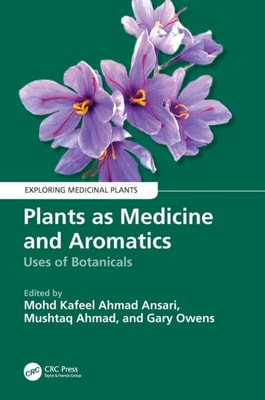
This book covers the morphological characteristics, ethnopharmacological properties, isolated and identified structurally diverse secondary metabolites, biological and pharmacological activities of medicinal plants.
This book covers the morphological characteristics, ethnopharmacological properties, isolated and identified structurally diverse secondary metabolites, biological and pharmacological activities of medicinal plants.
This new volume discusses the valuable contribution of immune-boosting properties of nutraceuticals and functional foods toward human health, exploring dietary antioxidants, vitamins and minerals, edible microalgae, herbs, phytonutrients, omega 3-fatty acids, and probiotics.
This new volume discusses the valuable contribution of immune-boosting properties of nutraceuticals and functional foods toward human health, exploring dietary antioxidants, vitamins and minerals, edible microalgae, herbs, phytonutrients, omega 3-fatty acids, and probiotics.
Porous Coordination Polymers: From Fundamentals to Advanced Applications brings together the latest advances in Porous Coordination Polymers (PCPs) for cutting-edge applications.
Ceramic matrix composites (CMCs) can withstand higher temperatures, reduce cooling airflow, improve turbine efficiency, and greatly reduce structural mass compared to the high temperature alloys.
This book covers the morphological characteristics, ethnopharmacological properties, isolated and identified structurally diverse secondary metabolites, biological and pharmacological activities of medicinal plants.
This book describes the characteristics of he five different disciplines of systems which are Systems Theory, Systems Science, Thinking in Systems, Systems Architecting, and Systems Engineering.
Equipment and Components in the Oil and Gas Industry Volume 2: Components provides an overview of the components used in the oil and gas industry, including instrumentation, pipe components, and safety components.
Valorization of Wastes/By-Products in the Design of Functional Foods/Supplements, Volume 106 provides up-to-date information on the valorization and application of by-products/wastes from fruit, vegetable, oil, cocoa, tea, coffee, nuts, seeds, cereals, legumes, citrus and animal-based products.
Revolution in the Seas: Ending Overfishing and Building Pesco-ecology, Sustainable Agro-Ecology of Fishing provides an in-depth analysis of the dynamics between humans and disrupting marine ecosystems by extracting its wild animals.
Biomedical Materials and Biofabrication for Regenerative Medicine addresses the existing and future trends of tissue engineering approaches for regenerating various organs/tissues.
Divided into four main chapters, this book covers the inception on through to the handover of a project and details the three main stages (study stage, design stage, and construction stage) involved with managing any type of project.
This unique volume traces the behavior of the drug substance, starting from the initial pre-contact stage, and ending with the formation of the complex.
This unique volume traces the behavior of the drug substance, starting from the initial pre-contact stage, and ending with the formation of the complex.
This book explores identity-mediated dynamics of food and nutrition entitlement in urban India analysing concerns around equity, access to food and public health.
This book explores identity-mediated dynamics of food and nutrition entitlement in urban India analysing concerns around equity, access to food and public health.
High amounts of waste are generated daily in various food processing industries including seed, pomace, pit, peel, germ, husk, broken pulses, sludge, skin, bones, blood, feathers, wash water, and spent residue, among others.
'The perfect accompaniment to a year of forest walks'Gardens Illustrated 'Books of the Year'A seductive mix of science, history and culture'Tracy Chevalier'I love this book'Lauren Laverne, as featured on BBC Radio 6 MusicA wondrous seasonal journey through Britain and Ireland's trees.
Bioplastics for Sustainability: Manufacture, Technologies, and Environment offers an innovative approach to bioplastics, integrating state-of-the-art materials and technologies with detailed analysis of lifecycle, recycling, circularity, and environmental impact of bioplastics, and enabling circular utilization and successful scale-up of bioplastics.
Divided into four main chapters, this book covers the inception on through to the handover of a project and details the three main stages (study stage, design stage, and construction stage) involved with managing any type of project.
This volume emphasizes techniques of optimal transport statistics, but it also describes and uses other econometric techniques, ranging from more traditional statistical techniques to more innovative ones such as quantiles (in particular, multidimensional quantiles), maximum entropy approach, and machine learning.
Plant based medicines and aromatics are increasingly in demand in the healthcare sector all over the globe where they are used, not only for the treatment of various diseases, but also for maintaining good human health.
Advances in Food Security and Sustainability, Volume Eight highlights new advances in the field with this new volume presenting interesting chapter on important topics such as Food Security, Diversification, and Inequality: Indonesia in the Era of Economic Recovery and High Price Trends, Oil Palm Cultivation and the Impact of Climate Change in Malaysia: A Systematic Review, Food Loss and Waste in Nigeria: Implications for Food Security and Environmental Sustainability, and the Role of different stakeholders and their relative importance in managing disaster.
This volume details preparations, separations, identification, analysis of postbiotics types and mechanism, uses of postbiotics in health, pharma, aquacultures, and the food industry.
Genetically Engineered Organisms in Bioremediation provides comprehensive coverage of biotechnological applications of genetically engineered microorganisms for the bioremediation of polluted environments.
The book discusses the materials, devices, and methodologies that can be used for energy harvesting including advanced materials, devices, and systems.