Drying is a key operation in processing of many plant-based foods and medicines for the purpose of preservation and retention of key attributes and active compounds.
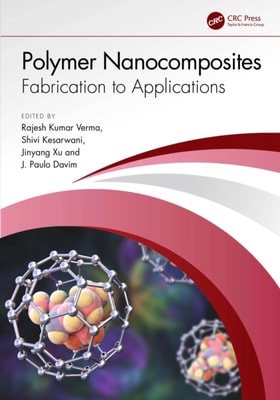
Polymer Nanocomposites: Fabrication to Applications offers readers an up-to-date interpretation of various polymeric nanocomposite materials and technologies via critical reviews.
Inherently Safer Design, Volume Seven in this ongoing series, highlights new advances in chemical engineering, with interesting chapters that provide an Introduction to Inherently Safer Design (ISD), ISD Fundamentals, History of ISD, ISD Life Cycle Considerations, ISD Indices, ISD and Human Factors, Conceptual and Practical Applications of ISD, Challenges to ISD Application, ISD Regulatory Requirements, ISD Case Studies, Risk-based ISD, ISD and Digitalization.
Principally focussed on the combing process, the initial chapters of this book explain the basic functioning of the conventional comber, which is not very different from modern combing.
Principally focussed on the combing process, the initial chapters of this book explain the basic functioning of the conventional comber, which is not very different from modern combing.
For novices and experienced health and safety professionals alike, the Respiratory Protection Handbook fills a critical gap in the respiratory protection literature.
This book explores the common approaches to upgrade heavy and extra-heavy crude oils by means of catalytic hydrotreating, emphasizing hydrogen addition technology as well as carbon rejection alternatives.
For novices and experienced health and safety professionals alike, the Respiratory Protection Handbook fills a critical gap in the respiratory protection literature.
Fruits and vegetables, commonly termed as "e;fresh produce"e; are an important component of the human diet, as these provide various beneficial and essential health-related compounds.
Digital Sensory Science: Applications in New Product Development provides a comprehensive overview of digital sensory science, an area that has broadly been defined as the use of technology to capture or model human sensory perception.
This book discusses smart technologies and their influence in the field of manufacturing and industrial systems engineering, in the context of performability enhancement, and explores the development of the workforce for the execution of such smart and advanced technologies.
This book discusses smart technologies and their influence in the field of manufacturing and industrial systems engineering, in the context of performability enhancement, and explores the development of the workforce for the execution of such smart and advanced technologies.
Digital Sensory Science: Applications in New Product Development provides a comprehensive overview of digital sensory science, an area that has broadly been defined as the use of technology to capture or model human sensory perception.
Although digenetic trematodes have been largely neglected, they constitute a major group of helminths that parasitize human and animals causing significant morbidity and mortality.
The United States has a long history as a leader of global innovation and of funding pioneering technologies that prove to be of benefit to the nation.
Dietary Lipids: Nutritional and Technological Aspects, Volume 105 focuses on major dietary lipids and their minor bioactive compounds, also covering the role of these lipids in metabolic diseases and covering oil processing with clean technologies and lipidomic characterization by mass spectrometry.
Functional Ingredients from Algae for Foods and Nutraceuticals, Second Edition presents an overview on the composition, properties and potential to develop novel ingredients and additives for functional foods and nutraceuticals.
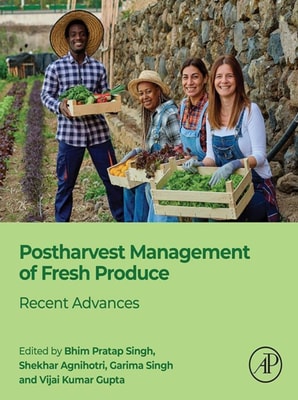
Postharvest Management of Fresh Produce: Recent Advances critically addresses the latest issues, challenges, and technological advancements in postharvest management of fresh commodities, especially fruits, nuts, and vegetables.
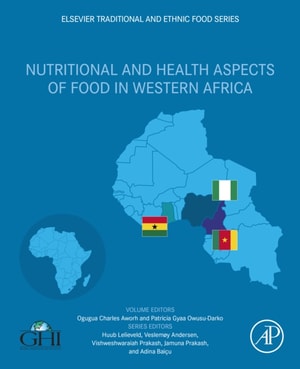
Nutritional and Health Aspects of Native West African Foods is part of an ongoing series that continues to build out Elsevier's Nutritional and Health Aspects of Traditional and Ethnic Foods series.
Dietary Lipids: Nutritional and Technological Aspects, Volume 105 focuses on major dietary lipids and their minor bioactive compounds, also covering the role of these lipids in metabolic diseases and covering oil processing with clean technologies and lipidomic characterization by mass spectrometry.
Functional Ingredients from Algae for Foods and Nutraceuticals, Second Edition presents an overview on the composition, properties and potential to develop novel ingredients and additives for functional foods and nutraceuticals.
Postharvest Management of Fresh Produce: Recent Advances critically addresses the latest issues, challenges, and technological advancements in postharvest management of fresh commodities, especially fruits, nuts, and vegetables.
These proceedings of EXPLOMET 90, the International Conference on the Materials Effects of Shock-Wave and High-Strain-Rate Phenomena, held August 1990, in La Jolla, California, represent a global and up-to-date appraisal of this field.
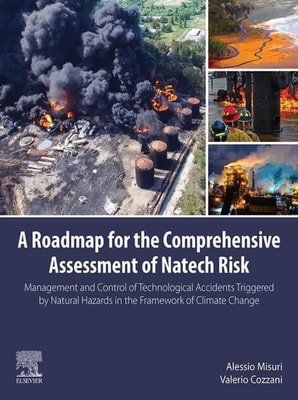
A Roadmap for the Comprehensive Assessment of Natech Risk: Management and Control of Technological Accidents Triggered by Natural Hazards in the Framework of Climate Change covers the latest advancements concerning the quantitative risk assessment and the management of cascading events involving technological accidents caused by natural hazards.
Much has been written about food allergies in scientific journals and in the lay press, but Food Allergies: Processing Technologies for Allergenicity Reduction approaches the issue of food allergies from an industrial processing rather than a clinical perspective.
Businesses have faced a variety of difficulties as a result of the global pandemic, and how they responded to this disruption has affected both their resilience and their ability to get through this crisis.
The current volume focuses on all the major concerns associated with the biofungicides and provides comprehensive knowledge of microbial and phytochemical fungicides, bioformulations, regulation as well as limitation of biofungicides, and their role in disease management in plants.
Master Process Control Hands On, through Updated Practical Examples and MATLAB(R) Simulations Process Control: Modeling, Design, and Simulation, Second Edition, is a complete introduction to process control and has been fully updated, integrating current software tools to enable professionals and students to master critical techniques hands on through simulations based on modern versions of MATLAB.
This handbook explores smart cities of the future, provides an understanding of their development and management systems, and discusses the technology challenges.
Emerging Methods for Oil Extraction from Food Processing Waste is a comprehensive and cutting-edge exploration of sustainable oil extraction practices, catering to professionals and researchers in food science.
The current volume focuses on all the major concerns associated with the biofungicides and provides comprehensive knowledge of microbial and phytochemical fungicides, bioformulations, regulation as well as limitation of biofungicides, and their role in disease management in plants.
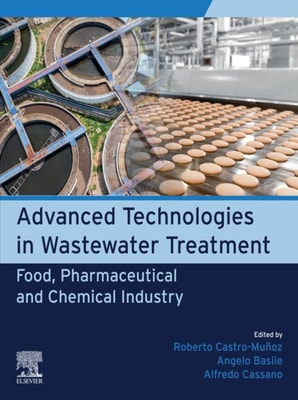
Food, Pharmaceutical and Chemical Industry: Advanced Technologies in Wastewater Treatment provides an overview of current techniques, processes, and strategies in the field of wastewater management, dealing either with the recovery of co-products, biomolecules or simply water recovery and purification.
This book provides in-depth coverage of the interconnection among food marketing, labelling, and technology to enhance consumers', practitioners', and scholars' understanding of the modern food market.
Food, Pharmaceutical and Chemical Industry: Advanced Technologies in Wastewater Treatment provides an overview of current techniques, processes, and strategies in the field of wastewater management, dealing either with the recovery of co-products, biomolecules or simply water recovery and purification.