Wine has been a staple of tables around the world for more than 4,000 years and in that time has developed into one of the most widely recognized and highly cultivated beverages in nearly every civilization on earth.
The consumption of functional foods is growing in the health and wellness communities because of their range of potent nutrients and health advantages, such as the ability to shield against illnesses, stop vitamin deficiencies, and encourage healthy growth and development.
Wild wines around the world have been created since the dawn of time, with nearly every civilization and culture on earth developing their own means of fermenting and distilling various fruits and grains into aromatic, strong spirited drinks that have graced the tables of kings and peasants alike.
Full-Spectrum Responsive Photocatalytic Materials: From Fundamentals to Applications provides a comprehensive overview on the design, synthesis concepts, mechanisms, characterization techniques, and advances and limitations in applications of full-spectrum responsive photocatalytic materials.
The Basics of Polymers is written exclusively about chemical methods of polymer testing aimed at producing a high degree of manufacturing and quality control of polymer products.
Peanuts: Genetics, Processing, and Utilization (Oilseed Monograph) presents innovations in crop productivity and processing technologies that help ensure global food security and high quality peanut products.
Practical Guide to Vegetable Oil Processing, Second Edition, includes an up-to-date summary of the basic principles of edible oil refining, processing, and deodorizing, serving as a hands-on training manual for chemists, engineers, and managers new to the industry.
This book is based on the Fifth International Conference that was held on 16-21 August, 1992 in Melbourne, Australia, in conjunction with AUSTCERAM 92.
Fabric Structures in Architecture covers the varying ways textiles and their properties are used in building construction, with particular focus given to tensile structures.
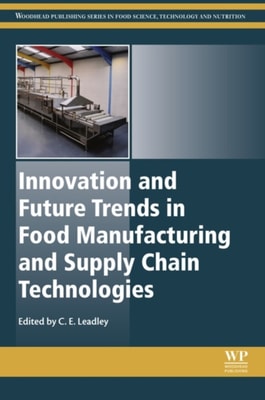
Innovation and Future Trends in Food Manufacturing and Supply Chain Technologies focuses on emerging and future trends in food manufacturing and supply chain technologies, examining the drivers of change and innovation in the food industry and the current and future ways of addressing issues such as energy reduction and rising costs in food manufacture.
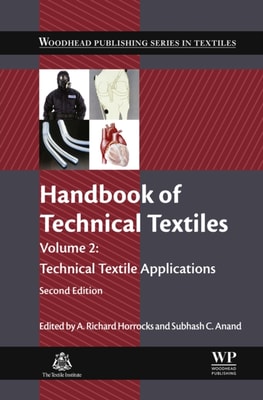
The first edition of Handbook of Technical Textiles has been an essential purchase for professionals and researchers in this area since its publication in 2000.
Recent concerns over the possible effects of metal-on-metal orthopaedic implants and the evolution of more natural structures made from fibre have made medical device manufacturers consider the potential of fibre.
Natural fiber-reinforced composites have the potential to replace synthetic composites, leading to less expensive, stronger and more environmentally-friendly materials.
Lasers can alter the surface composition and properties of materials in a highly controllable way, which makes them efficient and cost-effective tools for surface engineering.
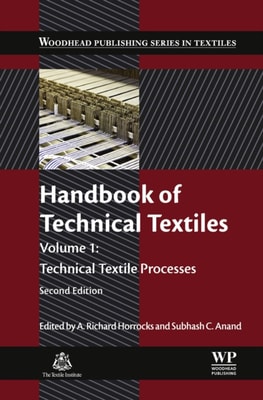
The second edition of Handbook of Technical Textiles, Volume 1: Technical Textile Processes provides readers with a comprehensive understanding of the latest advancements in technical textiles.
This text provides a general background as a course module in the area of inorganic reaction mechanisms, suitable for advanced undergraduate and postgraduate study and/or research.
Sustainability is an issue that increasingly concerns all those involved in the apparel industry, including textile manufacturers, apparel designers, retailers and consumers.
Advances in Food and Beverage Labelling reviews recent advances in labelling research and regulation, covering issues such as nutrition and hazard information, traceability, health claims and standardisation, as well as new labelling technologies and consumer issues.
Grapevine Breeding Programs for the Wine Industry: Traditional and Molecular Techniques summarizes recent trends in grapevine breeding, both in terms of research and practical programs.
Due to growing energy demands, the development of high energy storage density dielectric materials for energy storage capacitors has become a top priority.
Advances in Women's Intimate Apparel Technology discusses the design and manufacture of intimate apparel and how the industry is increasingly embracing novel materials, new technologies, and innovations in sizing and fit.
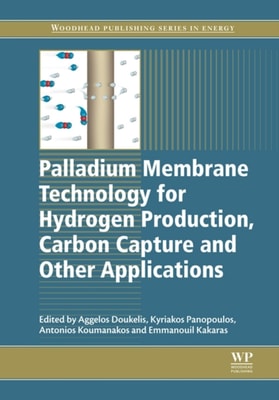
Membrane Reactors for Energy Applications and Basic Chemical Production presents a discussion of the increasing interest in membrane reactors that has emerged in recent years from both the scientific and industrial communities, in particular their usage for energy applications and basic chemical production.
Advances in 3D Textiles presents the most recent advances in the production of three-dimensional fibrous structures and how their use has resulted in the creation of novel fabrics and applications.