All three peroxisome proliferator-activated receptor (PPAR) subtypes share a high degree of structural homology but differ in function, tissue distribution and ligand specificity.
International biobank collaborations allow for studies with large number of subjects where generalizability of findings across populations can be investigated, which means establishing quality criteria concerning the nature of the sample, conditions of sample storage, and the adequacy of available information is of vital importance.
Known for flexibility and robustness, PCR techniques continue to improve through numerous developments, including the identification of thermostable DNA polymerases which exhibit a range of properties to suit given applications.
Due to their unique size-dependent properties, nanomaterials have the potential to revolutionize the detection, diagnosis, and treatment of disease by offering superior capabilities compared to conventionally-used materials.
The discovery of catalytic RNAs in the mid-1980s marked the beginning of a new era in RNA biology and an ever increasing appreciation of the diverse and critical roles played by this fascinating molecule.
Cryopreservation and Freeze-Drying Protocols: Second Edition is a compilation of robust, reproducible techniques for the conservation of a wide range of biological materials.
Nanotechnology plays a key leading role in developing tools able to identify, measure, and study cellular events at the nanometric level as well as in contributing to the disclosure of unknown biological interactions and mechanisms, which opens the door for advances including nanodevices for diagnostic and therapy, drug delivery systems, and regenerative medicine.
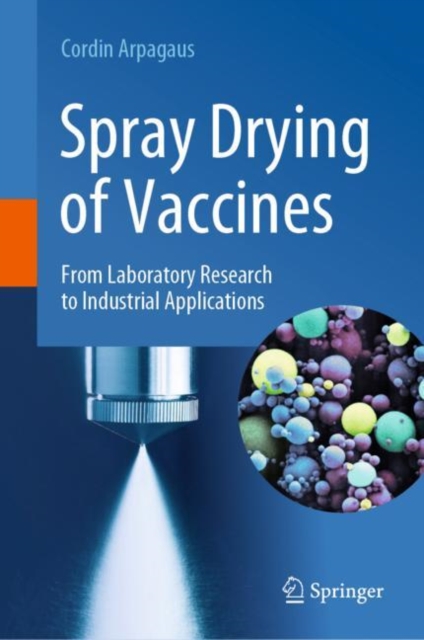
This book addresses the stabilization of vaccine powders by spray drying and provides an overview of the current state of the art on a laboratory and industrial scale.
Mechanobiology is a new research field that investigates how the physical forces and changes in mechanical properties of cells and tissues contribute to their development, physiology and disease.
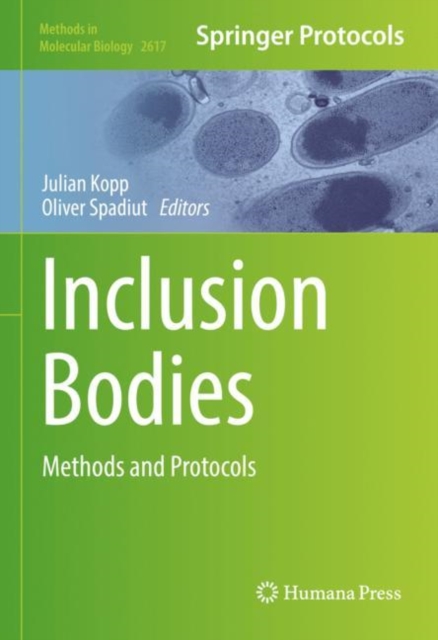
This detailed volume presents a series of protocols dealing with different aspects of inclusion body (IB) processing, from cloning procedures to purification of refolded product.
Nanorobotics and Nanodiagnostics in Integrative Biology and Biomedicine "e;Nanorobotics and nanodiagnostics"e; can be defined as a new generation of biohybrid and nanorobotics that translate fundamental biological principles into engineering design rules, or integrative living components into synthetic structures to create biorobots and nanodiagnotics that perform like natural systems.
The book Function-oriented bioengineered skin equivalents - continuous development towards complete skin replication aims to provide potential readers with a comprehensive summary of the available information on various in vitro skin models, from historical background to different modeling approaches and their applications.
This book reports on advanced biomaterials such as bioceramics, hydrogels, biopolymers, nanomaterials, membranes, and other compatible materials for medical applications.
This book covers all technologies, developments, and innovations for the manure treatment to explore various strategies for nutrient recovery as well as energy production around the globe.
Polymeric Foams: Innovations in Technologies and Environmentally Friendly Materials offers the latest in technology and environmental innovations within the field of polymeric foams.
Polymeric Foams: Innovations in Technologies and Environmentally Friendly Materials offers the latest in technology and environmental innovations within the field of polymeric foams.
This book offers expert guidance on materials for total hip arthroplasty (THA), providing readers with quick access to well-organized summaries on biomaterials such as metals, ceramics, polymers, and composites.
This volume presents a series of case studies, at different levels of inclusivity, of how organisms exhibit functional convergence as a key evolutionary mechanism resulting in responses to similar environmental constraints in mechanically similar ways.
Mechanics of Biological Systems and Materials & Micro-and Nanomechanics, Volume 4 of the Proceedings of the 2019 SEM Annual Conference & Exposition on Experimental and Applied Mechanics, the fourth volume of six from the Conference, brings together contributions to important areas of research and engineering.
The articles in this book review hybrid experimental-computational methods applied to soft tissues which have been developed by worldwide specialists in the field.
In the present scenario, green technologies are playing significant role in changing the course of nation's economic growth towards sustainability and providing an alternative socio-economic model that will enable present and future generations to live in a clean and healthy environment, in harmony with nature.
This book discusses the current direction of the research approach to extreme biomimetics through biological materials-inspired chemistry and its applications in modern technology and medicine.
This volume provides a state-of-art-report on the new methodologies in tissue engineering and developments in the biomaterials field based on the extracellular matrix-relevant discovery.
This book outlines the production of chitooligossacharides and their derivatives and discusses their main biological activities, biomedical applications and their role in disease prevention.
This book reviews the most recent developments in the field of osteochondral tissue engineering (OCTE) and presents challenges and strategies being developed that face not only bone and cartilage regeneration, but also establish osteochondral interface formation in order to translate it into a clinical setting.
This book covers the key basics of tissue engineering as well as the latest advances in the integration of both antimicrobial and osteoinductive properties.