This volume comprises the select proceedings of the 3rd Biennial International Conference on Future Learning Aspects of Mechanical Engineering (FLAME-2022).
This monograph contains an in-depth and coherent treatment of dimension-reduced modeling of blood flows on the level of large vessels (macrocirculation).
This volume comprises the select proceedings of the 3rd Biennial International Conference on Future Learning Aspects of Mechanical Engineering (FLAME-2022).
The third edition of Bubbles, Drops, and Particles in Non-Newtonian Fluids provides comprehensive coverage of the scientific foundations and the latest advances in particle motion in non-Newtonian media.
The third edition of Bubbles, Drops, and Particles in Non-Newtonian Fluids provides comprehensive coverage of the scientific foundations and the latest advances in particle motion in non-Newtonian media.
Defect Correction Methods for Fluid Flows at High Reynold's Numbers presents the mathematical development of defect correction methods (DCM) in application to fluid flow problems in various settings.
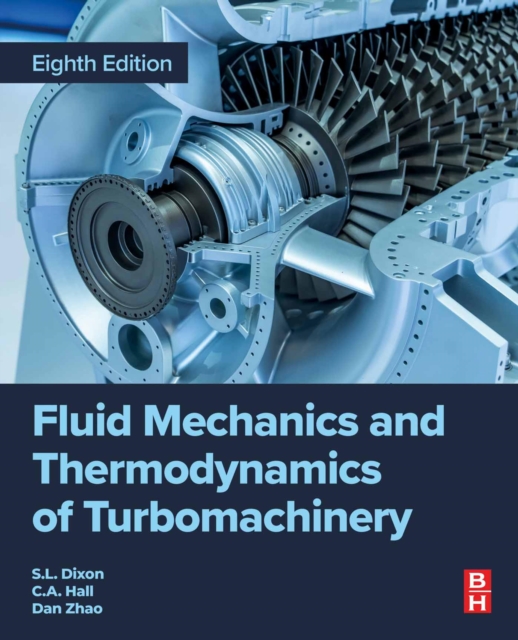
Fluid Mechanics and Thermodynamics of Turbomachinery, Eighth Edition is the leading turbomachinery book with its balanced coverage of theory and application.
Historically pharmaceutical and fine chemical products have been synthesised using batch methods, but increasingly chemists are looking towards flow chemistry as a greener and more efficient alternative.
A reference for the chemical engineer on the application, selection, construction, procurement, installation, operation, and maintenance of the three basic types of pumps used in chemical processing: centrifugal, rotary, and reciprocating.
This book aims to cast light on all aspects of tunnel fires, based on experimental activities and theoretical and computational fluid dynamics (CFD) analyses.
Three-Dimensional Navier-Stokes Equations for Turbulence provides a rigorous but still accessible account of research into local and global energy dissipation, with particular emphasis on turbulence modeling.
This text provides the reader with tools necessary to study biological and bio-inspired flows, all the while developing an appreciation for their evolutionary and engineering constraints.
This book presents new data on combustion processes for practical applications, discussing fire safety issues in the development of flame arresters and the use of noble metals in hydrogen recombiners for nuclear power plants.
Biofluid Mechanics: An Introduction to Fluid Mechanics, Macrocirculation, and Microcirculation shows how fluid mechanics principles can be applied not only to blood circulation, but also to air flow through the lungs, joint lubrication, intraocular fluid movement, renal transport among other specialty circulations.
This book is a thoroughly revised and enlarged version of "e;Shock-capturing methods for free-surface shallow flows"e;, first published by Wiley and Sons, 2001.
En su obra el autor compendia su amplia experiencia como estudiante, profesor, investigador y consultor en el campo de los recursos de agua y suelo y nos ofrece una obra clara, sencilla y sobre todo práctica, en la que se presentan los conceptos teóricos involucrados en el diseño de canales, acompañados de ejemplos y problemas en los que se ofrecen situaciones reales para que el lector de la obra pueda aplicar los conceptos aprendidos.
This book covers some of the fundamental topics in fluid power technology, presenting detailed derivations of formulas that form the basis of the theory.
This book elucidates heat transfer behavior for boiling of dilute emulsions- mixtures of two immiscible fluids- which has received little attention to date.
Shear Thickening Fluid: Theory and Applications provides a complete reference on shear thickening fluid (STF) and STF applications for engineers, researchers, and scientists.
This book mainly introduces the research overview, research results, and follow-up prospects of "e;Key Basic Scientific Problems on Near-Space Vehicles"e;, a major research plan of National Natural Science Foundation of China (hereinafter referred to as the Plan).
Numerical simulation models are used in all engineering disciplines for modeling physical phenomena to learn how the phenomena work, and to identify problems and optimize behavior.
Process Intensification: Faster, Better, Cheaper presents basic concepts and applications of process intensification (PI) and links their common effects across processes.
Process Intensification: Faster, Better, Cheaper presents basic concepts and applications of process intensification (PI) and links their common effects across processes.
This updated/augmented second edition retains it class-tested content and pedagogy as a core text for graduate courses in advanced fluid mechanics and applied science.
This new edition is designed for a one semester introductory course in thermodynamics, either in mechanical or aerospace engineering, or in an engineering science program.