Flowing matter is all around us, from daily-life vital processes (breathing, blood circulation), to industrial, environmental, biological, and medical sciences.
From the swirl of a wisp of smoke to eddies in rivers, and the huge persistent storm system that is the Great Spot on Jupiter, we see similar forms and patterns wherever there is flow - whether the movement of wind, water, sand, or flocks of birds.
From the swirl of a wisp of smoke to eddies in rivers, and the huge persistent storm system that is the Great Spot on Jupiter, we see similar forms and patterns wherever there is flow - whether the movement of wind, water, sand, or flocks of birds.
We inhabit a world of fluids, including air (a gas), water (a liquid), steam (vapour) and the numerous natural and synthetic fluids which are essential to modern-day life.
Master the Latest Techniques to Quantify, Locate, Control, and Prevent Water and Revenue Loss in Water Utility OperationsThis comprehensive guide takes you step by step through every stage of the development of a water loss control program-from measuring and auditing water loss, tracking losses to their root cause, to developing a loss control program for future efficiency.
The text comprehensively discusses the transport mechanism, storage, and conveying of the material, which are essential requirements for transporting solids in various process units, especially in mineral and chemical industries.
Piezoelectric Aeroelastic Energy Harvesting explains the design and implementation of piezoelectric energy harvesting devices based on fluid-structure interaction.
Experimental Hydrodynamics for Flow around Bodies explains complex novel experimental methodologies to solve a wide range of important flow problems in industry and research.
Cavitation and Bubble Dynamics: Fundamentals and Applications examines the latest advances in the field of cavitation and multiphase flows, including associated effects such as material erosion and spray instabilities.
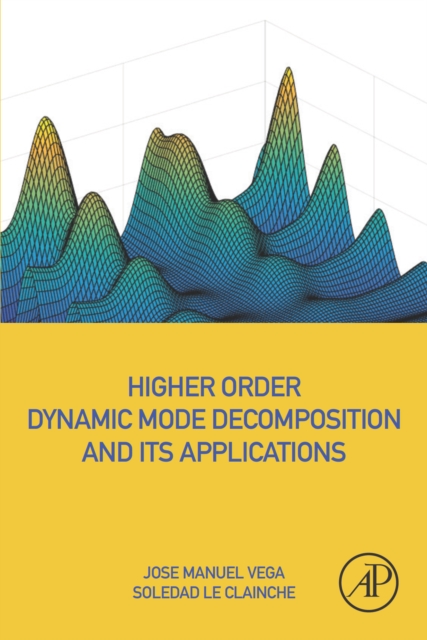
Higher Order Dynamic Mode Decomposition and Its Applications provides detailed background theory, as well as several fully explained applications from a range of industrial contexts to help readers understand and use this innovative algorithm.
Similarity Solutions for the Boundary Layer Flow and Heat Transfer of Viscous Fluids, Nanofluids, Porous Media, and Micropolar Fluids presents new similarity solutions for fluid mechanics problems, including heat transfer of viscous fluids, boundary layer flow, flow in porous media, and nanofluids due to continuous moving surfaces.
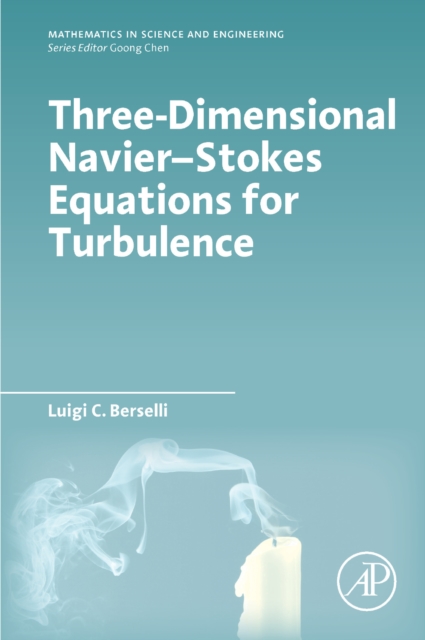
Three-Dimensional Navier-Stokes Equations for Turbulence provides a rigorous but still accessible account of research into local and global energy dissipation, with particular emphasis on turbulence modeling.
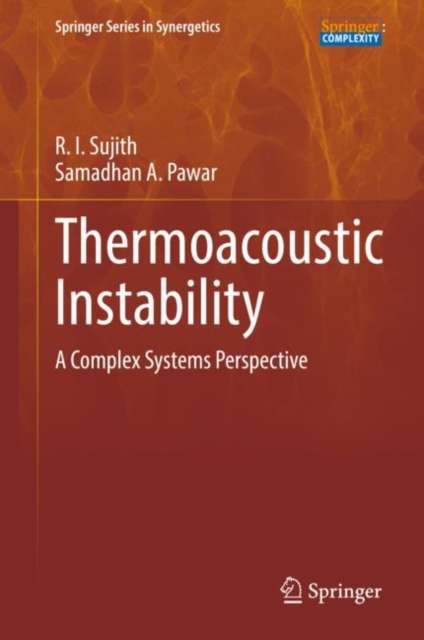
This book systematically presents the consolidated findings of the phenomenon of self-organization observed during the onset of thermoacoustic instability using approaches from dynamical systems and complex systems theory.
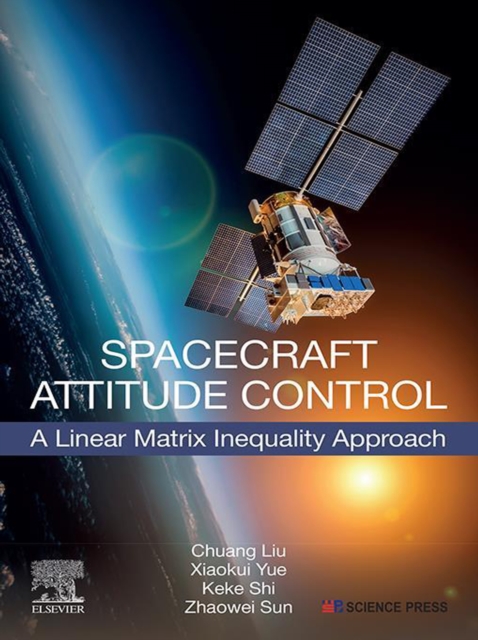
Spacecraft Attitude Control: A Linear Matrix Inequality Approach solves problemsfor spacecraft attitude control systems using convex optimization and, specifi cally,through a linear matrix inequality (LMI) approach.
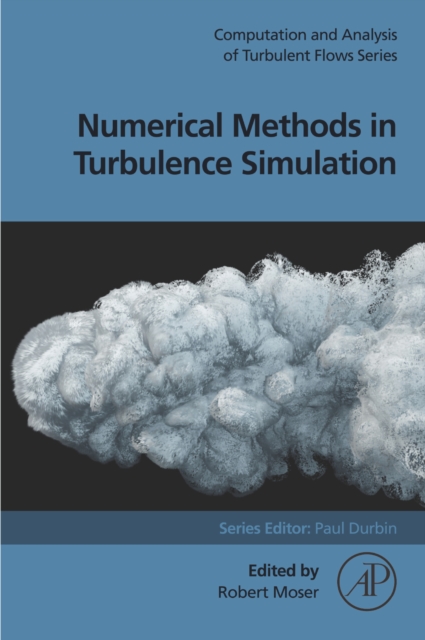
Numerical Methods in Turbulence Simulation provides detailed specifications of the numerical methods needed to solve important problems in turbulence simulation.
Liutex and Its Applications in Turbulence Research reviews the history of vortex definition, provides an accurate mathematical definition of vortices, and explains their applications in flow transition, turbulent flow, flow control, and turbulent flow experiments.
Multiphysics Modelling of Fluid-Particulate Systems provides an explanation of how to model fluid-particulate systems using Eulerian and Lagrangian methods.
Computational Fluid Dynamics Applied to Waste-to-Energy Processes: A Hands-On Approach provides the key knowledge needed to perform CFD simulations using powerful commercial software tools.
This textbook is for a one semester introductory course in thermodynamics, primarily for use in a mechanical or aerospace engineering program, although it could also be used in an engineering science curriculum.
This book provides state-of-art information on high-accuracy scientific computing and its future prospects, as applicable to the broad areas of fluid mechanics and combustion, and across all speed regimes.
Free Surface Flow: Environmental Fluid Mechanics introduces a wide range of environmental fluid flows, such as water waves, land runoff, channel flow, and effluent discharge.
This book focuses on using and implementing Circulation Control (CC) - an active flow control method used to produce increased lift over the traditionally used systems, like flaps, slats, etc.
This is the proceedings of the Second International Workshop on Flow Induced Noise and Vibration (FLINOVIA), which was held in Penn State, USA, in April 2016.
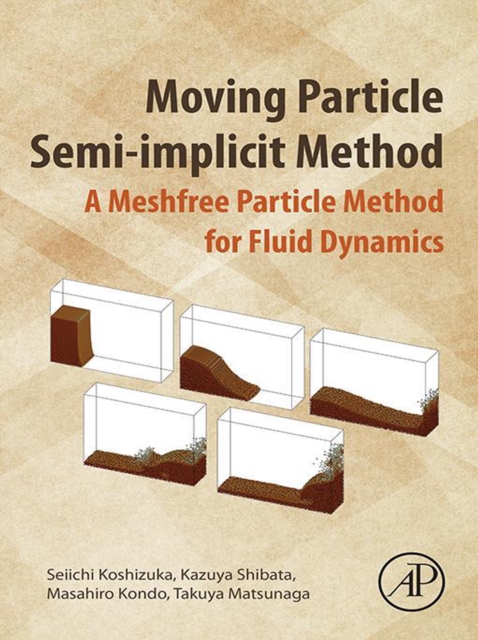
Moving Particle Semi-implicit Method: A Meshfree Particle Method for Fluid Dynamics begins by familiarizing the reader with basic theory that supports their journey through sections on advanced MPH methods.
Drag Reduction of Complex Mixtures discusses the concept of drag reduction phenomena in complex mixtures in internal and external flows that are shown experimentally by dividing flow patterns into three categories.
Numerical Models for Submerged Breakwaters: Coastal Hydrodynamics and Morphodynamics discusses the practice of submerged breakwaters, an increasingly popular tool used as a coastal defense system because of their amenity and aesthetics as compared to common emerged beach protection measures.