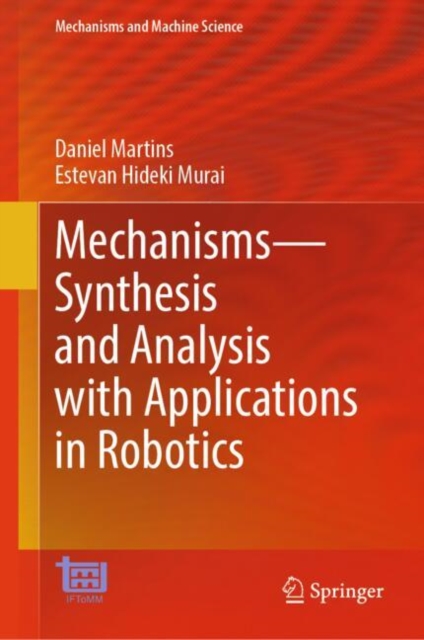
This book collects novel developments in the so-called "e;systems of systems"e; which is meant as a collection of specialized, task-oriented systems and capabilities which form, using a proper architecture, a new, more complex system that provides new functionalities than the sum of functionalities of the constituent systems.
This book is a comprehensive guide to the latest research on low-dimensional silicon carbide (SiC) nanostructures, including nanoparticles and quantum dots, diverse morphologies of nanowires, nanotubes, 2D honeycomb-structured monolayers, nanostructured films, and nanocomposites based on both sound experiments and ab initio calculations and simulations.
This book collects novel developments in the so-called "e;systems of systems"e; which is meant as a collection of specialized, task-oriented systems and capabilities which form, using a proper architecture, a new, more complex system that provides new functionalities than the sum of functionalities of the constituent systems.
This book is a comprehensive guide to the latest research on low-dimensional silicon carbide (SiC) nanostructures, including nanoparticles and quantum dots, diverse morphologies of nanowires, nanotubes, 2D honeycomb-structured monolayers, nanostructured films, and nanocomposites based on both sound experiments and ab initio calculations and simulations.
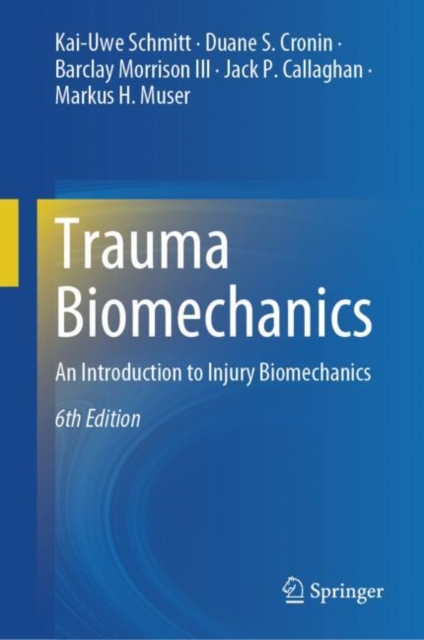
This is the sixth and revised edition of a well-received textbook that aims at bridging the gap between the engineering course of tensor algebra on the one hand and the mathematical course of classical linear algebra on the other hand.
This is the sixth and revised edition of a well-received textbook that aims at bridging the gap between the engineering course of tensor algebra on the one hand and the mathematical course of classical linear algebra on the other hand.
Proceedings of the FISITA 2012 World Automotive Congress are selected from nearly 2,000 papers submitted to the 34th FISITA World Automotive Congress, which is held by Society of Automotive Engineers of China (SAE-China ) and the International Federation of Automotive Engineering Societies (FISITA).
This contributed volume collects the scientific results of the DFG Priority Program 1180 Prediction and Manipulation of the Interactions between Structures and Processes.
Modern computational techniques, such as the Finite Element Method, have, since their development several decades ago, successfully exploited continuum theories for numerous applications in science and technology.
This third issue on "e;progress in turbulence"e; is based on the third ITI conference (ITI interdisciplinary turbulence initiative), which took place in Bertinoro, North Italy.
Computational kinematics is an enthralling area of science with a rich spectrum of problems at the junction of mechanics, robotics, computer science, mathematics, and computer graphics.
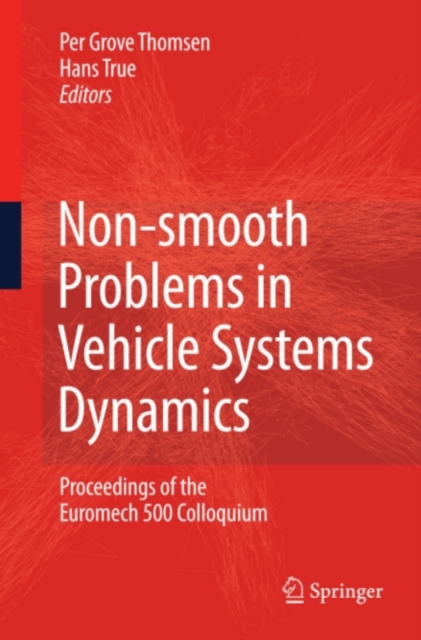
The book combines vehicle systems dynamics with the latest theoretical developments in dynamics of non-smooth systems and numerical analysis of differential-algebraic dynamical systems with discontinuities.
Non Destructive Testing and Non Destructive Evaluation using Ultrasounds covers an important field of applications and requires a wide range of fundamental theoretical, numerical and experimental investigations.
This book provides a comprehensive and practical introduction to the Boundary Element Method (BEM) as applied to the analysis of plates, shells, and thin-walled structures in solid mechanics.
This book provides a comprehensive and practical introduction to the Boundary Element Method (BEM) as applied to the analysis of plates, shells, and thin-walled structures in solid mechanics.
There is a large gap between the engineering course in tensor algebra on the one hand and the treatment of linear transformations within classical linear algebra on the other hand.
This book on wire ropes is dedicated mainly to all users of wire ropes - the construction engineers, operators and supervisors of machines and instal- tions running on wire ropes - and it is divided into three main sections.
"e;Complex Systems: Fractionality, Time-delay and Synchronization"e; covers the most recent developments and advances in the theory and application of complex systems in these areas.
The book presents a synopsis of the main results achieved during the 3 year EU-project "e;Advanced Inflight Measurement Techniques (AIM)"e; which applied advanced image based measurement techniques to industrial flight testing.
Elastomers are found in many applications ranging from technology to daily life applications for example in tires, drive systems, sealings and print rollers.
Artificial intelligence (AI) techniques and the finite element method (FEM) are both powerful computing tools, which are extensively used for modeling and optimizing manufacturing processes.
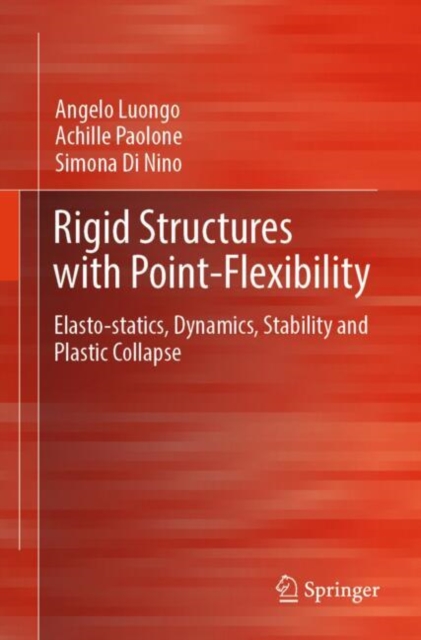
This book deals with kinematics and statics of rigid-body systems, lumped elasticity, variational principles, dynamics, stability and bifurcation, piece-wise linear (rigid-plastic or elasto-plastic) constitutive behavior, and geometrically nonlinear behavior.
This book deals with kinematics and statics of rigid-body systems, lumped elasticity, variational principles, dynamics, stability and bifurcation, piece-wise linear (rigid-plastic or elasto-plastic) constitutive behavior, and geometrically nonlinear behavior.
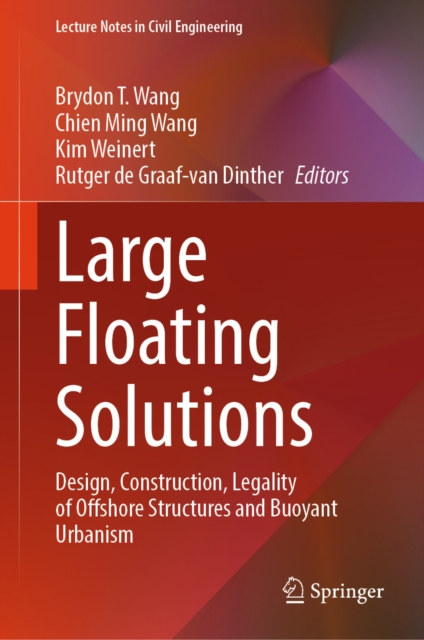
Large Floating Solutions builds on the foundations laid in Large Floating Structures: Technological Advances, extending the analysis to the next generation of Very Large Floating Structures (VLFS) as integrated, climate-adaptive urban systems.
Large Floating Solutions builds on the foundations laid in Large Floating Structures: Technological Advances, extending the analysis to the next generation of Very Large Floating Structures (VLFS) as integrated, climate-adaptive urban systems.
This book gathers the proceedings of the 8th International Conference Mechanics of Masonry Structures Strengthened with Composite Materials (MuRiCo8), which was held in Bologna, Italy on June 25–27, 2025, and brought together scholars in the fields of modeling, testing, design, control, and health monitoring of masonry structures strengthened with composite materials.
This book gathers the proceedings of the 8th International Conference Mechanics of Masonry Structures Strengthened with Composite Materials (MuRiCo8), which was held in Bologna, Italy on June 25–27, 2025, and brought together scholars in the fields of modeling, testing, design, control, and health monitoring of masonry structures strengthened with composite materials.
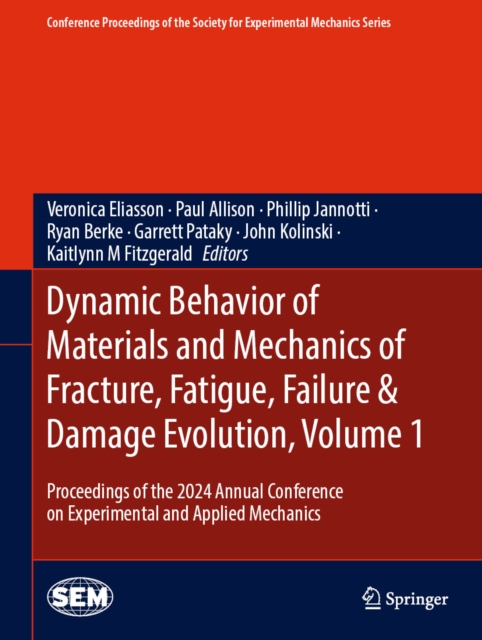
Dynamic Behavior of Materials and Fracture, Fatigue, Failure & Damage Evolution, Volume 1 of the Proceedings of the 2024 SEM Annual Conference & Exposition on Experimental and Applied Mechanics, the first volume of three from the Conference, brings together contributions to this important area of research and engineering.
Dynamic Behavior of Materials and Fracture, Fatigue, Failure & Damage Evolution, Volume 1 of the Proceedings of the 2024 SEM Annual Conference & Exposition on Experimental and Applied Mechanics, the first volume of three from the Conference, brings together contributions to this important area of research and engineering.
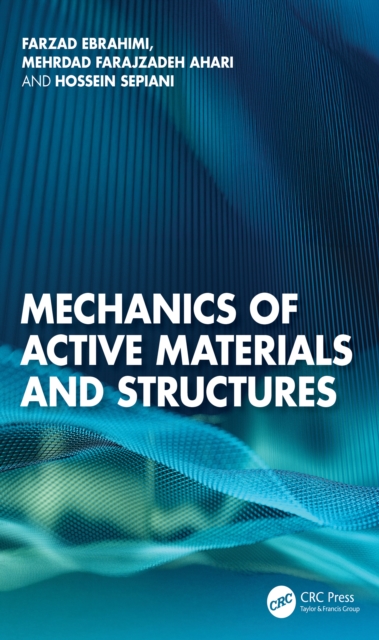
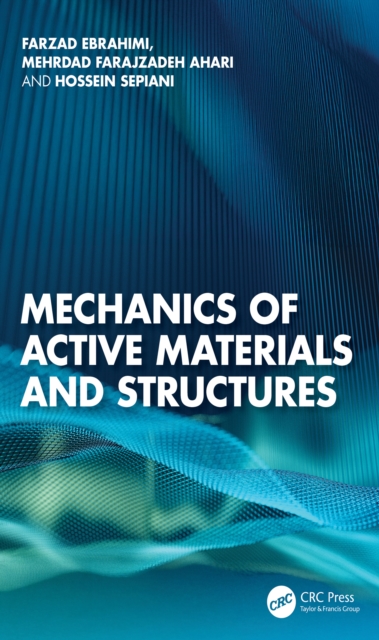
Mechanics of Active Materials and Structures offers a wide range of application-based and practical considerations of state-of-the-art smart and active materials.
Mechanics of Active Materials and Structures offers a wide range of application-based and practical considerations of state-of-the-art smart and active materials.
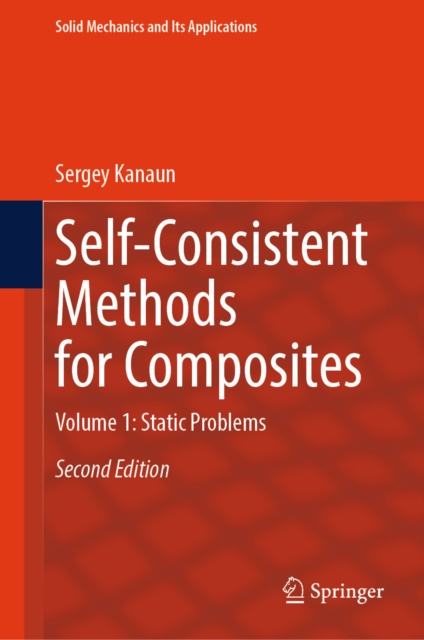
This book introduces new chapters that delve into the structure of electromagnetic and elastic fields in anisotropic media, the detailed solutions of the conductivity and elasticity problems for spherical radially transverse isotropic inclusions, the analysis of the neutral inclusion problem in static conductivity and elasticity, and the homogenization problem for polycrystalline materials.
This book introduces new chapters that delve into the structure of electromagnetic and elastic fields in anisotropic media, the detailed solutions of the conductivity and elasticity problems for spherical radially transverse isotropic inclusions, the analysis of the neutral inclusion problem in static conductivity and elasticity, and the homogenization problem for polycrystalline materials.