This classic and authoritative textbook contains material that is not over-simplified and can be used to solve real-world noise control engineering problems.
This volume focuses on the wealth of existing literature on physical metallurgy, and deals with materials in different states of order and the process of order evolution.
The primary objective of Foundations of Stress Waves is to give the reader an understanding of stress wave behaviour while taking into account the dynamic constitutive equations of elastic-plastic solids.
The primary objective of Foundations of Stress Waves is to give the reader an understanding of stress wave behaviour while taking into account the dynamic constitutive equations of elastic-plastic solids.
Dieses Lehr- und Übungsbuch vermittelt auf anschauliche Weise die Methoden der Mehrkörpersimulation und verdeutlicht deren Vor- und Nachteile bei der praktischen Anwendung anhand konkreter Beispiele.
Both refining and extending previous publications by the authors, the material in this monograph has been class-tested in mathematical institutions throughout the world.
Divided Solids Mechanics, part of the Industrial Equipment for Chemical Engineering set, defines how to perform the selection and calculation of equipment needed in the basic operations of process engineering, offering reliable and simple methods, with this volume providing a comprehensive focus divided solids mechanics.
Stochastic Crack Propagation: Essential Practical Aspects describes a feature important to the analysis of stochastic crack propagation, starting with essential background theory.
Multiphysics Modelling: Materials, Components, and Systems focuses on situations where coupled phenomena involving a combination of thermal, fluid, and solid mechanics occur.
THE MOST COMPLETE, UP-TO-DATE CORROSION CONTROL REFERENCEFully revised throughout, Handbook of Corrosion Engineering, Second Edition discusses the latest advances in corrosion-resistant materials, methods, and protective coatings.
Size Effects in Plasticity: From Macro to Nano provides concise explanations of all available methods in this area, from atomistic simulation, to non-local continuum models to capture size effects.
Computational Structural Mechanics: Static and Dynamic Behaviors provides a cutting-edge treatment of functionally graded materials and the computational methods and solutions of FG static and vibration problems of plates.
Composite materials, with their higher exposure to dynamic loads, have increasingly been used in aerospace, naval, automotive, sports and other sectors over the last few decades.
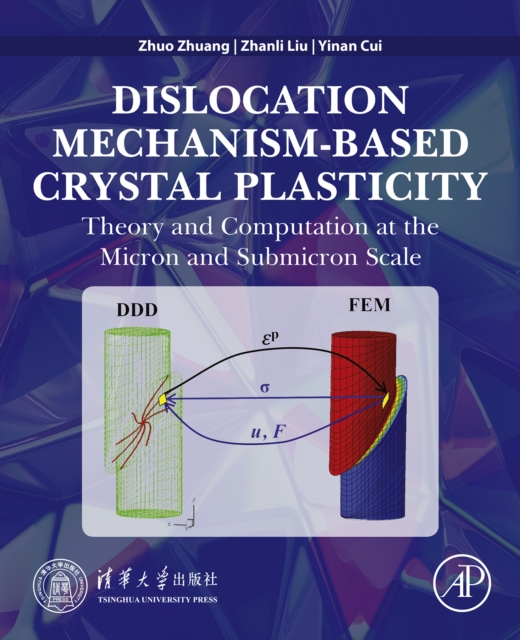
Dislocation Based Crystal Plasticity: Theory and Computation at Micron and Submicron Scale provides a comprehensive introduction to the continuum and discreteness dislocation mechanism-based theories and computational methods of crystal plasticity at the micron and submicron scale.
The major developments in the fields of fluid and solid mechanics are scattered throughout an array of technical journals, often making it difficult to find what the real advances are, especially for a researcher new to the field or an individual interested in discovering the state-of-the-art in connection with applications.
Providing a logically balanced and authoritative account of the different branches and problems of mathematical physics that Lagrange studied and developed, this volume presents up-to-date developments in differential goemetry, dynamical systems, the calculus of variations, and celestial and analytical mechanics.
This volume focuses on the wealth of existing literature on physical metallurgy, and deals with materials in different states of order and the process of order evolution.
This Brief is mainly devoted to two classical and related results: the existence of a right inverse of the divergence operator and the so-called Korn Inequalities.
The Welding Engineer's Guide to Fracture and Fatigue provides an essential introduction to fracture and fatigue and the assessment of these failure modes, through to the level of knowledge that would be expected of a qualified welding engineer.
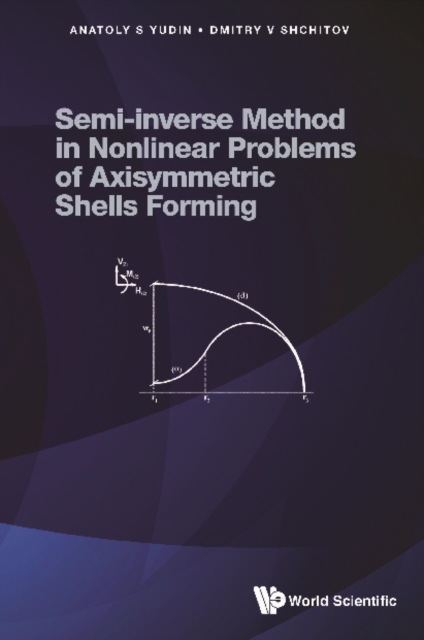
Currently, solving problems based on designing and calculating complex structures with significant nonlinearity usually require:Semi-inverse Method in Nonlinear Problems of Axisymmetric Shells Forming provides an alternative method for solving problems with deep geometric and physical nonlinearity.
This book presents research results of PowerWeb, TU Delft's consortium for interdisciplinary research on intelligent, integrated energy systems and their role in markets and institutions.
This monograph provides a concise overview of the main theoretical and numerical tools to solve homogenization problems in solids with finite elements.
This book presents a collection of chapters on the current problems of the theory of dynamical processes in generalized continua and structures, and has been compiled to commemorate the 70th birthday of Prof.
Model Validation and Uncertainty Quantification, Volume 3: Proceedings of the 37th IMAC, A Conference and Exposition on Structural Dynamics, 2019, the third volume of eight from the Conference brings together contributions to this important area of research and engineering.
This book offers an excellent complementary text for an advanced course on the modelling and dynamic analysis of multi-body mechanical systems, and provides readers an in-depth understanding of the modelling and control of robots.
This book describes in detail different types of vibration signals and the signal processing methods, including signal resampling and signal envelope, used for condition monitoring of drivetrains.
This self-contained book addresses the three most popular computational methods in CAE (finite elements, boundary elements, collocation methods) in a unified way, bridging the gap between CAD and CAE.
Residual Stress, Thermomechanics & Infrared Imaging and Inverse Problems, Volume 6 of the Proceedings of the 2019 SEM Annual Conference & Exposition on Experimental and Applied Mechanics, the sixth volume of six from the Conference, brings together contributions to this important area of research and engineering.
This book develops and substantiates methods for structural mathematical modeling in the context of protecting machines and equipment from vibration effects.
This volume collects the edited and reviewed contributions presented in the 8th iTi Conference on Turbulence, held in Bertinoro, Italy, in September 2018.