FROM THE INTRODUCTIONVehicle crashworthiness has been improving in recent years with attention mainly directed towards reducing the impact of the crash on the passengers.
FROM THE INTRODUCTIONVehicle crashworthiness has been improving in recent years with attention mainly directed towards reducing the impact of the crash on the passengers.
Modern analytical theories of fatigue coupled with a knowledge of processing effects on metals make up the sound basis for designing machine parts that are free from unexpected failure.
Modern analytical theories of fatigue coupled with a knowledge of processing effects on metals make up the sound basis for designing machine parts that are free from unexpected failure.
The interest in finite element method as a solution technique of the computer age is reflected in the availability of many general and special purpose software based on this technique.
The interest in finite element method as a solution technique of the computer age is reflected in the availability of many general and special purpose software based on this technique.
This volume examines the theoretical and practical needs on the subject of multibody system dynamics with emphasis on flexible systems and engineering applications.
This volume examines the theoretical and practical needs on the subject of multibody system dynamics with emphasis on flexible systems and engineering applications.
In considering hydro-elasticity in marine technology, this text covers proceedings papers on risers of floating production platforms, cables, pipelines, flexible containers, seal bag system of surface effect ships, slamming on ships, whipping, and springing of ships, TLPs and very large floating structures.
In considering hydro-elasticity in marine technology, this text covers proceedings papers on risers of floating production platforms, cables, pipelines, flexible containers, seal bag system of surface effect ships, slamming on ships, whipping, and springing of ships, TLPs and very large floating structures.
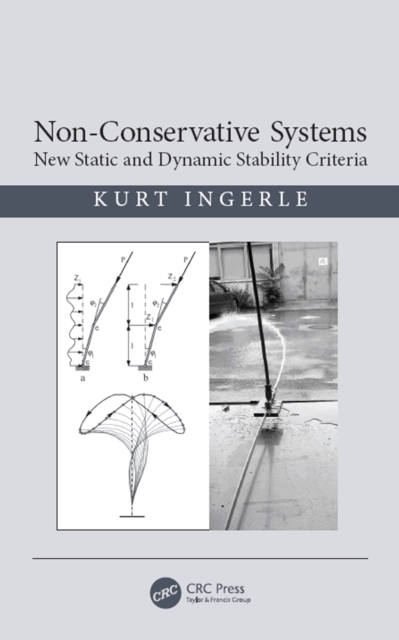
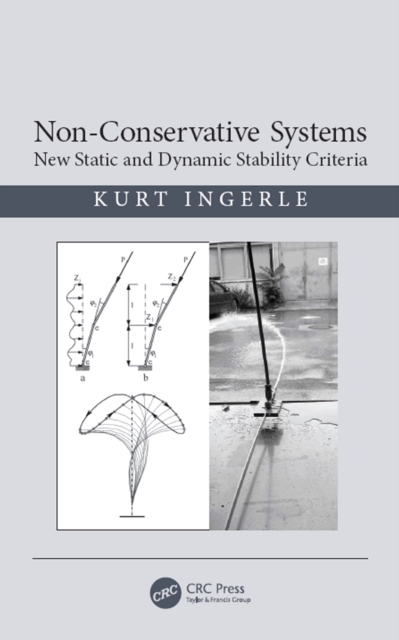
Non-Conservative Systems: New Static and Dynamic Stability Criteria summarizes the essential properties of non-conservative elastic systems (static stability and post-critical behavior), and the importance of novel stability criteria for such systems.
Non-Conservative Systems: New Static and Dynamic Stability Criteria summarizes the essential properties of non-conservative elastic systems (static stability and post-critical behavior), and the importance of novel stability criteria for such systems.
Amorphous-nanocrystalline alloys are a relatively new class of materials born from the rapid development of new technologies and different methods of producing amorphous and nanocrystalline powders and films, compacting, melt quenching, megaplastic deformation, implantation, laser, plasma, and other high-energy methods.
Amorphous-nanocrystalline alloys are a relatively new class of materials born from the rapid development of new technologies and different methods of producing amorphous and nanocrystalline powders and films, compacting, melt quenching, megaplastic deformation, implantation, laser, plasma, and other high-energy methods.
Vibration-based condition monitoring (VCM) is a well-accepted approach in industries for early detection of any defect, thereby triggering the maintenance process and ultimately reducing overheads and plant downtime.
Vibration-based condition monitoring (VCM) is a well-accepted approach in industries for early detection of any defect, thereby triggering the maintenance process and ultimately reducing overheads and plant downtime.
Nonlinear Analysis of Structures presents a complete evaluation of the nonlinear static and dynamic behavior of beams, rods, plates, trusses, frames, mechanisms, stiffened structures, sandwich plates, and shells.
Nonlinear Analysis of Structures presents a complete evaluation of the nonlinear static and dynamic behavior of beams, rods, plates, trusses, frames, mechanisms, stiffened structures, sandwich plates, and shells.
The monograph analyses the state of the art (problem) in using stone siftings and aspiration dust obtained in natural stone crushing for producing concrete aggregates and fillers for dry construction mixtures and mortars on their basis.
The monograph analyses the state of the art (problem) in using stone siftings and aspiration dust obtained in natural stone crushing for producing concrete aggregates and fillers for dry construction mixtures and mortars on their basis.
The effect of combined extreme transient loadings on a structure is not well understood-whether the source is man-made, such as an explosion and fire, or natural, such as an earthquake or extreme wind loading.
The effect of combined extreme transient loadings on a structure is not well understood-whether the source is man-made, such as an explosion and fire, or natural, such as an earthquake or extreme wind loading.