The need for advanced thermal management materials in electronic packaging has been widely recognized as thermal challenges become barriers to the electronic industry's ability to provide continued improvements in device and system performance.
Based on courses for students of science, engineering, and systems science at the Zurich University of Applied Sciences at Winterthur, this text approaches the fundamentals of thermodynamics from the point of view of continuum physics.
Modeling Multiphase Materials Processes: Gas-Liquid Systems describes the methodology and application of physical and mathematical modeling to multi-phase flow phenomena in materials processing.
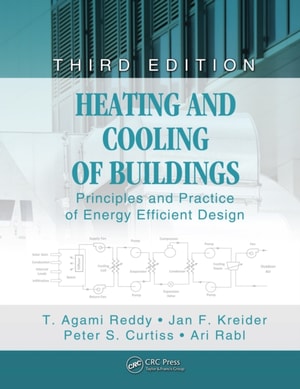
Heating and Cooling of Buildings: Principles and Practice of Energy Efficient Design, Third Edition is structured to provide a rigorous and comprehensive technical foundation and coverage to all the various elements inherent in the design of energy efficient and green buildings.
Since its publication more than 15 years ago, Heat Conduction Using Green's Functions has become the consummate heat conduction treatise from the perspective of Green's functions-and the newly revised Second Edition is poised to take its place.
Poised to dramatically impact human health, biomedical microsystems (bioMEMS) technologies incorporate various aspects from materials science, biology, chemistry, physics, medicine, and engineering.
As Computational Fluid Dynamics (CFD) and Computational Heat Transfer (CHT) evolve and become increasingly important in standard engineering design and analysis practice, users require a solid understanding of mechanics and numerical methods to make optimal use of available software.
Although computer technology has dramatically improved the analysis of complex transport phenomena, the methodology has yet to be effectively integrated into engineering curricula.
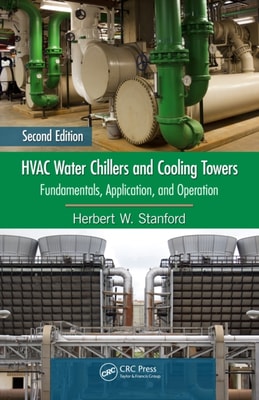
HVAC Water Chillers and Cooling Towers: Fundamentals, Application, and Operation, Second Edition explores the major improvements in recent years to many chiller and cooling tower components that have resulted in improved performance and lower operating costs.
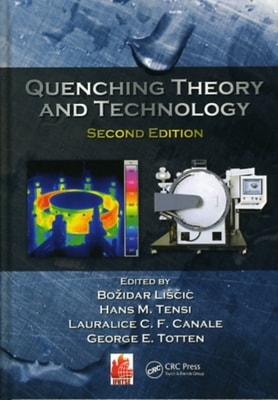
Quenching is one of the most fundamentally complex processes in the heat treatment of metals, and it is something on which mechanical properties and distortion of engineering components depend.
The first resource of its kind, this work compiles all of the latest testing techniques to serve as a comprehensive resource for those conducting tests in the field of industrial combustion.
Handbook of Fluid Dynamics offers balanced coverage of the three traditional areas of fluid dynamics-theoretical, computational, and experimental-complete with valuable appendices presenting the mathematics of fluid dynamics, tables of dimensionless numbers, and tables of the properties of gases and vapors.
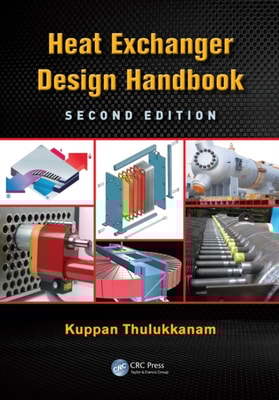
This comprehensive reference covers important aspects of heat exchangers (HEs): design and modes of operation and practical, large-scale applications in process, power, petroleum, transport, air conditioning, refrigeration, cryogenics, heat recovery, energy, and other industries.
The first two editions of Concise Chemical Thermodynamics proved to be a very popular introduction to a subject many undergraduate students perceive to be difficult due to the underlying mathematics.
Advanced Thermodynamics Engineering, Second Edition is designed for readers who need to understand and apply the engineering physics of thermodynamic concepts.
From fundamental concepts and theories to implementation protocols and cutting-edge applications, the Handbook of Mobile Systems Applications and Services supplies a complete examination of the evolution of mobile services technologies.
Definitive Treatment of the Numerical Simulation of Bioheat Transfer and Fluid FlowMotivated by the upwelling of current interest in subjects critical to human health, Advances in Numerical Heat Transfer, Volume 3 presents the latest information on bioheat and biofluid flow.
Emphasizing basic mass and energy balance principles, Chemical and Energy Process Engineering prepares the next generation of process engineers through an exemplary survey of energy process engineering, basic thermodynamics, and the analysis of energy efficiency.
Reflecting the developments in gas turbine combustion technology that have occurred in the last decade, Gas Turbine Combustion: Alternative Fuels and Emissions, Third Edition provides an up-to-date design manual and research reference on the design, manufacture, and operation of gas turbine combustors in applications ranging from aeronautical to po
The first resource of its kind, this work compiles all of the latest testing techniques to serve as a comprehensive resource for those conducting tests in the field of industrial combustion.
Illustrates Calculations Using Machine and Technological ProcessesThe conjugate heat transfer (CHT) problem addresses the thermal interaction between a body and fluid flowing over or through it.
Published nearly a decade ago, Fluid Machinery: Performance, Analysis, and Design quickly became popular with students, professors, and professionals because of its comprehensive and comprehensible introduction to the fluid mechanics of turbomachinery.
Two-phase nano- and micro-thermal control device research is now proving relevant to a growing range of modern applications, including those in cryogenics, thermal engineering, MEMS, and aerospace engineering.
The finite element method (FEM) is the dominant tool for numerical analysis in engineering, yet many engineers apply it without fully understanding all the principles.
Mass transfer along with separation processes is an area that is often quite challenging to master, as most volumes currently available complicate the learning by teaching mass transfer linked with heat transfer, rather than focusing on more relevant techniques.
"e;With the appearance and fast evolution of high performance materials, mechanical, chemical and process engineers cannot perform effectively without fluid processing knowledge.
As an increasing number of professionals and graduate students enter the field of solid-based power generation, they all require an command of process and equipment, as well as the theory behind it all.
Amidst tightening requirements for eliminating CFC's, HCFC's, halons, and HFC's from use in air conditioning and heat pumps, the search began for replacements that are environmentally benign, non-flammable, and similar to the banned refrigerants in system-level behavior.
The subject of special functions is rich and expanding continuously with the emergence of new problems encountered in engineering and applied science applications.
Hydrodynamics, Mass and Heat Transfer in Chemical Engineering contains a concise and systematic exposition of fundamental problems of hydrodynamics, heat and mass transfer, and physicochemical hydrodynamics, which constitute the theoretical basis of chemical engineering in science.
Models for the mechanical behavior of porous media introduced more than 50 years ago are still relied upon today, but more recent work shows that, in some cases, they may violate the laws of thermodynamics.
Because classical thermodynamics evolved into many branches of science and engineering, most undergraduate courses on the subject are taught from the perspective of each area of specialization.