This new book throws light on the use of nanoparticles as nanofertifilizers and details their prospective applications in agricultural science, including their use in minimizing the consequences of climate change, enhancing nutrient utilization efficiency, and achieving abiotic stress management.
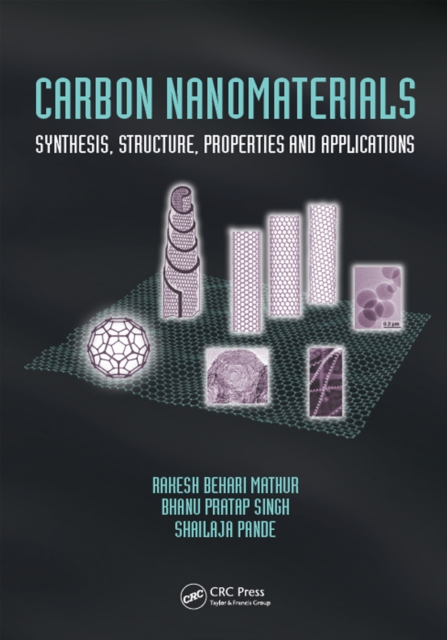
The Carbon Nanomaterials Sourcebook contains extensive, interdisciplinary coverage of carbon nanomaterials, encompassing the full scope of the field-from physics, chemistry, and materials science to molecular biology, engineering, and medicine-in two comprehensive volumes.
The theory and practice of the non-linear optics of silicon are inextricably linked with a variety of areas of solid state physics, particularly semiconductor physics.
The theory and practice of the non-linear optics of silicon are inextricably linked with a variety of areas of solid state physics, particularly semiconductor physics.
The study of nanostructures has become, in recent years, a theme common to many disciplines, in which scientists and engineers manipulate matter at the atomic and molecular level in order to obtain materials and systems with significantly improved properties.
Advances in Magnetic Materials: Processing, Properties, and Performance discusses recent developments of magnetic materials, including fabrication, characterization and applications in the aerospace, biomedical, and semiconductors industries.
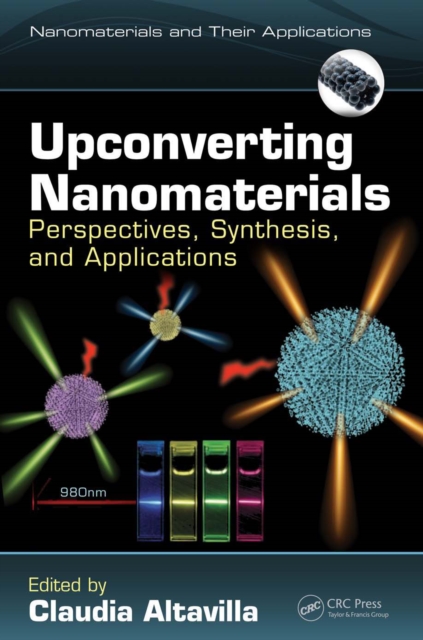
Upconverting Nanomaterials: Perspectives, Synthesis, and Applications serves as a powerful instrument that explores cutting-edge research knowledge on the topic of upconverting nanosystems, while simultaneously providing the necessary fundamental background for nonspecialist readers.
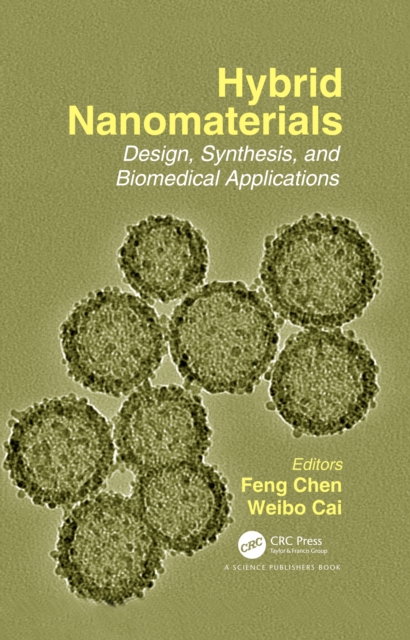
Over the last decade, an unprecedented expansion in the field of nanomedicine has resulted in the development of new nanomaterials for diagnosis and therapy of various diseases such as cancer.
Ongoing concerns regarding greenhouse gas-related environmental effects, energy security, and the rising costs of conventional energy sources has led to sustained interest and growth in solar energy in general, and photovoltaics in particular.
The manipulation and control of cells and sub-cellular structures through magnetic nanoparticle-based actuation is a relatively new technique that has led to novel and exciting biomedical applications.
Since the potential toxicity of silver nanoparticles (Ag NPs) has raised serious concerns in the biomaterials and biomedical engineering community, Silver Nanoparticles for Antibacterial Devices: Biocompatibility and Toxicity brings together the synthesis, the physicochemical properties and the biological actions of Ag NPs, as well as the clinical demands for fabricating antibacterial medical devices, discussing how to suppress the side effects of nanomaterials and how to impart to them the selective toxicity.
Contamination of aqueous environments by hazardous chemical compounds is the direct cause of the decline of safe clean water supply throughout the globe.
Diffractive Optics and Nanophotonics is devoted to achievements in diffractive optics, focusing on the creation of new nanophotonic components and devices, as well as instrumentation and available information technology.
In this new book, an interdisciplinary and international team of experts provides an exploration of the emerging plasma science that is poised to make the plasma technology a reality in the manufacturing sector.
A peek into the literature on the environmental health implications of the rapidly developing nanotechnology industry shows that the potential problem of exposure to airborne nanoparticles has not been adequately addressed.
This book deals with evolving intelligence systems and their use in immune algorithm (IM), particle swarm optimization (PSO), bacterial foraging (BF), and hybrid intelligent system to improve plants, robots, etc.
Nanomedicine can take advantage of the recent developments in nanobiotechnology research for the creation of platforms with superior drug carrier capabilities, selective responsiveness to the environment, unique contrast enhancement profiles, and improved accumulation at the disease site.
This might be the first book that deals mostly with the 3D technology computer-aided design (TCAD) simulations of major state-of-the-art stress- and strain-engineered advanced semiconductor devices: MOSFETs, BJTs, HBTs, nonclassical MOS devices, finFETs, silicon-germanium hetero-FETs, solar cells, power devices, and memory devices.
This book explores the potential of nanosystems as a multidisciplinary science with the aim of the design and development of smart sensing technologies using micro/nano electrodes and novel nanosensing material.
This important book presents a collection of scientific papers on recent theoretical and practical advances in nanostructures, nanomaterials, and nanotechnologies.
This important new book provides the fundamental understanding of the peptide and protein drug delivery systems with a special focus on their nanotechnology applications.
"e;The book reviews all the aspects of recent developments in research on skyrmions, from the presentation of the observation and characterization techniques to the description of physical properties and expected applications.
"e;The book reviews all the aspects of recent developments in research on skyrmions, from the presentation of the observation and characterization techniques to the description of physical properties and expected applications.
Understand the principles, practices, and applications of bionanotechnologyThis hands-on textbook covers key aspects of bionanotechnology from an engineering perspective.
Theoretical, computational, and experimental electromagnetic modeling and characterizationThis engineering and scientific handbook offers extensive coverage of electromagnetic modeling and characterization of composite materials from the theoretical, computational, and experimental points of view.
The expanding use of nanoparticles in a wide range of applications has brought to light the need to adopt an integrated approach regarding their synthesis, use, recovery and handling.
Nano particles have created a high interest in recent years by virtue of their unusual mechanical, electrical, optical and magnetic properties and find wide applications in all fields of engineering.
Commercializing Nanotechnology: A Roadmap to Taking Nanoproducts from Laboratory to Market provides a step-by-step roadmap for taking the results of laboratory research on nanotechnology and nanomaterials and developing them into successful and profitable commercial ventures.
Nanostructures for Antimicrobial Therapy discusses the pros and cons of the use of nanostructured materials in the prevention and eradication of infections, highlighting the efficient microbicidal effect of nanoparticles against antibiotic-resistant pathogens and biofilms.