Grapheneelectrolyte systems are commonly found in cutting-edge research on electrochemistry, biotechnology, nanoelectronics, energy storage, materials engineering, and chemical engineering.
This book summarizes the fundamental and established methods for the synthesis of nanoparticles, providing readers with an organized and comprehensive insight into the field of nanoparticle technology.
Emphasizing the static and dynamic behaviors of nanocomposite single- or multilayered structures in the framework of continuum mechanics-based approaches, Mechanics of Nanocomposites: Homogenization and Analysis investigates mechanical behaviors of polymeric matrices strengthened via various nanofillers and nanoparticles such as carbon nanotubes (CNTs), graphene platelets (GPLs), and graphene oxides (GOs).
Emphasizing the static and dynamic behaviors of nanocomposite single- or multilayered structures in the framework of continuum mechanics-based approaches, Mechanics of Nanocomposites: Homogenization and Analysis investigates mechanical behaviors of polymeric matrices strengthened via various nanofillers and nanoparticles such as carbon nanotubes (CNTs), graphene platelets (GPLs), and graphene oxides (GOs).
Nanostructured materials with multiple components and complex structures are the current focus of research and are expected to develop further for material designs in many applications in electrochemical, colloidal, medical, pharmaceutical, and several other fields.
Noble metal nanoparticles have attracted enormous scientific and technological interest because of their unique optical properties, which are related to surface plasmon resonances.
This book summarizes the results of studies of molecules and molecular complexes using techniques based on surface plasmon resonance (SPR) in a novel scientific direction called molecular plasmonics.
Noble metal nanoparticles have attracted enormous scientific and technological interest because of their unique optical properties, which are related to surface plasmon resonances.
This book summarizes the results of studies of molecules and molecular complexes using techniques based on surface plasmon resonance (SPR) in a novel scientific direction called molecular plasmonics.
Magnonics, a research field that uses spin waves, collective excitations of ordered magnetic materials, or magnons (their quanta) as a tool for signal processing, communication, and computation, has rapidly grown during the past decade because of the low-energy consumption and potential compatibility with next-generation circuits beyond CMOS electronics.
Magnonics, a research field that uses spin waves, collective excitations of ordered magnetic materials, or magnons (their quanta) as a tool for signal processing, communication, and computation, has rapidly grown during the past decade because of the low-energy consumption and potential compatibility with next-generation circuits beyond CMOS electronics.
Data science and machine learning (ML) methods are increasingly being used to transform the way research is being conducted in materials science to enable new discoveries and design new materials.
Data science and machine learning (ML) methods are increasingly being used to transform the way research is being conducted in materials science to enable new discoveries and design new materials.
The integration of microelectromechanical systems (MEMS) and nanotechnology (NT) in sensors and devices significantly reduces their weight, size, power consumption, and production costs.
In Mondo Nano Colin Milburn takes his readers on a playful expedition through the emerging landscape of nanotechnology, offering a light-hearted yet critical account of our high-tech world of fun and games.
Nanostructured materials are one of the highest profile classes of materials in science and engineering today, and will continue to be well into the future.
Ultrananocrystalline Diamond: Syntheses, Properties, and Applications is a unique practical reference handbook that brings together the basic science of nanoscale carbon structures, particularly its diamond phase, with detailed information on nanodiamond synthesis, properties, and applications.
The Foundations of Vacuum Coating Technology is a concise review of the developments that have led to the wide variety of applications of this technology.
A comprehensive guide to MEMS materials, technologies and manufacturing, examining the state of the art with a particular emphasis on current and future applications.
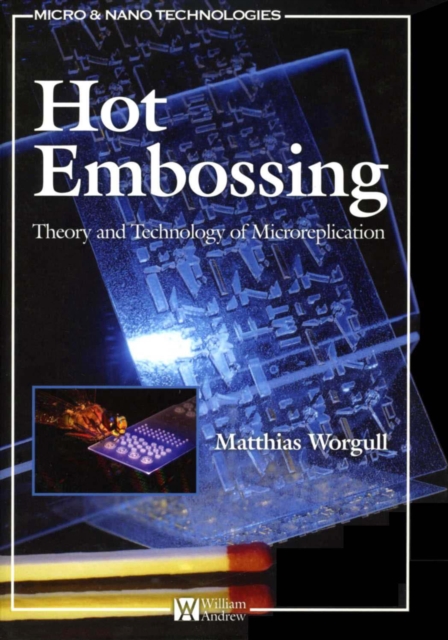
This book is an overview of replication technology for micro- and nanostructures, focusing on the techniques and technology of hot embossing, a scaleable and multi-purpose technology for the manufacture of devices such as BioMEMS and microfluidic devices which are expected to revolutionize a wide range of medical and industrial processes over the coming decade.
A comprehensive guide to MEMS materials, technologies and manufacturing, examining the state of the art with a particular emphasis on current and future applications.
Mesoporous silica comprehensively covers the importance and applications of mesoporous silica nanoparticles in the field of nanoscience and nanotechnology.
This book highlights the potential applications of microbots for minimally invasive diagnosis of colorectal cancer (CRC), enhancing the accuracy of colonoscopy and improving drug delivery for more precise and effective treatments.
The visionary science behind the digital human twins that will enhance our health and our futureVirtual You is a panoramic account of efforts by scientists around the world to build digital twins of human beings, from cells and tissues to organs and whole bodies.
Possibly the most impactful material in the nanotechnology arena, carbon nanotubes have spurred a tremendous amount of scientific research and development.
This book provides a comprehensive overview of the current state of the art in 2D MoS2 materials synthesis, properties, and mimics of various applications.
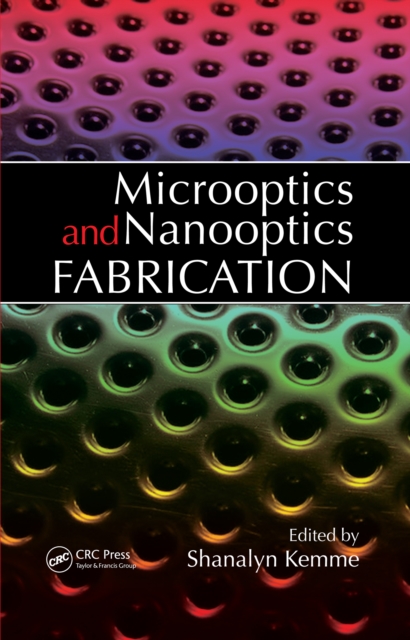
The deep interconnection between micro/nanooptical components and related fabrication technologies-and the constant changes in this ever-evolving field-means that successful design depends on the engineer's ability to accommodate cutting-edge theoretical developments in fabrication techniques and experimental realization.
The visionary science behind the digital human twins that will enhance our health and our futureVirtual You is a panoramic account of efforts by scientists around the world to build digital twins of human beings, from cells and tissues to organs and whole bodies.
This text on optics for graduate students explains how to determine material properties and parameters for inaccessible substrates and unknown films as well as how to measure extremely thin films.
A practical workbook that bridges the gap between theory and practice in the nanotechnology field Because nanosized particles possess unique properties, nanotechnology is rapidly becoming a major interest in engineering and science.
An authoritative, in-depth exploration of the environmental consequences of nanotechnology Nanotechnology is revolutionizing the chemical, telecom, biotech, pharmaceutical, health care, aerospace, and computer industries, among others, and many exciting new nanotech applications are envisioned for the near future.
In the first attempt to fully explore the controversial issues associated with the commercial application of nanotechnology, you'll find a thorough analysis of intellectual property and patents, financing and legal concerns, regulatory measures particularly in the field of nanomedicine, and environmental regulations.
Discussions of the basic structural, nanotechnology, and system engineering principles, as well as an introductory overview of essential concepts and methods in biotechnology, will be included.
The technology involved in lubrication by nanoparticles is a rapidly developing scientific area and one that has been watched with interest for the past ten years.
This issue contains 17 peer-reviewed (invited and contributed) papers covering various aspects and the latest developments related to processing, modeling and manufacturing technologies of nanoscaled materials including inorganic-organic nanocomposites, nanowire-based sensors, new generation photovoltaic cells, self-assembly of nanostructures, functional nanostructures for cell tracking and heterostructures.
The cutting-edge guide on advancing the science of molecular imaging using nanoparticles Nanoplathform-Based Molecular Imaging provides rationale for using nanoparticle-based probes for molecular imaging, then discusses general strategies for this underutilized, yet promising, technology.
Functionalized Inorganic Fluorides: Synthesis, Characterization & Properties of Nanostructured Solids covers several classes of nanostructured and functionalized inorganic fluorides, oxide-fluorides, and fluorinated oxides such as silica and alumina.