The Quantum Cellular Automaton (QCA) concept represents an attempt to break away from the traditional three-terminal device paradigm that has dominated digital computation.
This volume is concerned with functional nanomaterials: materials containing specific, predictable nanostructure whose chemical composition or interfacial structure enable them to perform a specific job - destroy, sequester or detect some material that constitutes an environmental threat.
Written by a leading nanobiologist actively involved at the forefront of the field both as a researcher and an educator, this book takes the reader from the fundamentals of nanobiology to the most advanced applications.
Materials development has reached a point where it is difficult for a single material to satisfy the needs of sophisticated applications in the modern world.
Combining engineering and medicine research projects with biological applications, the contributions in this volume constitute the efforts of both distinguished scientists and young investigators in various fields of biomedical engineering at Tohoku University, one of Japan's leading scientific research universities.
This novel book is the first comprehensive text on dynamical mean-field theory (DMFT), which has emerged over the past two decades as one of the most powerful new developments in many-body physics.
Quantum dot nano structures are interesting for applications in information technology and play a growing role in data storage, medical and biological applications.
This book is concerned with functional nanomaterials, materials containing specific, predictable nanostructures whose chemical composition, or interfacial structure enables them to perform a specific job: to destroy, sequester, or detect some material that constitutes an environmental threat.
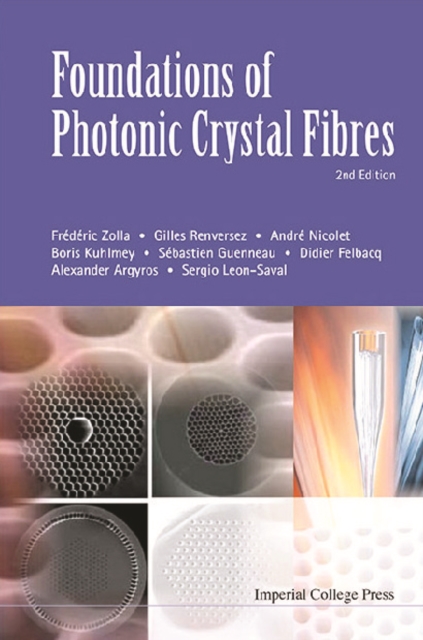
Photonic crystal nanostructures, whose photonic properties can be tuned in response to external stimuli, are desired for a wide range of applications in colour displays, biological and chemical sensors, and inks and paints.
Research into polymer nanofibers has increased significantly over the last decade, prompting the need for a comprehensive monograph examining the subject as knowledge of their properties and potential applications has increased.
Understanding the chemistry behind works of art and heritage materials presents an opportunity to apply scientific techniques to their conservation and restoration.
Chemically-modified carbon nanotubes (CNTs) exhibit a wide range of physical and chemical properties which makes them an attractive starting material for the preparation of super-strong and highly-conductive fibres and films.
This timely publication bridges and presents the latest trends and updates in three hot topics of current and future society: nanomaterials, energy and environment.
Many nanomaterials exhibit anti-microbial properties and demand for such materials grows as new applications are found in such areas as medicine, environmental science and specialised coatings.
There has been significant growth in the field of nanofluidics, where nanoscale analytical instruments employ micromachined features and are able to manipulate fluid samples with high precision and efficiency and have many advantages over their conventional (larger) analogues.
Naturally occurring or manufactured through chemical and/or physical processes, particulate materials are substances consisting of individual particles which have significance to the global economy, society and environments.
The manipulation of cells and microparticles within microfluidic systems using external forces is valuable for many microscale analytical and bioanalytical applications.
Polymer nanocomposites revolutionized research in the composites area by achieving the nanoscale dispersion of the inorganic filler (clay platelets) in the polymer matrices after suitable surface modifications of the filler phase.
This exciting new book is a unique compilation of data from a wide range of chemical and spectroscopic instrumentation and the integration of nanostructure characterisation drawn from physical, chemical, electrochemical, spectroscopic and electron microscopic measurements.
Magnetic composite particles offer much potential for use in a variety of applications, including manufacturing, environmental protection, microfluidics, microelectronics, and biomedicine.
This expanded and updated edition of the 2007 version introduces readers from various backgrounds to the rapidly growing interface between biology and nanotechnology.
Several books and many papers have been published during the last decade on the design and the use of new nanomaterials in medicine and technology, which describe major concepts of nanotechnology.
Recent developments in the field of nanotechnology have paved the way for lots of innovation in a number of industrial and consumer sectors, including food and food packaging.
The book gives a comprehensive up-to-date summary of the existing information on the structural/electronic properties, chemistry and catalytic properties of vanadium and molybdenum containing catalysts.