This book has been assembled with the hope of being an authoritative, comprehensive, conceptually sound and highly informative compilation of recent advances describing the concepts of bioengineering in the field of microbiology.
Reviews in Fluorescence 2017, the tenth volume of the book serial from Springer, serves as a comprehensive collection of current trends and emerging hot topics in the field of fluorescence and closely related disciplines, such as fluorescence based plasmonics.
This brief explores polysaccharides, the most abundant family of naturally occurring polymers, and explains how they have gained considerable attention in recent decades as a source of innovative bio-based materials.
This book presents synthesis techniques for the preparation of low-dimensional nanomaterials including 0D (quantum dots), 1D (nanowires, nanotubes) and 2D (thin films, few layers), as well as their potential applications in nanoelectronic systems.
This book offers a comprehensive treatment of nonlocal elasticity theory as applied to the prediction of the mechanical characteristics of various types of biological and non-biological nanoscopic structures with different morphologies and functional behaviour.
This book presents a thorough discussion of the physics, biology, chemistry and medicinal science behind a new and important area of materials science and engineering: polymer nanocomposites.
Les nanotechnologies recouvrent désormais un spectre très large d’activités fort différentes qui vont de l’électronique dernier cri aux nouvelles biotechnologies en passant par la conception de matériaux dits « intelligents ».
"e;Nanoparticles in Modern Neurological Treatment"e; provides a comprehensive exploration of the promising field of nanoparticles and their applications in neurology.
The must-read summary of Jack Uldrich and Deb Newberry's book: "e;The Next Big Thing Is Really Small: Nanotechnology and the Future of Big Business"e;.
This book covers environmental and economic waste treatment with resource recovery strategies covering mining, urban, agricultural, industrial, and sewage wastes.
The Quantum Cellular Automaton (QCA) concept represents an attempt to break away from the traditional three-terminal device paradigm that has dominated digital computation.
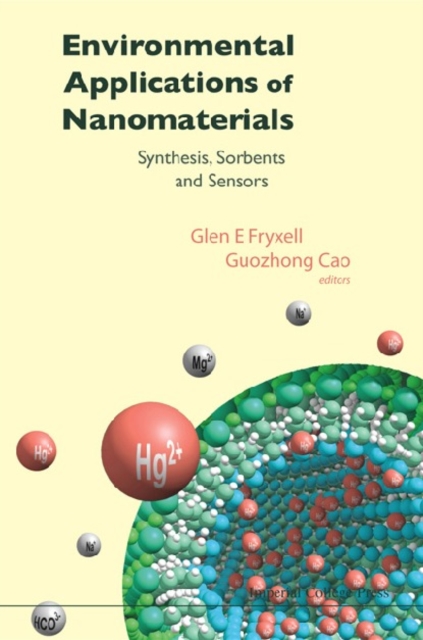
This volume is concerned with functional nanomaterials: materials containing specific, predictable nanostructure whose chemical composition or interfacial structure enable them to perform a specific job - destroy, sequester or detect some material that constitutes an environmental threat.
Written by a leading nanobiologist actively involved at the forefront of the field both as a researcher and an educator, this book takes the reader from the fundamentals of nanobiology to the most advanced applications.
Materials development has reached a point where it is difficult for a single material to satisfy the needs of sophisticated applications in the modern world.
Combining engineering and medicine research projects with biological applications, the contributions in this volume constitute the efforts of both distinguished scientists and young investigators in various fields of biomedical engineering at Tohoku University, one of Japan's leading scientific research universities.
This novel book is the first comprehensive text on dynamical mean-field theory (DMFT), which has emerged over the past two decades as one of the most powerful new developments in many-body physics.
Quantum dot nano structures are interesting for applications in information technology and play a growing role in data storage, medical and biological applications.
This book is concerned with functional nanomaterials, materials containing specific, predictable nanostructures whose chemical composition, or interfacial structure enables them to perform a specific job: to destroy, sequester, or detect some material that constitutes an environmental threat.
Photonic crystal nanostructures, whose photonic properties can be tuned in response to external stimuli, are desired for a wide range of applications in colour displays, biological and chemical sensors, and inks and paints.
Research into polymer nanofibers has increased significantly over the last decade, prompting the need for a comprehensive monograph examining the subject as knowledge of their properties and potential applications has increased.
Understanding the chemistry behind works of art and heritage materials presents an opportunity to apply scientific techniques to their conservation and restoration.
Chemically-modified carbon nanotubes (CNTs) exhibit a wide range of physical and chemical properties which makes them an attractive starting material for the preparation of super-strong and highly-conductive fibres and films.
This timely publication bridges and presents the latest trends and updates in three hot topics of current and future society: nanomaterials, energy and environment.
This book provides a critical overview of the advances being made towards overcoming biological barriers through the contribution of nanosciences and nanotechnologies.
High-surface-area materials have recently attracted significant interest due to potential applications in various fields such as electrochemistry and catalysis, gas-phase catalysis, optics, sensors and actuators, energy harvesting and storage.