Geometrical tolerancing is the standard technique that designers and engineers use to specify and control the form, location and orientation of the features of components and manufactured parts.
In human factors and ergonomics, professionals play a key role in shaping the compatibility between tasks, products, and environments with the needs of individuals.
Covering theory and practical industry usage of the finite element method, this highly-illustrated step-by-step approach thoroughly introduces methods using ANSYS.
This book introduces Vision Zero, a commitment to create workplaces free from serious accidents, harm and work- related diseases while delivering excellence in Safety, Health and Wellbeing (SHW).
Understanding workplace health and safety can be a minefield and considering how the human can be placed at the heart of it adds another level of complexity to task that already has many factors.
This book gathers original peer-reviewed papers reporting on innovative methods and tools in design, modeling, simulation and optimization, and their applications in engineering design, manufacturing, and other relevant industrial sectors.
PRACTICAL, PROVEN METHODS FOR WOOD FAILURE ANALYSISWritten by an expert in the field, this authoritative resource presents tested techniques for conducting in-depth, professional investigations of failures involving wood and wood-based products.
Understanding workplace health and safety can be a minefield and considering how the human can be placed at the heart of it adds another level of complexity to task that already has many factors.
In the current age of automation, there is a growing opportunity to connect design and manufacturing into a single workflow that harnesses industrial tools such as robots and brings their efficiencies to vulnerable building sites within the conservation of cultural heritage.
For the first time in history, the most powerful artificial intelligence (AI) works through language itself: The same medium humans use to think and communicate.
In the current age of automation, there is a growing opportunity to connect design and manufacturing into a single workflow that harnesses industrial tools such as robots and brings their efficiencies to vulnerable building sites within the conservation of cultural heritage.
For the first time in history, the most powerful artificial intelligence (AI) works through language itself: The same medium humans use to think and communicate.
The vision of HEPS is represented by the bridge connecting the past and future of healthcare services, as well as ergonomists and clinicians, patients and providers.
This text provides a comprehensive and authoritative introduction to the burgeoning discipline of Human-Computer Interaction for students, academics, and those from industry who wish to know more about the subject.
The vision of HEPS is represented by the bridge connecting the past and future of healthcare services, as well as ergonomists and clinicians, patients and providers.
This text provides a comprehensive and authoritative introduction to the burgeoning discipline of Human-Computer Interaction for students, academics, and those from industry who wish to know more about the subject.
This book aims to mainstream UI/UX design process by explaining latest AI/ML models in a comprehensible way and highlighting case studies on developing intelligent user interfaces for XR systems, human robot interaction, cockpit design and trajectory prediction.
This book aims to mainstream UI/UX design process by explaining latest AI/ML models in a comprehensible way and highlighting case studies on developing intelligent user interfaces for XR systems, human robot interaction, cockpit design and trajectory prediction.
The revised edition of Dr Chang's textbook showcases the dynamic evolution of the engineering management field, driven by recent advancements in artificial intelligence (AI), digital technologies, and shifts in engineering management practices defined by changes in social and economic landscapes.
The revised edition of Dr Chang's textbook showcases the dynamic evolution of the engineering management field, driven by recent advancements in artificial intelligence (AI), digital technologies, and shifts in engineering management practices defined by changes in social and economic landscapes.
Whenever automation is introduced to control real-time activities or processes, the role of the human changes from being a manual controller to being a supervisory controller.
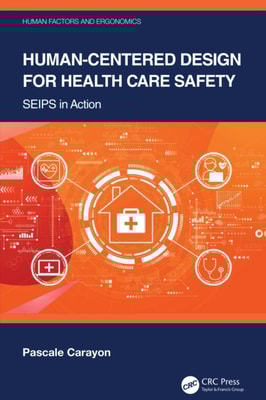
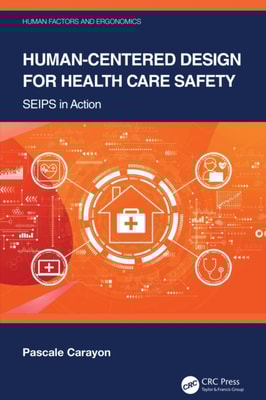
Human-Centered Design for Health Care Safety describes a conceptual framework (SEIPS or Systems Engineering Initiative for Patient Safety) based on the Human Factors and Ergonomics (HFE) discipline and associated human-centered design (HCD) approaches and methods that can help to create innovative solutions for enhancing health care safety.
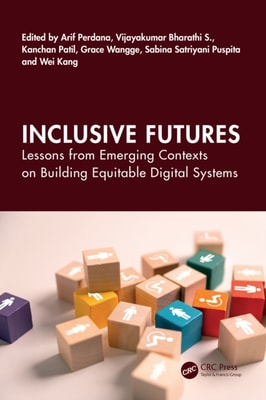
Emerging markets and emerging design approaches both present unique challenges for designing products and services, such as design inclusivity, cultural differences, the impact of new technology such as AI, care for the planet and evolving consumer needs.
Designing for Kids helps design students and professionals dive deeply into building a child-centered design practice, providing them with the knowledge, skills, and tools to create products with a positive impact on child development, learning, play, and well-being.
Emerging markets and emerging design approaches both present unique challenges for designing products and services, such as design inclusivity, cultural differences, the impact of new technology such as AI, care for the planet and evolving consumer needs.
Whenever automation is introduced to control real-time activities or processes, the role of the human changes from being a manual controller to being a supervisory controller.
Designing for Kids helps design students and professionals dive deeply into building a child-centered design practice, providing them with the knowledge, skills, and tools to create products with a positive impact on child development, learning, play, and well-being.
Human-Centered Design for Health Care Safety describes a conceptual framework (SEIPS or Systems Engineering Initiative for Patient Safety) based on the Human Factors and Ergonomics (HFE) discipline and associated human-centered design (HCD) approaches and methods that can help to create innovative solutions for enhancing health care safety.
The global crisis of road traffic fatalities and injuries has remained an ongoing challenge, plagued by inconsistent estimation methods, data gaps, and underreporting.
The global crisis of road traffic fatalities and injuries has remained an ongoing challenge, plagued by inconsistent estimation methods, data gaps, and underreporting.