A complete reference to adaptive control of systems with nonsmooth industrial nonlinearities such as: backlash; dead-zones; component failure; friction; hysteresis; saturation; and time delays.
Laser Material Processing (2nd ed) by William M Steen is an updated and expanded version of the original which sold very well with reprints in 1994 and 1996.
The aIm of the first two German editions of our book Kon- struktionslehre (Engineering Design) was to present a comprehensive, consistent and clear approach to systematic engineering design.
The readers of the book Just Technology: The Quest for Cultural, Economic, Environmental, and Technical Sustainability, Second Edition of will benefit from its systematic approach in evaluating the true sustainability challenges facing society and will learn how to address these challenges in a just manner.
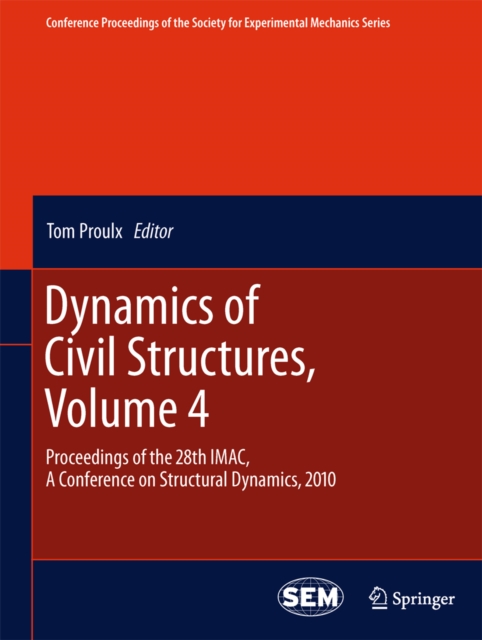
This the fourth volume of five from the 28th IMAC on Structural Dynamics and Renewable Energy, 2010, brings together 29 chapters on the Dynamics of Civil Structures.
This the fifth volume of five from the 28th IMAC on Structural Dynamics and Renewable Energy, 2010, brings together 19 chapters on the Dynamics of Bridges.
E-Manufacturing: Business Paradigms and Supporting Technologies opens with a set of interesting selections from invited authors, covering perspectives such as concurrent engineering in product and process design, the tools needed to deal with people, relationships and networks, enterprise networking in Europe.
Shows why plastics, in aggregate, have become a toxin to humans, wildlife, and the planet, and proposes novel solutions that involve neither traditional recycling nor giving up plastic.
A complete introduction to the field, Ergonomics: Foundational Principles, Applications and Technologies discusses scientific principles, research, applications, and emerging trends in technology.
Human factors and ergonomics have made considerable contributions to the research, design, development, operation and analysis of transportation systems and their complementary infrastructure.
Based on recent research, this book discusses physical ergonomics, which is concerned with human anatomical, anthropometric, physiological and biomechanical characteristics as they relate to physical activity.
Meeting the needs of the manufacturing and service sectors of contemporary industry, this volume is concerned with the human factors, ergonomics, and safety issues related to the design of products, processes, and systems, as well as the operation and management of business enterprises.
If there is any one element to the engineering of service systems that is unique, it is the extent to which the suitability of the system for human use, human service, and excellent human experience has been and must always be considered.
An in depth review of social ergonomics- also known as organizational ergonomics- this book discusses the optimization of sociotechnical systems, including their organizational structures, policies, and processes.
Real-world examples and hands-on experience are invaluable resources when learning how to use new methods and tools, whether in training or in a classroom.
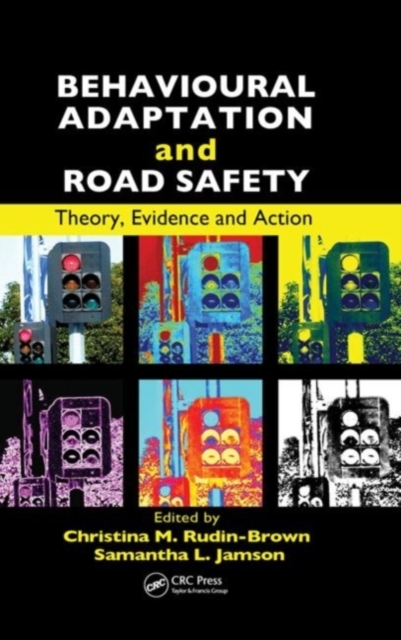
Despite being an accepted construct in traffic and transport psychology, the precise nature of behavioural adaptation, including its causes and consequences, has not yet been established within the road safety community.
During day-to-day use, thousands of lives are lost each year due to accidents, directly or indirectly, resulting from poor transportation system reliability and safety.
Edited by Jussi Kantola, the founding faculty member of the world's first university Knowledge Service Engineering Department at Korea Advanced Institute of Science and Technology, and Waldemar Karwowski from the Department of Industrial Engineering and Management Systems at UCF, Knowledge Service Engineering Handbook defines what knowledge services engineering means and how it is different from service engineering and service production.
In the last decade, the number of complex problems facing engineers has increased, and the technical knowledge required to address and mitigate them continues to evolve rapidly.
A collection of works authored by leading scientists from the US and Russia, Human-Computer Interaction and Operators' Performance: Optimizing Work Design with Activity Theory describes applied and systemic-structural activity theory as it is used to study human-computer interaction, aviation, design, and training.
Taking the field of human factors and ergonomics beyond state of the art, this volume focuses on advances in the use of ergonomics modeling and on the evaluation of usability, a critical aspect of any human-technology system.
Combining emerging concepts, theories, and applications of human factors knowledge, this volume focuses on discovery and understanding of human performance issues in complex systems, including recent advances in neural basis of human behavior at work (i.
This volume is concerned with the human factors, ergonomics, and safety issues related to the design of products, processes, and systems, as well as operation and management of business enterprises in both manufacturing and service sectors of contemporary industry.
When confronted with a fire protection problem, building management is often desperately short on information and know-how in this critical component of protection for their own facility.
Unlike most engineers, system engineers focus on the knowledge base needed to develop good systems in a cross-functional fashion rather than deeply on isolated topics.
In the real world the dynamic behavior of a real machine presents either unforeseen or limiting phenomena: both are undesired, and can be therefore be classified as parasitic phenomena- unwanted, unforeseen, or limiting behaviors.
Although speech is the most natural form of communication between humans, most people find using speech to communicate with machines anything but natural.