An illustrated account of the development and action-packed service history of the Jaguar attack jet, featuring first-hand accounts from the pilots that flew it into combat.
On July 25, 2010, Arnold Ebneter flew across the country in a plane he designed and built himself, setting an aviation world record for aircraft of its class.
A rigorous introduction to the theory and applications of state estimation and association, an important area in aerospace, electronics, and defense industries.
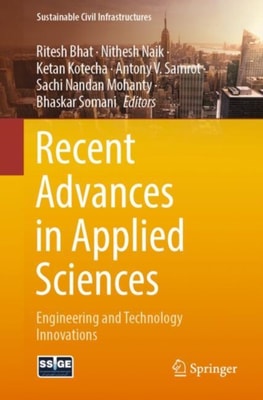
This book commences with an editorial overview, providing a comprehensive introduction to the current landscape and future prospects in engineering and technology.
An illustrated account of the clashes between RAF Fighter Command's Hurricane and Spitfire and the Luftwaffe's Ju 87 Stuka in the skies over France, the Channel and southern England.
This book deals with the basics of parameter estimation and state estimation as the fundamental building blocks of mathematical modelling activity in the broader field of control theory.
The definitive account of the rise and fall of the iconic Concorde plane from British Airways' former Chief Concorde Pilot'A remarkable story' DAILY EXPRESS'A stonking good read' FLYER_________What's it like to fly faster than a bullet?
Discover the exhilarating first-hand account of one man's white-knuckle life as a fighter pilot with the Royal Navy Sea Harriers'Searingly honest, keenly observed, well written and extremely funny' RAF NEWS'Puts you in the cockpit for carrier landings, missile firings and some of the most intense close air support stories imaginable' MIKE SUTTON____________Few have what it takes to be a fighter pilot.
This book highlights stories of the most important 13 ground-based observatories and 14 space probes in human history, leading readers through each significant step of human's astronomical observation journey.
Vaughan unveils the complicated and high-pressure world of air traffic controllers as they navigate technology and political and public climates, and shows how they keep the skies so safe.
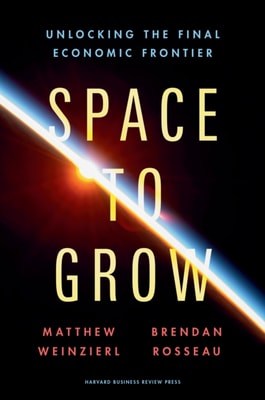
Your guideusing the compelling stories of changemakers and the tools of economicsto the transformation and future possibilities of the business and economics of space.
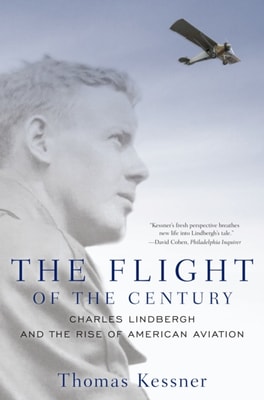
In late May 1927 an inexperienced and unassuming 25-year-old Air Mail pilot from rural Minnesota stunned the world by making the first non-stop transatlantic flight.
In late May 1927 an inexperienced and unassuming 25-year-old Air Mail pilot from rural Minnesota stunned the world by making the first non-stop transatlantic flight.
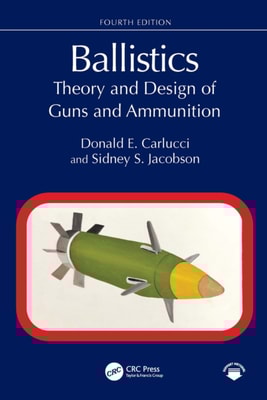
Ballistics examines the analytical and computational tools for predicting a weapon's behavior in terms of pressure, stress, and velocity, demonstrating their applications in ammunition and weapons design.
This book stems from the worrying scale and intensity of conflicts, humanitarian crises, and human rights violations around the world, which can be seen in a wide range of global hotspots including Venezuela, Yemen, Syria, Myanmar, Sudan, Eritrea, and numerous others.
This book gathers the outcomes of the second ECCOMAS CM3 Conference series on transport, which addressed the main challenges and opportunities that computation and big data represent for transport and mobility in the automotive, logistics, aeronautics and marine-maritime fields.
Fundamentals of Aeroacoustics with Applications to Aeropropulsion Systems from the Shanghai Jiao Tong University Press Aerospace series, is the go-to reference on the topic, providing a modern take on the fundamental theory and applications relating to prediction and control of all major noise sources in aeropropulsion systems.
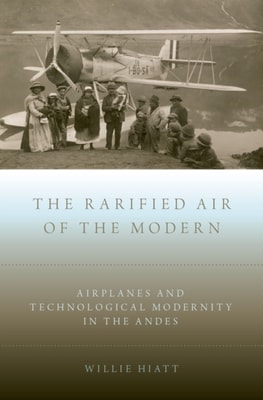
From the moment news reached Peru in 1910 that Jorge Chavez Dartnell, a pilot of Peruvian parentage, had become the first man to fly across the Alps, aviation fired the imagination of the masses in his home country.
From the moment news reached Peru in 1910 that Jorge Chavez Dartnell, a pilot of Peruvian parentage, had become the first man to fly across the Alps, aviation fired the imagination of the masses in his home country.
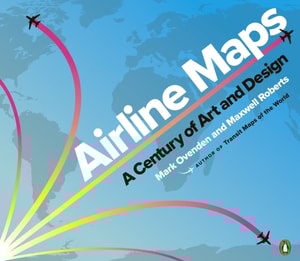
In this gorgeously illustrated collection of airline route maps, Mark Ovenden and Maxwell Roberts look to the skies and transport readers to another time.
As spinning is still involved in around 60% of all aircraft accidents (BFU, 1985 and Belcastro, 2009), this aerodynamic phenomenon is still not fully understood.
Accelerated testing (most types of laboratory testing, proving ground testing, intensive field/flight testing, any experimental research) is increasingly a key component for predicting of product's/process performance.
Advanced Distributed Consensus for Multiagent Systems contributes to the further development of advanced distributed consensus methods for different classes of multiagent methods.
Electrostatic Dust Mitigation and Manipulation Techniques for Planetary Dust explains how to control and remove dust in space due to the presence of a vacuum, abrasiveness of dust particles and electrostatic charge on particles.
Bistatic Synthetic Aperture Radar covers bistatic SAR in a comprehensive way, presenting theory, method and techniques, as well as the most recent research and near-future applications.
The ground segment is the fundamental backbone of every satellite project, yet it is usually not visible to the public or the end user of a satellite service.
The two-volume Structural Dynamics Fundamentals and Advanced Applications is a comprehensive work that encompasses the fundamentals of structural dynamics and vibration analysis, as well as advanced applications used on extremely large and complex systems.
The two-volume work, Structural Dynamics Fundamentals and Advanced Applications, is a comprehensive work that encompasses the fundamentals of structural dynamics and vibration analysis, as well as advanced applications used on extremely large and complex systems.
This book reports on the state of the art in the field of aerial-aquatic locomotion, focusing on the main challenges concerning the translation of this important ability from nature to synthetic systems, and describing innovative engineering solutions that have been applied in practice by the authors at the Aerial Robotics Lab of Imperial College London.
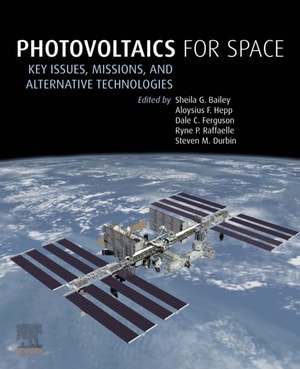
The solutions to technical challenges posed by flight and space exploration tend to be multidimensional, multifunctional, and increasingly focused on the interaction of systems and their environment.