Developments in the Analysis and Design of Marine Structures is a collection of papers presented at MARSTRUCT 2021, the 8th International Conference on Marine Structures (by remote transmission, 7-9 June 2021, organised by the Department of Marine Technology of the Norwegian University of Science and Technology, Trondheim, Norway), and is essential reading for academics, engineers and professionals involved in the design of marine and offshore structures.
When combined with artificial intelligence, advanced computing architectures and enhanced communications, sensor technologies can monitor vessel performance and the adjacent environment to detect conditions that may hinder voyage completion.
This set of two volumes comprises the collection of the papers presented at the 5th International Conference on Maritime Technology and Engineering (MARTECH 2020) that was held in Lisbon, Portugal, from 16 to 19 November 2020.
This set of two volumes comprises the collection of the papers presented at the 5th International Conference on Maritime Technology and Engineering (MARTECH 2020) that was held in Lisbon, Portugal, from 16 to 19 November 2020.
This set of two volumes comprises the collection of the papers presented at the 5th International Conference on Maritime Technology and Engineering (MARTECH 2020) that was held in Lisbon, Portugal, from 16 to 19 November 2020.
This set of two volumes comprises the collection of the papers presented at the 5th International Conference on Maritime Technology and Engineering (MARTECH 2020) that was held in Lisbon, Portugal, from 16 to 19 November 2020.
Ship Management: Theory and Practice unpacks the complexity of this crucial maritime activity by spelling out its key elements and the connections and linkages between them.
Ship Management: Theory and Practice unpacks the complexity of this crucial maritime activity by spelling out its key elements and the connections and linkages between them.
Smart shipping is a future method for transporting ocean cargo and exploring the resources of oceans for medical drugs, food, energy resources, and other products.
Smart shipping is a future method for transporting ocean cargo and exploring the resources of oceans for medical drugs, food, energy resources, and other products.
Shipbuilding in the United Kingdom provides a systematic historical account of the British Shipbuilders Corporation, first looking at this major industry under private enterprise, then under state control, and finally back in private hands.
Shipbuilding in the United Kingdom provides a systematic historical account of the British Shipbuilders Corporation, first looking at this major industry under private enterprise, then under state control, and finally back in private hands.
This book includes original and peer-reviewed research papers presented at 11th International Conference on Coastal and Ocean Engineering, which was held during August 9-11, 2024.
Dynamic Positioning for Engineers enables the reader to acquire the basic knowledge of the concepts and understanding of the dynamic positioning (DP) system from the systems perspective.
Dynamic Positioning for Engineers enables the reader to acquire the basic knowledge of the concepts and understanding of the dynamic positioning (DP) system from the systems perspective.
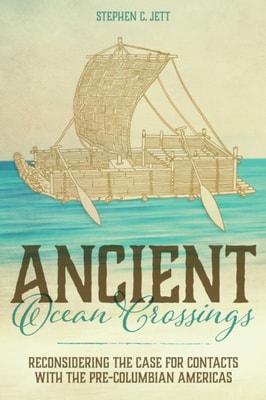
Paints a compelling picture of impressive pre-Columbian cultures and Old World civilizations that, contrary to many prevailing notions, were not isolated from one another In Ancient Ocean Crossings: Reconsidering the Case for Contacts with the Pre-Columbian Americas, Stephen Jett encourages readers to reevaluate the common belief that there was no significant interchange between the chiefdoms and civilizations of Eurasia and Africa and peoples who occupied the alleged terra incognita beyond the great oceans.
The inadvertent transfer of harmful aquatic organisms and pathogens in the ballast water of ships has been determined to have caused a significant adverse impact to many of the world's coastal regions.
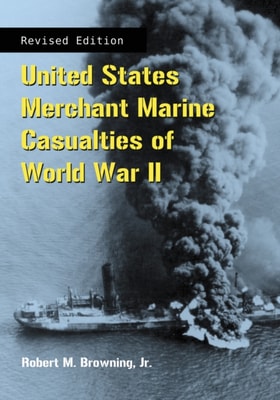
World War II's naval battles between the United States and Japan have been the subject of many books, popular movies, and documentaries, but the very important story of the fighting between United States and Japanese aircraft carriers is often lost in broader discussions of the Pacific naval war.
Fresh from success in sinking the Albermarle in the Civil War, the young Captain Cushing was assigned to command the gunboat USS Maumee in Hong Kong to aid the restoration of America's naval power in Asia.
Up and down the Eastern seaboard during the 1850s, American shipyards constructed numerous large wooden merchant sailing vessels that formed the backbone of the commercial shipping industry.
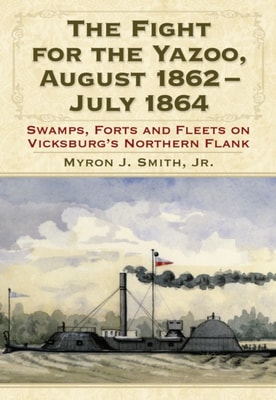
Following the loss of the CSS Arkansas in early August 1862, Union and Confederate eyes turned to the Yazoo River, which formed the developing northern flank for the South's fortress at Vicksburg, Mississippi.
The availability of inexpensive steel, so crucial to the United States' emergence as a leading industrial power in the late nineteenth century, relied upon the rise of an ore transport system on the Great Lakes that would feed American industry as a whole and come to alter the face of the region.
World War II's naval battles between the United States and Japan have been the subject of many books, popular movies, and documentaries, but the very important story of the fighting between United States and Japanese aircraft carriers is often lost in broader discussions of the Pacific naval war.
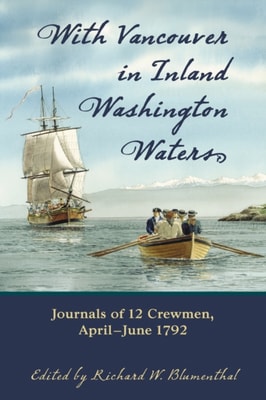
Picking up the narrative from his earlier volume, The Early Exploration of Inland Washington Waters: Journals and Logs from Six Expeditions, 1786-1792, Richard Blumenthal once again offers the reader a fascinating, firsthand look at the Northwest's earliest maritime history.
While the Monitor and Merrimack are the most famous of the Civil War ironclads, the Confederacy had another ship in its flotilla that carried high hopes and a metal hull.
This analysis of naval engagements during the War Between the States presents the action from the efforts at Fort Sumter during the secession of South Carolina in 1860, through the battles in the Gulf of Mexico, on the Mississippi River, and along the eastern seaboard, to the final attack at Fort Fisher on the coast of North Carolina in January 1865.
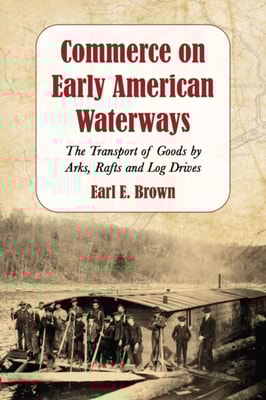
Colonial pioneers began entering the logging and forestry industries in great numbers along the Allegheny and Appalachian mountains during the late 1700s and were soon producing more products than they could use.
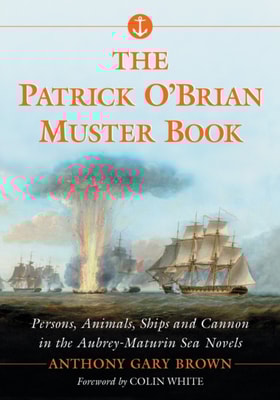
Now in its second edition, this expanded work catalogs every person, animal, ship and cannon mentioned by name in the 21 books of Patrick O'Brian's series on the maritime adventures of Jack Aubrey and Stephen Maturin.
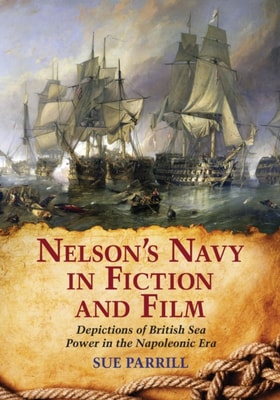
This book provides summaries and analyses of more than 250 novels and nearly 30 films and examines the extent to which they accurately reflect the history, mores and manners of the period--and the extent to which they reveal the ideas and attitudes of their authors and of the periods in which they were written.
Between the last battle fought entirely under oars in 1571 and the first fought entirely under steam in 1866, naval warfare in the Middle Seas and adjacent Atlantic waters was dominated by the sailing warship.
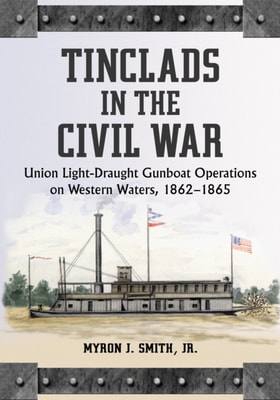
Once the Union Army gained control of the upper rivers of the Mississippi Valley during the first half of 1862, slow and heavy ironclads proved ineffective in patrolling the waters.