This book emphasizes the important message that architects and structural engineers must strive to ensure that the buildings they design and construct should not be major contributors to climate change.
This book examines what seems to be the basic challenge in neuroscience today: understanding how experience generated by the human brain is related to the physical world we live in.
This book examines ways of saving energy by using green roofs and facades, solar devices such as building-integrated photovoltaics (BIPV), and thermal solar panels, as components of energy-efficient building envelopes.
The book explores how architectural, engineering and construction (AEC) firms have been adapting and changing to effectively address key environmental challenges, focusing on Life Cycle Thinking and related methodologies (Life Cycle Assessments and Life Cycle Costing).
This book provides the first comparative assessment of the energy-efficiency retrofit programs in the social housing sector of Canadian cities, focusing on program efficiency and effectiveness.
This book addresses the main challenges in implementing the concepts that aim to replace the regular fossil-fuels based energy pattern with the novel energy pattern relying on renewable energy.
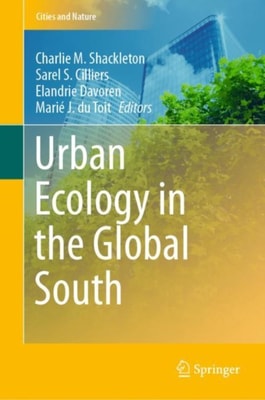
Against the background of unprecedented rates of urbanisation in the Global South, leading to massive social, economic and environmental transformations, this book engages with the dire need to understand the ecology of such settings as the foundation for fostering sustainable and resilient human settlements in contexts that are very different to the Global North.
This book brings together technical expertise, best practices, case studies and ground-level application of the ideas for empowering the rural population of the world to live economically prosperous, environmentally sustainable, and socially progressive lives, on par or comparable with the quality of life enjoyed by the global urban population.
This book covers the important aspects of greenery in buildings, both in the landscape and within buildings, examining how greenery improves comfort and appeal in sustainable buildings.
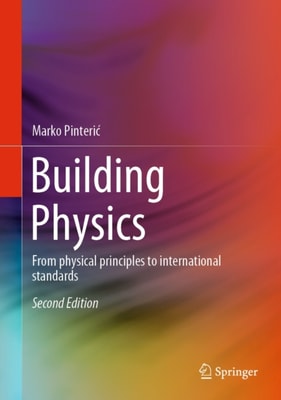
This book offers a comprehensive presentation of the most important phenomena in building physics: heat transfer, moisture/humidity, sound/acoustics and illumination.
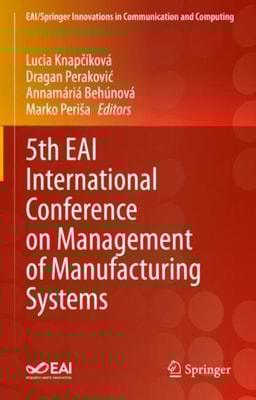
The book presents the proceedings of the 5th EAI International Conference on Management of Manufacturing Systems (MMS 2020), which took place online on October 27-29, 2020.
This book provides a comprehensive, systematic overview of original theoretical, experimental, and numerical studies in the building services engineering domain.
This book includes the proceedings of the Sustaining Tomorrow 2020 symposium and summit which bring together research from experts in academia, industry, and policy arenas to uncover the challenges and to forge solutions to sustain tomorrow.
This book is about the optimization of the characterization of the thermal properties of building envelopes, through experimental tests and the use of artificial intelligence.
This book proposes strategies for FM services optimization and innovation, based on innovative models of IoT application and big data management within FM processes, able to support FM stakeholders in: orienting and managing big data flows and their sources (sensor, RFID, etc.
This book focuses on holistic approaches to sustainability in all sectors of building, infrastructure, and energy to achieve a best-balanced global energy, building, infrastructure, transportation, and water technology (EBITW) system using a series of innovative research and implementation solutions.
This book provides a collection of recent research works, related to structural stability and durability, service life, reinforced concrete structures, recycled materials, and sustainability with endogenic materials.
This book begins with an introduction describing current societal transformations that merit new urban designs, including depletion of non-renewable natural resources, elevated levels of greenhouse gas emissions, large numbers of aging "e;Baby Boomers,"e; and climate change.
This book highlights progress towards the capture, storage, and utilization of energy through the development of advanced materials and systems based on abundant elements, materials, and commodities.
In this book, the author tests a regenerative-adaptive pattern language theory towards investigating the possibilities of a holistic, integrated design and planning method for sustainable development that incorporates the principles of regenerative design, as well as an adaptive pattern language that re-establishes our wholeness with nature, and considers the vulnerabilities of a changing landscape.
This book gathers the latest advances, innovations, and applications in the field of information technology in civil and building engineering, presented at the 18th International Conference on Computing in Civil and Building Engineering (ICCCBE), Sao Paulo, Brazil, August 18-20, 2020.
Smart Technologies and Design for Healthy Built Environment connects smart technology to a healthy built environmentthat builds upon the sustainable building movement.
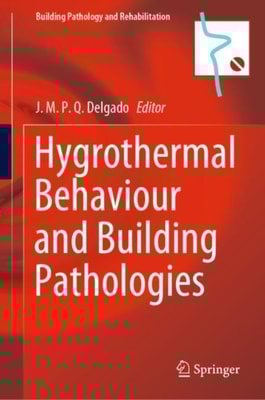
This book presents recent research in the area of construction pathology, hygrothermal behaviour of buildings, service life and diagnostic techniques, and highlights the latest developments in building physics, hygrothermal behaviour, durability and numerical models applied to building materials analysis.
This book draws on important original transdisciplinary research to address a wide range of issues relating to the remodeling of existing schools for pre-teenagers to fit them to various novel teaching models (e.
This book discusses sustainable housing issues in urban areas throughout the Global South, revealing their complexity in terms of urban dynamics, housing markets and human interactions with the environment.
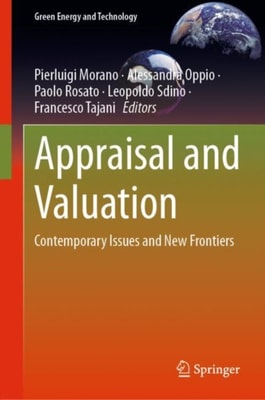
This book features a selection of the best papers presented at two recent conferences organized by the SIEV (Italian Society of Appraisal and Valuation).
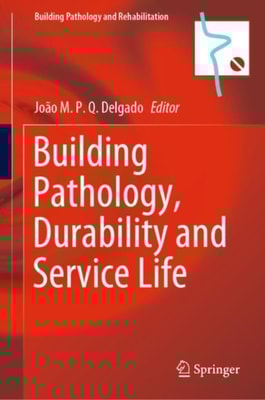
This book provides a collection of recent research works, helping contribute to the systematization and dissemination of the latest findings on building pathologies (structural and hygrothermal), salt attack and corrosion, durability and service-life prediction.
This proceedings of the 13th World Congress on Engineering Asset Management covers a range of topics that are timely, relevant and practically important in the modern digital era towards safer, cost effective, efficient, and secure engineered assets such as production and manufacturing plants, process facilities, civil structures, equipment, machinery, and infrastructure.
This book presents a selection of recent research works that provide best practice solutions, case studies and practical advice on the implementation of sustainable construction techniques.