This book examines the best available empirical evidence regarding one of the most challenging and pervasive questions throughout ages, cultures, and religions: the survival of human consciousness after death.
A major new theory of why human intelligence has not evolved in other speciesThe Human Evolutionary Transition offers a unified view of the evolution of intelligence, presenting a bold and provocative new account of how animals and humans have followed two powerful yet very different evolutionary paths to intelligence.
How a computational framework can account for the successes and failures of human cognitionAt the heart of human intelligence rests a fundamental puzzle: How are we incredibly smart and stupid at the same time?
A look at the extraordinary ways the brain turns thoughts into actions-and how this shapes our everyday livesWhy is it hard to text and drive at the same time?
Process Plant Layout, Second Edition, explains the methodologies used by professional designers to layout process equipment and pipework, plots, plants, sites, and their corresponding environmental features in a safe, economical way.
Songs, barks, roars, hoots, squeals, and growls: exploring the mysteries of how animals communicate by soundWhat is the meaning of a bird's song, a baboon's bark, an owl's hoot, or a dolphin's clicks?
This book highlights the key phases and central findings of Alzheimer's Disease research since the introduction of the label 'Alzheimer's Disease' in 1910.
Updated and better than ever, Design of Gas-Handling Systems and Facilities, 3rd Edition includes greatly expanded chapters on gas-liquid separation, gas sweetening, gas liquefaction, and gas dehydration -information necessary and critical to production and process engineers and designers.
Research institutions have or are planning to build, expand and renovate animal research facilities to keep up with the demands of biomedical research caused in part by growth in the use of genetically altered rodents and the upsurge of research in infectious diseases.
Songs, barks, roars, hoots, squeals, and growls: exploring the mysteries of how animals communicate by soundWhat is the meaning of a bird's song, a baboon's bark, an owl's hoot, or a dolphin's clicks?
Research institutions have or are planning to build, expand and renovate animal research facilities to keep up with the demands of biomedical research caused in part by growth in the use of genetically altered rodents and the upsurge of research in infectious diseases.
This monograph, now in its 2nd edition with 31 new chapters and significant updates, is the first book of its kind written specifically for graduate students and clinicians.
Around the world concerns about cost, efficiency, and safety - employee, product, process and consumer -- have led to changes in the way food plants are planned, constructed and evaluated.
The first comprehensive narrative of the South Carolina state capitol and the history enshrined in its monuments from 1787 to the presentThe South Carolina State House grounds are a work in progress-a cultural landscape of human-built and natural components connected physically, conceptually, and aesthetically.
An illuminating look at the adaptive nature of our memoriesand how their flexibility and fallibility help us survive and thriveWe tend to think of our memories as impressions of the past that remain fully intact, preserved somewhere inside our brains.
This book-Mind, Body, and Digital Brains-focuses on both theoretical and empirical issues and joins contributions from different disciplines, concepts, and sensibilities, bringing together scholars from fields that at first glance may appear different-Neuroscience and Cognitive Neuroscience; Robotics, Computer Science, Deep Learning, and Information Processing Systems; Education, Philosophy, Law, and Psychology.
Microclimate for Cultural Heritage: Conservation and Restoration of Indoor and Outdoor Monuments, Second Edition, is a cutting-edge, theoretical, and practical handbook concerning microclimate, environmental factors, and conservation of cultural heritage.
The neuroscience of why bad habits are so hard to break-and how evidence-based strategies can help us change our behavior more effectivelyWe all have habits we'd like to break, but for many of us it can be nearly impossible to do so.
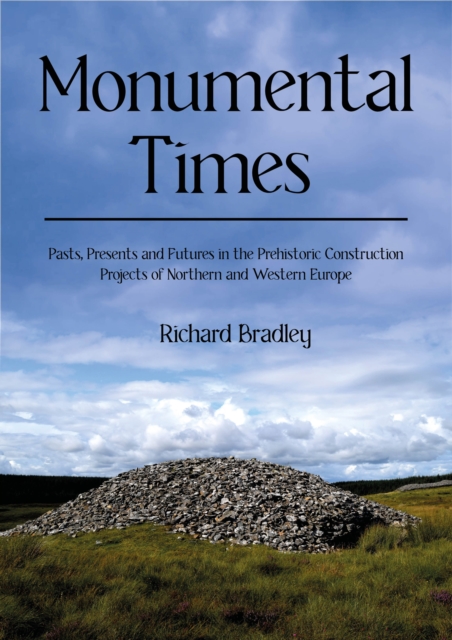
Richard Bradley's latest thought provoking re-examination of familiar monumental archaeology drawing on latest discussions of multi-temporality and the implications of new levels of analysis afforded by developments in archaeological sciences such as DNA, radiocarbon dating and isotopes.
This book includes selected peer reviewed articles from The 5th International Conference on Communications and Cyber-Physical Engineering (ICCCE 2022), held on 29th and 30th April 2022 in Hyderabad, India.