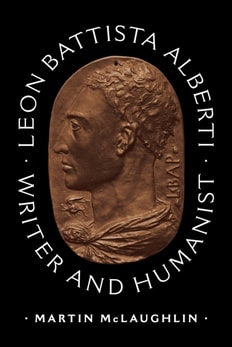
The first book in English to examine Leon Battista Alberti's major literary works in Latin and Italian, which are often overshadowed by his achievements in architectureLeon Battista Alberti (14041472) was one of the most prolific and original writers of the Italian Renaissancea fact often eclipsed by his more celebrated achievements as an art theorist and architect, and by Jacob Burckhardt's mythologizing of Alberti as a Renaissance or Universal Man.
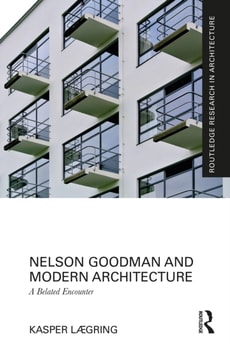
This book orchestrates a convergence of two discourses from the 1960s-Nelson Goodman's aesthetic theory on one side and critiques of modern architecture articulated by figures like Peter Blake, Charles Jencks, and Robert Venturi/Denise Scott Brown on the other.
This book provides an urgent framework and collective reflection on understanding ways to reconsider and recast architecture within ideas and politics of the commons and practices of commoning.
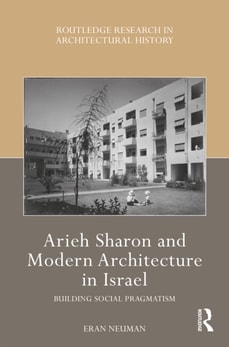
Arieh Sharon and Modern Architecture in Israel: Building Social Pragmatism offers the first comprehensive survey of the work of Arieh Sharon and analyzes and discusses his designs and plans in relation to the emergence of the State of Israel.
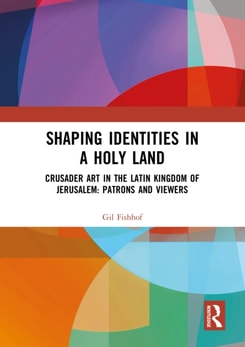
In the 88 years between its establishment by the victorious armies of the First Crusade and its collapse following the disastrous defeat at Hattin, the Latin Kingdom of Jerusalem was the site of vibrant artistic and architectural activity.
In the 88 years between its establishment by the victorious armies of the First Crusade and its collapse following the disastrous defeat at Hattin, the Latin Kingdom of Jerusalem was the site of vibrant artistic and architectural activity.
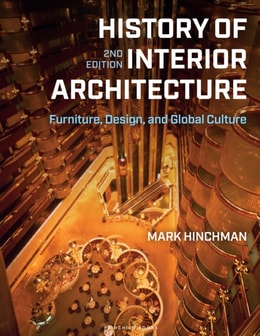
In today's globalized world, every aspect of our lives is affected by global interconnectedness from what we buy to what we eat to what we study - and the study of design history is no exception.
A uniquely personal account of the life and enduring legacy of the Renaissance libraryWith the advent of print in the fifteenth century, Europe's cultural elite assembled personal libraries as refuges from persecutions and pandemics.
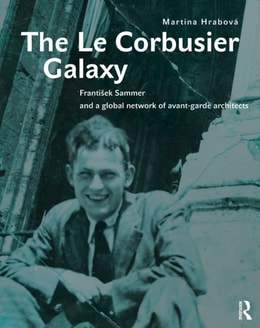
Drawing on the author's discovery of an unknown, long-forgotten collection of photographs in an Indian ashram, this book offers an exciting, new view of the international community of young architects who served as Le Corbusier's assistants in the inter-war years.
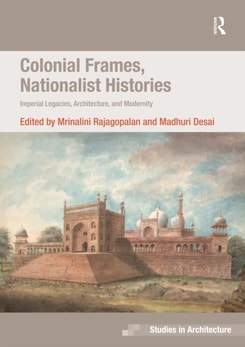
In recent years, there has been a growing debate on the various ways that architecture and urbanism have served the triad of colonialism, nationalism and modernity.
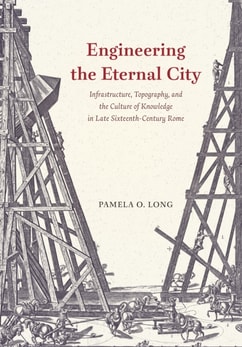
Between the catastrophic flood of the Tiber River in 1557 and the death of the "e;engineering pope"e; Sixtus V in 1590, the city of Rome was transformed by intense activity involving building construction and engineering projects of all kinds.
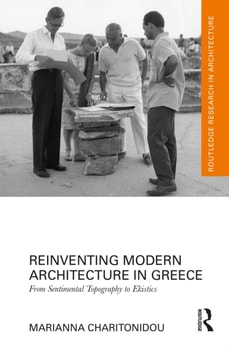
This book examines the connection between the politics of the Marshall Plan and urban planning and identifies the key players, such as the Greek architect and urban planner Constantinos A.
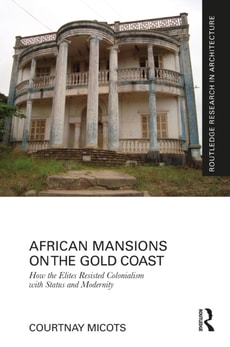
This will be the first book to focus on the African patrons who commissioned grand family mansions from the 1860s to 1950s, and to highlight their intentions during the tumultuous period in the Gold Coast Colony (part of present-day Ghana) from roughly 1874 to independence from the British on March 6, 1957.
The Irvine Ranch: Fulfilling the Vision, 1977-2025 continues the story of the planning and development of the Irvine Ranch under a partnership of high-powered businessmen to the single ownership of Donald Bren.
The Irvine Ranch: Fulfilling the Vision, 1977-2025 continues the story of the planning and development of the Irvine Ranch under a partnership of high-powered businessmen to the single ownership of Donald Bren.
This will be the first book to focus on the African patrons who commissioned grand family mansions from the 1860s to 1950s, and to highlight their intentions during the tumultuous period in the Gold Coast Colony (part of present-day Ghana) from roughly 1874 to independence from the British on March 6, 1957.
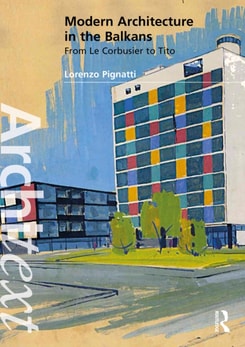
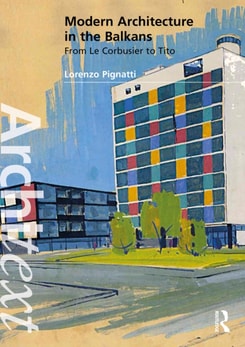
This book is an attempt to comprehend the reasons for modernity in the Balkans, beginning with the famous Journey to the East undertaken by Charles-Edouard Jeanneret in 1911; a journey during which the future Le Corbusier was the first to appreciate the originality of the region's architecture.
This book is an attempt to comprehend the reasons for modernity in the Balkans, beginning with the famous Journey to the East undertaken by Charles-Edouard Jeanneret in 1911; a journey during which the future Le Corbusier was the first to appreciate the originality of the region's architecture.