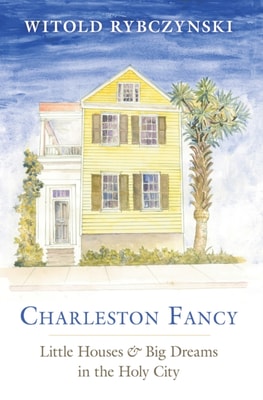
A captivating chronicle of building in modern-day Charleston, making a case for architecture based on historical precedent, local context, and the ability to delight Charleston, South Carolina, which boasts America’s first historic district, is known for its palmetto-lined streets and picturesque houses.
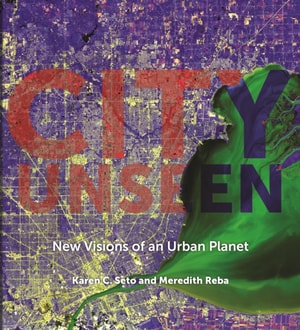
Stunning satellite images of one hundred cities show our urbanizing planet in a new light to reveal the fragile relationship between humanity and Earth Seeing cities around the globe in their larger environmental contexts, we begin to understand how the world shapes urban landscapes and how urban landscapes shape the world.
The first book to reevaluate the evocative and polarizing work of one of midcentury America’s most significant architects Born to Japanese immigrant parents in Seattle, Minoru Yamasaki (1912–1986) became one of the towering figures of midcentury architecture, even appearing on the cover of Time magazine in 1963.
A compelling and long-overdue exploration of the Progressive-era conservation movement, and its lasting effects on American culture, politics, and contemporary environmentalismThe turn of the twentieth century caught America at a crossroads, shaking the dust from a bygone era and hurtling toward the promises of modernity.
A compelling and long-overdue exploration of the Progressive-era conservation movement, and its lasting effects on American culture, politics, and contemporary environmentalismThe turn of the twentieth century caught America at a crossroads, shaking the dust from a bygone era and hurtling toward the promises of modernity.
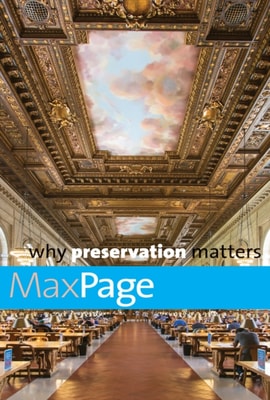
Commemorating the fiftieth anniversary of the National Historic Preservation Act, a critique of the preservation movement—and a bold vision for its future Every day, millions of people enter old buildings, pass monuments, and gaze at landscapes unaware that these acts are possible only thanks to the preservation movement.
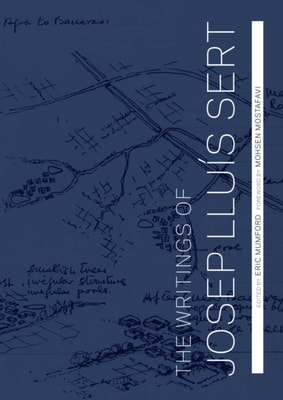
Josep Lluís Sert (1902–1983) was the last president of CIAM (International Congresses of Modern Architecture) and dean of the Harvard University Graduate School of Design from 1953 to 1969, where he founded the discipline of urban design.
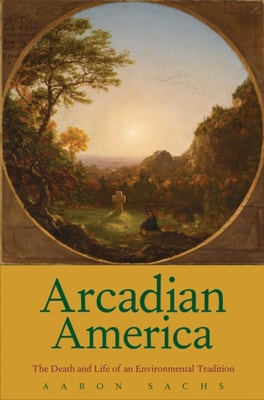
How a forgotten environmental tradition of the pre-Civil War era may prove powerfully useful to us now Perhaps America's best environmental idea was not the national park but the garden cemetery, a use of space that quickly gained popularity in the mid-nineteenth century.
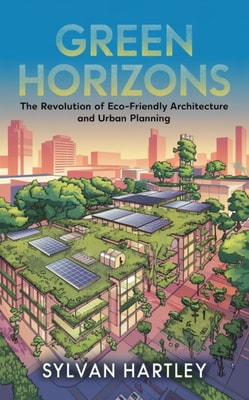
Reimagining Our Cities for a Greener TomorrowDive into the transformative world of sustainable architecture and urban planning with Green Horizons: The Revolution of Eco-Friendly Architecture and Urban Planning.
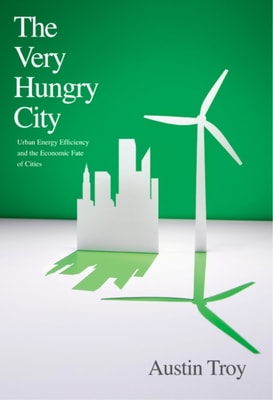
As global demand for energy grows and prices rise, a city's energy consumption becomes increasingly tied to its economic viability, warns the author of The Very Hungry City.
Despite being commonplace in American households a generation ago, corporal punishment of children has been subjected to criticism and shifting attitudes in recent years.
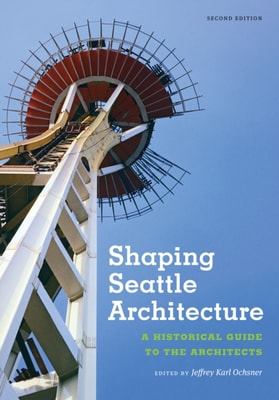
The first edition of Shaping Seattle Architecture, published in 1994, introduced readers to Seattles architects by showcasing the work of those who were instrumental in creating the regions built environment.
As human activity and environmental change come to be increasingly recognized as intertwined phenomena on a rapidly urbanizing planet, the field of urban ecology has risen to offer useful ways of thinking about coupled human and natural systems.
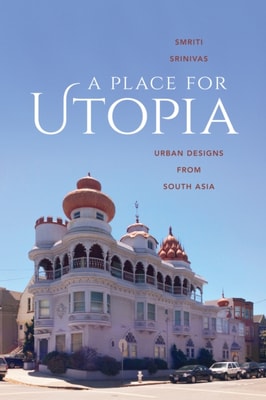
Exploring several utopian imaginaries and practices, A Place for Utopia ties different times together from the early twentieth century to the present, the biographical and the anthropological, the cultural and the conjunctional, South Asia, Europe, and North America.
Since the 1950s, the housing developments in the West that historian Lincoln Bramwell calls wilderburbs have offered residents both the pleasures of living in nature and the creature comforts of the suburbs.
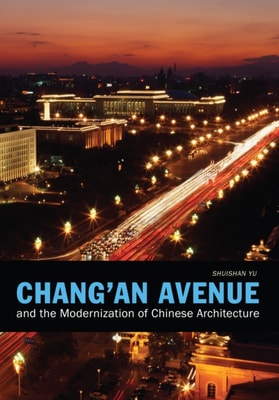
In this interdisciplinary narrative, the never-ending "e;completion"e; of China's most important street offers a broad view of the relationship between art and ideology in modern China.
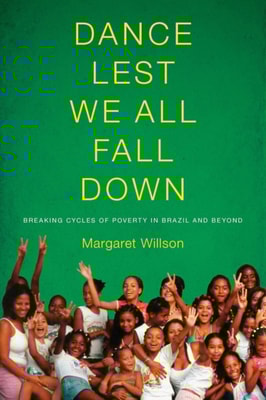
An unexpected detour can change the course of our lives forever, and, for white American anthropologist Margaret Willson, a stopover in Brazil led to immersion in a kaleidoscopic world of street urchins, capoeiristas, drug dealers, and wise teachers.
Key concepts, definitions, examples, and historical contexts for understanding smart cities, along with discussions of both drawbacks and benefits of this approach to urban problems.
Original, action-oriented humanist practices for interpreting and intervening in the city: a new methodology at the intersection of the humanities, design, and urban studies.
Engaging essays that roam across uncertain territory, in search of sunken forests, unclassifiable islands, inflammable skies, plagiarized tabernacles, and other phenomena missing from architectural history.
Mariana Griswold Van Rensselaer (1851-1934) is highly regarded among architectural historians for her 1888 biography of the nineteenth-century architect Henry Hobson Richardson.
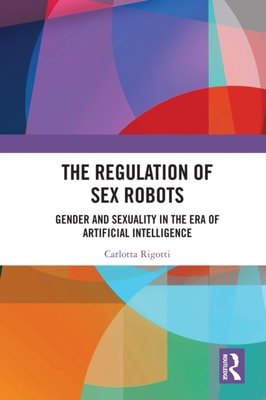
This book proposes a framework for regulating sex robots - human-like machines designed to engage emotionally and sexually with users through customisable, often AI-powered features.
This book proposes a framework for regulating sex robots - human-like machines designed to engage emotionally and sexually with users through customisable, often AI-powered features.
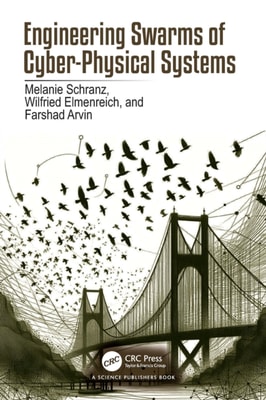
Engineering Swarms for Cyber-Physical Systems covers the whole design cycle for applying swarm intelligence in Cyber-Physical Systems (CPS) and guides readers through modeling, design, simulation, and final deployment of swarm systems.
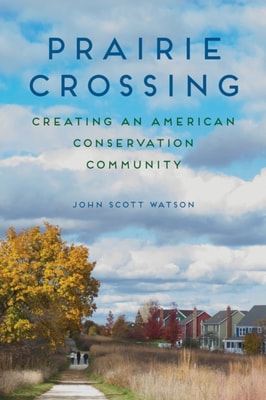
Carved out of century-old farmland near Chicago, the Prairie Crossing development is a novel experiment in urban public policy that preserves 69 percent of the land as open space.
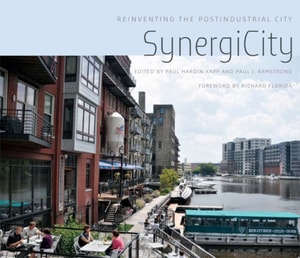
SynergiCity: Reinventing the Postindustrial City proposes a new and invigorating vision of urbanism, architectural design, and urban revitalization in twenty-first-century America.
Discover the Future That Awaits with AIStep into a world where technology pushes the boundaries of imagination, fundamentally altering the fabric of our daily lives.