Intravascular Ultrasound: From Acquisition to Advanced Quantitative Analysis covers topics of the whole imaging pipeline, ranging from the definition of the clinical problem and image acquisition systems to image processing and analysis, including the assisted clinical-decision making procedures and treatment planning (stent deployment and follow up).
Precision Motion Systems: Modeling, Control, and Applications presents basic dynamics and the control knowledge needed for the daily challenges of researchers and professionals working in the field.
This book explores the hybridity of urban identities in multiple dimensions and at multiple scales, how they form as catalysts and mechanisms for urban transitions, and how they develop as city branding strategies and urban regeneration methods.
This book discusses computer vision, a noncontact as well as a nondestructive technique involving the development of theoretical and algorithmic tools for automatic visual understanding and recognition which finds huge applications in agricultural productions.
Flexible Robotics in Medicine: A Design Journey of Motion Generation Mechanisms and Biorobotic System Development provides a resource of knowledge and successful prototypes regarding flexible robots in medicine.
This book provides a careful explanation of the basic areas of electronics and computer architecture, along with lots of examples, to demonstrate the interface, sensor design, programming and microcontroller peripheral setup necessary for embedded systems development.
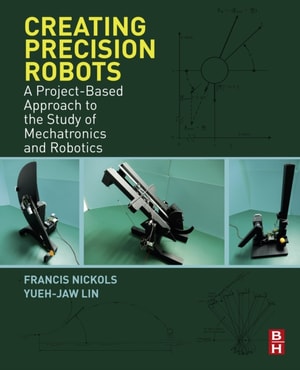
Creating Precision Robots: A Project-Based Approach to the Study of Mechatronics and Robotics shows how to use a new "e;Cardboard Engineering technique for the handmade construction of three precision microcomputer controlled robots that hit, throw and shoot.
The book compares different approaches to urban development in Singapore and Seoul over the past decades, by focusing on community participation in the transformation of neighbourhoods and its impact on the built environment and communal life.
This book analyses the magnificent imperial necropolises of ancient China from the perspective of Archaeoastronomy, a science which takes into account the landscape in which ancient monuments are placed, focusing especially but not exclusively on the celestial aspects.
Aerial Robotic Workers: Design, Modeling, Control, Vision and Their Applications provides an in-depth look at both theory and practical applications surrounding the Aerial Robotic Worker (ARW).
This volume presents innovative work on innovative methods, tools and practices aimed at supporting the transition of Asian and Middle Eastern cities and regions towards a more smart and sustainable dimension.
Multimodal Behavioral Analysis in the Wild: Advances and Challenges presents the state-of- the-art in behavioral signal processing using different data modalities, with a special focus on identifying the strengths and limitations of current technologies.
Mechatronic Components: Roadmap to Design explains the practical application of mechatronics, including sections on adaptive structures, robotics and other areas where mechanics and electronics converge.
Imaging Genetics presents the latest research in imaging genetics methodology for discovering new associations between imaging and genetic variables, providing an overview of the state-of the-art in the field.
How a computational framework can account for the successes and failures of human cognitionAt the heart of human intelligence rests a fundamental puzzle: How are we incredibly smart and stupid at the same time?
Computer Vision for Assistive Healthcare describes how advanced computer vision techniques provide tools to support common human needs, such as mental functioning, personal mobility, sensory functions, daily living activities, image processing, pattern recognition, machine learning and how language processing and computer graphics cooperate with robotics to provide such tools.
Human Inspired Dexterity in Robotic Manipulation provides up-to-date research and information on how to imitate humans and realize robotic manipulation.
A look at the extraordinary ways the brain turns thoughts into actions-and how this shapes our everyday livesWhy is it hard to text and drive at the same time?
Modelling, Dynamics and Control of Electrified Vehicles provides a systematic overview of EV-related key components, including batteries, electric motors, ultracapacitors and system-level approaches, such as energy management systems, multi-source energy optimization, transmission design and control, braking system control and vehicle dynamics control.
Get answers FAST with the Landscape Architect's One-Stop,Take-It-Anywhere GuideIn the office or out on the job, the Landscape Architect's Portable Handbook puts the 20% of information you need 80% of the time at your fingertips!
Diffuse Algorithms for Neural and Neuro-Fuzzy Networks: With Applications in Control Engineering and Signal Processing presents new approaches to training neural and neuro-fuzzy networks.
Path Planning for Vehicles Operating in Uncertain 2D-environments presents a survey that includes several path planning methods developed using fuzzy logic, grapho-analytical search, neural networks, and neural-like structures, procedures of genetic search, and unstable motion modes.
Time-Critical Cooperative Control of Autonomous Air Vehicles presents, in an easy-to-read style, the latest research conducted in the industry, while also introducing a set of novel ideas that illuminate a new approach to problem-solving.
Control Theory in Biomedical Engineering: Applications in Physiology and Medical Robotics highlights the importance of control theory and feedback control in our lives and explains how this theory is central to future medical developments.
Between 1937 and 1938, garden designer Christopher Tunnard published a series of articles in the British Architectural Review that rejected the prevailing English landscape style.
Wheeled Mobile Robotics: From Fundamentals Towards Autonomous Systemscovers the main topics from the wide area of mobile robotics, explaining all applied theory and application.
Cellular Actuators: Modularity and Variability in Muscle-Inspired Actuation describes the roles actuators play in robotics and their insufficiency in emerging new robotic applications, such as wearable devices and human co-working robots where compactness and compliance are important.
Bioinspired Legged Locomotion: Models, Concepts, Control and Applications explores the universe of legged robots, bringing in perspectives from engineering, biology, motion science, and medicine to provide a comprehensive overview of the field.
Safe Robot Navigation Among Moving and Steady Obstacles is the first book to focus on reactive navigation algorithms in unknown dynamic environments with moving and steady obstacles.
On-Road Intelligent Vehicles: Motion Planning for Intelligent Transportation Systems deals with the technology of autonomous vehicles, with a special focus on the navigation and planning aspects, presenting the information in three parts.
The work of landscape architecture firm Hargreaves Associates is globally renowned, from the 21st Century Waterfront in Chattanooga, Tennessee, to London's 2012 Olympic Park.
5G IoT and Edge Computing for Smart Healthcare addresses the importance of a 5G IoT and Edge-Cognitive-Computing-based system for the successful implementation and realization of a smart-healthcare system.
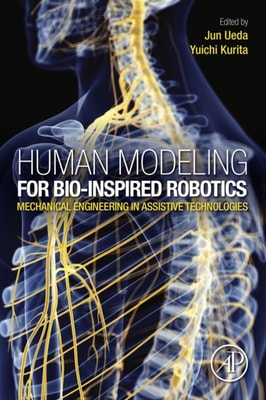
Human Modelling for Bio-inspired Robotics: Mechanical Engineering in Assistive Technologies presents the most cutting-edge research outcomes in the area of mechanical and control aspects of human functions for macro-scale (human size) applications.
Rugged Embedded Systems: Computing in Harsh Environments describes how to design reliable embedded systems for harsh environments, including architectural approaches, cross-stack hardware/software techniques, and emerging challenges and opportunities.
This book describes the signal, image and video processing methods and techniques for fire detection and provides a thorough and practical overview of this important subject, as a number of new methods are emerging.
Brain-computer interface (BCI) technology provides a means of communication that allows individuals with severely impaired movement to communicate with assistive devices using the electroencephalogram (EEG) or other brain signals.