This book aims to fill the knowledge gap on how to plan, develop and manage innovation districts that are competitive in terms of both productivity and quality of living, justifying the massive investment put into place and at the same time doing both in a delicate and harmonious way.
Artificial Vision is a rapidly growing discipline, aiming to build computational models of the visual functionalities in humans, as well as machines that emulate them.
This book-Mind, Body, and Digital Brains-focuses on both theoretical and empirical issues and joins contributions from different disciplines, concepts, and sensibilities, bringing together scholars from fields that at first glance may appear different-Neuroscience and Cognitive Neuroscience; Robotics, Computer Science, Deep Learning, and Information Processing Systems; Education, Philosophy, Law, and Psychology.
Comprehensive guide to industrial automation and robotics, covering fluid power systems, control mechanisms, and AI integration for enhanced operational efficiency.
Comprehensive guide to industrial automation and robotics, covering fluid power systems, control mechanisms, and AI integration for enhanced operational efficiency.
Rather than using traditional artificial intelligence techniques, which are ineffective when applied to the complexities of real-world robot navigaiton, Connell describes a methodology of reconstructing intelligent robots with distributed, multiagent control systems.
A comprehensive, step-by-step guide to understanding the basics of robotics and creating your own robotics applications within days, not monthsGet With Your Book: PDF Copy, AI Assistant, and Next-Gen Reader FreeKey FeaturesBuild a strong foundation in ROS 2 and instill confidence for future robotics projectsLeverage best practices to create scalable ROS 2 applications with Python and C++Follow a step-by-step process to create and simulate a custom robot using ROS 2Book DescriptionROS 2 from Scratch, written by the cofounder of a robotics company with years of experience in teaching and engineering, will equip you with the skills necessary to develop cutting-edge robotic systems efficiently.
Accessible to all readers, including students of secondary school and amateur technology enthusiasts, Robotics, Mechatronics, and Artificial Intelligence simplifies the process of finding basic circuits to perform simple tasks, such as how to control a DC or step motor, and provides instruction on creating moving robotic parts, such as an "e;eye"e; or an "e;ear.
This book offers in-depth ethnographic analyses of key informants' interviews on the ecological urbanism and ecosystem services (ES) of selected green infrastructure (GI) in Yoruba cities of Ile-Ife, Ibadan, Osogbo, Lagos, Abeokuta, Akure, Ondo, among others in Southwest Nigeria.
Now in its second volume, Regreening the Built Environment provides an overview of physical and social environmental challenges that the planet is facing and presents solutions that restore ecological processes, reclaim open space, foster social equity, and facilitate a green economy.
Contemporary cities are shaped by the unlikely adjacencies of objects that are vastly different in kind, origin, and scale: buildings, infrastructure, and other urban components that over time accumulate into mismatched configurations.
The declared goal of this book, an extended and revised translation of the German edition (2021), is to show how a unified model of the psyche and body can be developed via insights from psychoanalysis, neurology and computer technology.
This book offers in-depth ethnographic analyses of key informants' interviews on the ecological urbanism and ecosystem services (ES) of selected green infrastructure (GI) in Yoruba cities of Ile-Ife, Ibadan, Osogbo, Lagos, Abeokuta, Akure, Ondo, among others in Southwest Nigeria.
This book looks at migrant landing spaces, exploring the processes and infrastructures which people encounter as they navigate urban spaces along the central Mediterranean route.
This book considers and examines the concept of a Smart City in the context of improving the quality of life and sustainable development in Central and Eastern European cities.
This book considers and examines the concept of a Smart City in the context of improving the quality of life and sustainable development in Central and Eastern European cities.
The text presents aspects of virtual worlds and highlights the emerging trends in simulation and modeling, comprising machine learning, artificial intelligence, deep learning, robotics, cloud computing, and data mining algorithms.
In the digital-driven economy era, an AI-oriented competency framework (AIoCF) is a collection to identify AI-oriented knowledge, attributes, efforts, skills, and experiences (AKASE) that directly and positively affect the success of employees and the organization.
This new handbook provides a platform to bring together multidisciplinary researchers focusing on greening high-density agglomerations from three perspectives: climate change, social implications, and people's health.
The application of internet of things (IoT) technologies and artificial intelligence (AI)-enabled IoT solutions has gradually become accepted by business and production organizations as an effective tool for automating several activities effectively and efficiently and developing and distributing products to the global market.
Outdoor Environments for People addresses the everyday human behavior in outdoor built environments and explains how designers can learn about and incorporate their knowledge into places they help to create.
Outdoor Environments for People addresses the everyday human behavior in outdoor built environments and explains how designers can learn about and incorporate their knowledge into places they help to create.
The neuroscience of why bad habits are so hard to break-and how evidence-based strategies can help us change our behavior more effectivelyWe all have habits we'd like to break, but for many of us it can be nearly impossible to do so.
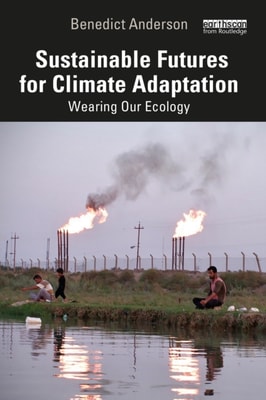
Considering sustainability as a flawed and restrictive term in practice, Sustainable Futures for Climate Adaptation argues that we must radically adapt humanity and reform society, cities, buildings, and our approach to migration in order to coexist in harmony with our natural environments.
This book provides an urgent framework and collective reflection on understanding ways to reconsider and recast architecture within ideas and politics of the commons and practices of commoning.