The last of the Spanish Romantics, composer, conductor, and impresario Federico Moreno Torroba (1891-1982) left his mark on virtually every aspect of Spanish musical culture during a career that spanned six decades and saw tremendous political and cultural upheavals.
In the Middle Ages, relic cults provoked rich expressions of devotion not only in hagiographic literature and visual art but also in liturgical music and ritual.
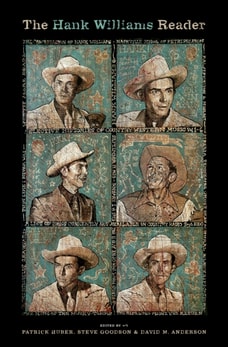
When Hank Williams died on New Year's Day 1953 at the age of twenty-nine, his passing appeared to bring an abrupt end to a saga of rags-to-riches success and anguished self-destruction.
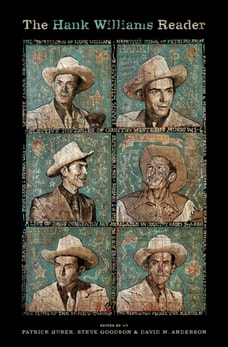
When Hank Williams died on New Year's Day 1953 at the age of twenty-nine, his passing appeared to bring an abrupt end to a saga of rags-to-riches success and anguished self-destruction.
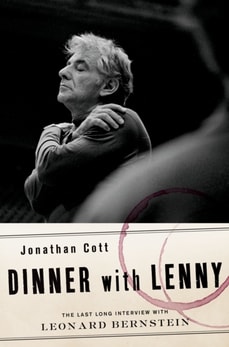
Winner of the 2015 Music in American Culture Award from the American Musicological SocietyWhen Leonard Bernstein first arrived in New York City, he was an unknown artist working with other brilliant twentysomethings, notably Jerome Robbins, Betty Comden, and Adolph Green.
The Sounds of the Silents in Britain explores the sonic dimension of film exhibition in Britain from the emergence of cinema to the introduction of synchronized sound.
"e;Industrial"e; is a descriptor that fans and critics have applied to a remarkable variety of music: the oildrum pounding of Einsturzende Neubauten, the processed electronic groans of Throbbing Gristle, the drumloop clatter of Skinny Puppy, and the synthpop songcraft of VNV Nation, to name just a few.
Perhaps the most widely recognized figure in folk music and one of the most well-known figures in American political activism, Pete Seeger now belongs among the icons of 20th-century American culture.
Sounding Authentic considers the intersecting influences of nationalism, modernism, and technological innovation on representations of ethnic and national identities in twentieth-century art music.
Unique and often startling encounters between music and the moving image in the films of Stanley Kubrick are trademarks of his style; witness the powerful effects of Strauss's "e;Also Sprach Zarathustra"e; in 2001: A Space Odyssey and of Beethoven's 9th Symphony in A Clockwork Orange, each excerpt vetted by Kubrick himself.
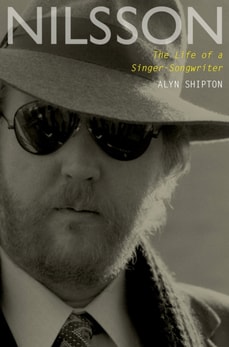
Paul McCartney and John Lennon described him as the Beatles' "e;favorite group,"e; he won Grammy awards, wrote and recorded hit songs, and yet no figure in popular music is as much of a paradox, or as underrated, as Harry Nilsson.
Paul McCartney and John Lennon described him as the Beatles' "e;favorite group,"e; he won Grammy awards, wrote and recorded hit songs, and yet no figure in popular music is as much of a paradox, or as underrated, as Harry Nilsson.
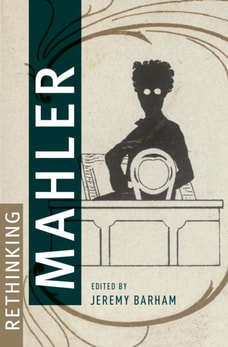
As one of the most popular classical composers in the performance repertoire of professional and amateur orchestras and choirs across the world, Gustav Mahler continues to generate significant interest, and the global appetite for his music, and for discussions of it, remains large.
During the century of British rule of the Indian subcontinent known as the British Raj, the rulers felt the significant influence of their exotic subjects.
Why would Gustav Mahler (1860-1911), modernist titan and so-called prophet of the New Music, commit himself time and again to the venerable sonata-allegro form of Mozart and Beethoven?
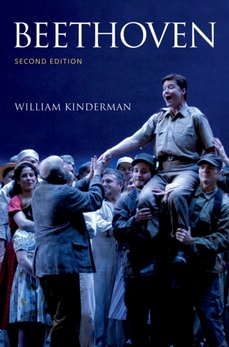
Combining musical insight with the most recent research, William Kinderman's Beethoven is both a richly drawn portrait of the man and a guide to his music.
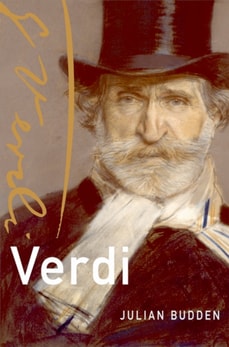
In this third edition of the classic Verdi, renowned authority Julian Budden offers a comprehensive overview of Verdi the man and the artist, tracing his ascent from humble beginnings to the status of a cultural patriarch of the new Italy, whose cause he had done much to promote, and demonstrating the gradual enlargement over the years of his artistic vision.
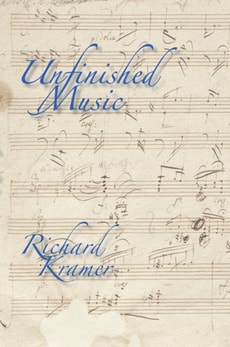
Unfinished Music draws its inspiration from the riddling aphorism by Walter Benjamin that serves as its epigraph: "e;the work is the death mask of its conception.
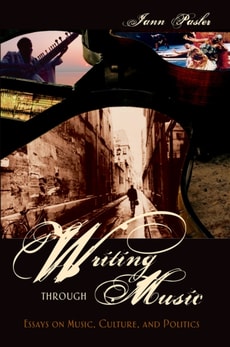
Drawing on a passion for music, a remarkably diverse interdisciplinary toolbox, and a gift for accessible language that speaks equally to scholars and the general public, Jann Pasler invites us to read as she writes "e;through"e; music, unveiling the forces that affect our sonic encounters.
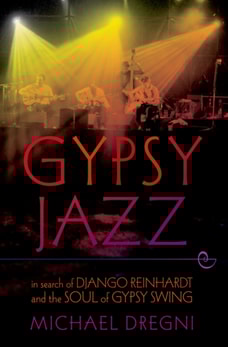
Of all the styles of jazz to emerge in the twentieth century, none is more passionate, more exhilaratingly up-tempo, or more steeped in an outsider tradition than Gypsy Jazz.
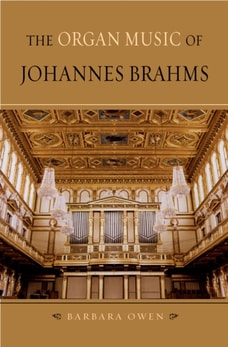
Influenced by Robert and Clara Schumann and Joseph Joachim, Johannes Brahms not only learned to play the organ at the beginning of his career, but also wrote significant compositions for the instrument as a result of his early counterpoint study.
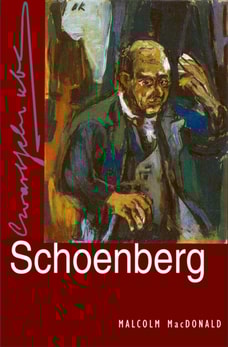
In this completely rewritten and updated edition of his long-indispensable study, Malcolm MacDonald takes advantage of 30 years of recent scholarship, new biographical information, and deeper understanding of Schoenberg's aims and significance to produce a superb guide to Schoenberg's life and work.
The study of music is always, to some extent, "e;empirical,"e; in that it involves testing ideas and interpretations against some kind of external reality.
Josephine Lang (1815-80) was one of the most gifted, respected, prolific, and widely published song composers of the nineteenth century, yet her life and works have remained virtually unknown.