Theological Stains offers the first in-depth study of the development of art music in Israel from the mid-twentieth century to the turn of the twenty-first.
Theological Stains offers the first in-depth study of the development of art music in Israel from the mid-twentieth century to the turn of the twenty-first.
The Hispanic rite, a medieval non-Roman Western liturgy, was practiced across the Iberian Peninsula for over half a millennium and functioned as the most distinct marker of Christian identity in this region.
The Hispanic rite, a medieval non-Roman Western liturgy, was practiced across the Iberian Peninsula for over half a millennium and functioned as the most distinct marker of Christian identity in this region.
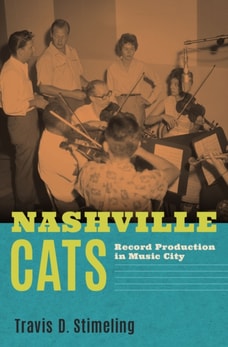
The Nashville Cats bounced from studio to studio along the city's Music Row, delivering instrumental backing tracks for countless recordings throughout the mid-20th century.
The Nashville Cats bounced from studio to studio along the city's Music Row, delivering instrumental backing tracks for countless recordings throughout the mid-20th century.
There were but four major galaxies in the early jazz universe, and three of them--New Orleans, Chicago, and New York--have been well documented in print.
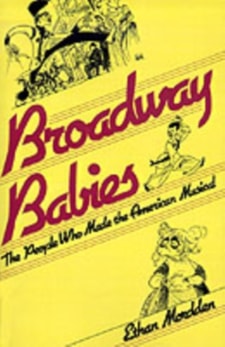
Vividly recreating the unique pleasure of experiencing a song-and-dance show, Broadway Babies spotlights the men and women who made a difference in the development of American musical comedy.
Amy Marcy Cheney Beach (1867-1944), the most widely performed composer of her generation, was the first American woman to succeed as a creator of large-scale art music.
Even as orchestras, performers, enthusiasts, and critics across the nation--and across the globe--celebrate the one-hundredth anniversary of his birth, George Gershwin (1898-1937) remains one of America's most popular yet least appreciated composers.
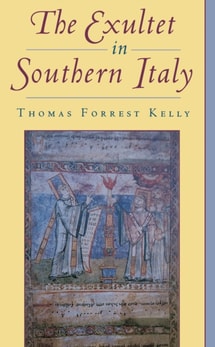
The Exultet rolls of southern Italy are parchment scrolls containing text and music for the blessing of the great Easter candle; they contain magnificent illustrations, often turned upside down with respect to the text, The Exultet in Southern Italy provides a broad perspective on this phenomenon that has long attracted the interest of those interested in medieval art, liturgy, and music.
Alec Wilder wrote songs and lyrics of unsurpassed beauty and originality, and his work won the respect and admiration of such important musical figures as Frank Sinatra, Peggy Lee, Mitch Miller, Gunther Schuller, and many others.
Drawing upon a remarkable mix of intensive research and the personal experience of a career devoted to the music about which Dvorak so presciently spoke, Maurice Peress's lively and convincing narrative treats readers to a rare and delightful glimpse behind the scenes of the burgeoning American school of music and beyond.
War and Press Freedom: The Problem of Prerogative Power is a groundbreaking and provocative study of one of the most perplexing civil liberties issues in American history: What authority does or should the government have to control press coverage and commentary in wartime?
Amid the recent increase in scholarly attention to rock music, Understanding Rock stands out as one of the first books that subjects diverse aspects of the music itself to close and sophisticated analytical scrutiny.
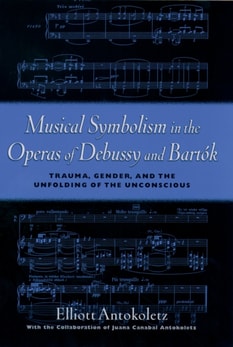
Musical Symbolism in the Operas of Debussy and Bartok explores the means by which two early 20th century operas - Debussy's Pelleas et Melisande (1902) and Bartok's Duke Bluebeard's Castle (1911) - transformed the harmonic structures of the traditional major/minor scale system into a new musical language.
As a work of cultural criticism that recalls the concerns of Foucault, Hayden White, Zizek, and others Decentering Music examines the struggle for the authority to speak about music at a time when the humanities are in crisis.
Building on ideas first advanced by Arnold Schoenberg and later developed by Erwin Ratz, this book introduces a new theory of form for instrumental music in the classical style.
This book draws upon both musicology and cultural history to argue that French musical meanings and values from 1898 to 1914 are best explained not in terms of contemporary artistic movements but of the political culture.
The groundbreaking analytical techniques of Heinrich Schenker have had a powerful impact on the English-speaking musical world, and their importance, a century after he embarked on his major projects, is greater than ever.
Four Parts, No Waiting investigates the role that vernacular, barbershop-style close harmony has played in American musical history, in American life, and in the American imagination.
The motet was unquestionably one of the most important vocal genres from its inception in late twelfth-century Paris through the Counter-Reformation and beyond.
This book is the first biography of 20th-century pianist Rudolf Serkin, providing a narrative of Serkin's life with emphasis on his European roots and the impact of his move to America.
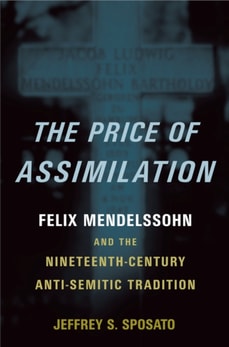
Most scholars since World War Two have assumed that composer Felix Mendelssohn Bartholdy (1809-1847) maintained a strong attachment to Judaism throughout his lifetime.
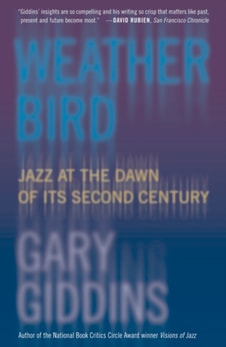
Gary Giddins's Weather Bird is a brilliant companion volume to his landmark in music criticism, Visions of Jazz, winner of the National Book Critics Circle Award in Criticism.