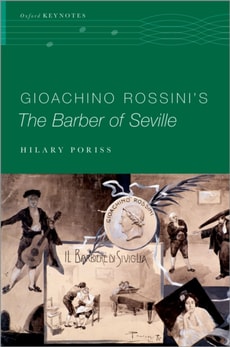
Gioachino Rossini's The Barber of Seville surveys the opera's fascinating performance history, mapping out the myriad changes that have affected the work since its premiere, exploring many of the personalities responsible for those alterations, and taking into account the range of reactions that these changes have prompted in spectators and critics from the nineteenth century to the present.
Gioachino Rossini's The Barber of Seville surveys the opera's fascinating performance history, mapping out the myriad changes that have affected the work since its premiere, exploring many of the personalities responsible for those alterations, and taking into account the range of reactions that these changes have prompted in spectators and critics from the nineteenth century to the present.
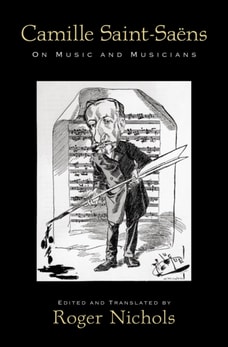
Camille Saint-Saens is a memorable figure not only for his successes as a composer of choral and orchestral works, and the eternally popular opera Samson et Dalila, but also because he was a keen observer of the musical culture in which he lived.
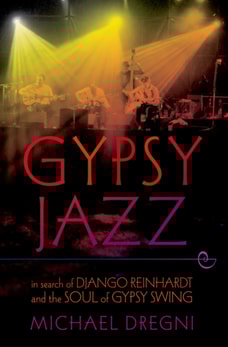
Of all the styles of jazz to emerge in the twentieth century, none is more passionate, more exhilaratingly up-tempo, or more steeped in an outsider tradition than Gypsy Jazz.
A comprehensive introduction to the inner workings of rock music, The Foundations of Rock goes back to the heart of the music itself from the time of its birth through the end of classic rock.
Influenced by Robert and Clara Schumann and Joseph Joachim, Johannes Brahms not only learned to play the organ at the beginning of his career, but also wrote significant compositions for the instrument as a result of his early counterpoint study.
Drawing on a passion for music, a remarkably diverse interdisciplinary toolbox, and a gift for accessible language that speaks equally to scholars and the general public, Jann Pasler invites us to read as she writes "e;through"e; music, unveiling the forces that affect our sonic encounters.
In Shapes of American Ballet: Teachers and Training before Balanchine, Jessica Zeller introduces the first few decades of the twentieth century as an often overlooked, yet critical period for ballet's growth in America.
In Shapes of American Ballet: Teachers and Training before Balanchine, Jessica Zeller introduces the first few decades of the twentieth century as an often overlooked, yet critical period for ballet's growth in America.
Josephine Lang (1815-80) was one of the most gifted, respected, prolific, and widely published song composers of the nineteenth century, yet her life and works have remained virtually unknown.
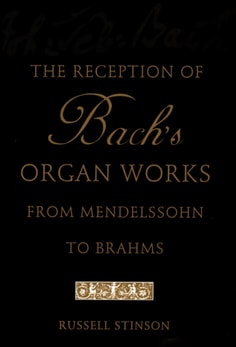
In this penetrating study, Russell Stinson explores how four of the greatest composers of the nineteenth century--Felix Mendelssohn, Robert Schumann, Franz Liszt, and Johannes Brahms--responded to the model of Bach's organ music.
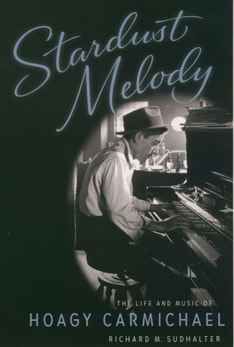
Georgia on My Mind, Rockin' Chair, Skylark, Lazybones, and of course the incomparable Star Dust--who else could have composed these classic American songs but Hoagy Carmichael?
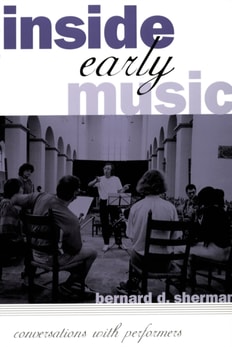
The attempt to play music with the styles and instruments of its era--commonly referred to as the early music movement--has become immensely popular in recent years.
In The Composer as Intellectual, musicologist Jane Fulcher reveals the extent to which leading French composers between the World Wars were not only aware of but also engaged intellectually and creatively with the central political and ideological issues of the period.
During the years preceding the composition of Tristan and Isolde, Wagner's aesthetics underwent a momentous turnaround, principally as a result of his discovery of Schopenhauer.
The study of music is always, to some extent, "e;empirical,"e; in that it involves testing ideas and interpretations against some kind of external reality.
From the Jim Crow world of 1920s Greenville, South Carolina, to Greenwich Village's Cafe Society in the '40s, to their 1974 Grammy-winning collaboration on "e;Loves Me Like a Rock,"e; the Dixie Hummingbirds have been one of gospel's most durable and inspiring groups.
Four Parts, No Waiting investigates the role that vernacular, barbershop-style close harmony has played in American musical history, in American life, and in the American imagination.
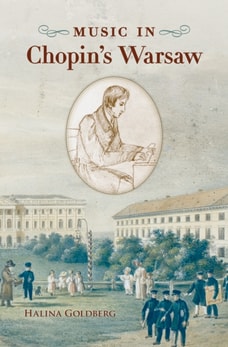
Music in Chopin's Warsaw examines the rich musical environment of Fryderyk Chopin's youth--largely unknown to the English-speaking world--and places Chopin's early works in the context of this milieu.
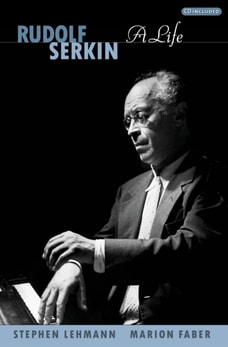
This book is the first biography of 20th-century pianist Rudolf Serkin, providing a narrative of Serkin's life with emphasis on his European roots and the impact of his move to America.
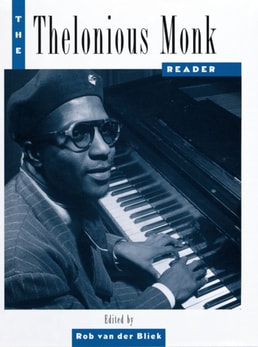
Of all the major jazz artists, Thelonious Monk was one of the most original musical thinkers--nonconformist, idiosyncratic, imaginative, eccentric--in a word, unique.
A freewheeling blend of continental European folk music and the songs, tunes, and dances of Anglo and Celtic immigrants, polkabilly has enthralled American musicians and dancers since the mid-19th century.
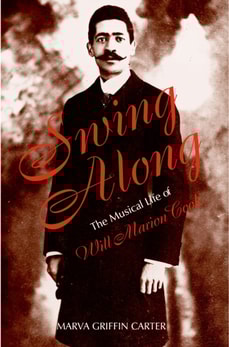
Renowned today as a prominent African-American in Music Theater and the Arts community, composer, conductor, and violinist Will Marion Cook was a key figure in the development of American music from the 1890s to the 1920s.
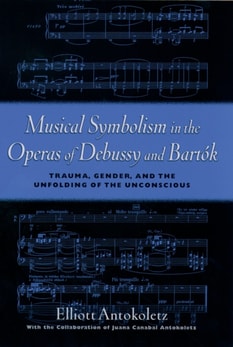
Musical Symbolism in the Operas of Debussy and Bartok explores the means by which two early 20th century operas - Debussy's Pelleas et Melisande (1902) and Bartok's Duke Bluebeard's Castle (1911) - transformed the harmonic structures of the traditional major/minor scale system into a new musical language.
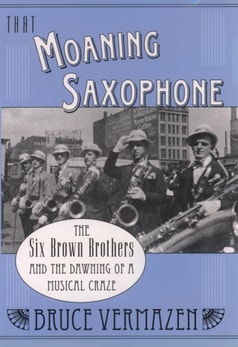
There were but four major galaxies in the early jazz universe, and three of them--New Orleans, Chicago, and New York--have been well documented in print.