This new collection views Russian music through the Greek triad of';the Good, the True, and the Beautiful' to investigatehow the idea of nation embeds itself in the public discourse about music and other arts with results at times invigorating, at times corrupting.
In this original study, Christopher Alan Reynolds examines the influence of Beethoven's Ninth Symphony on two major nineteenth-century composers, Richard Wagner and Robert Schumann.
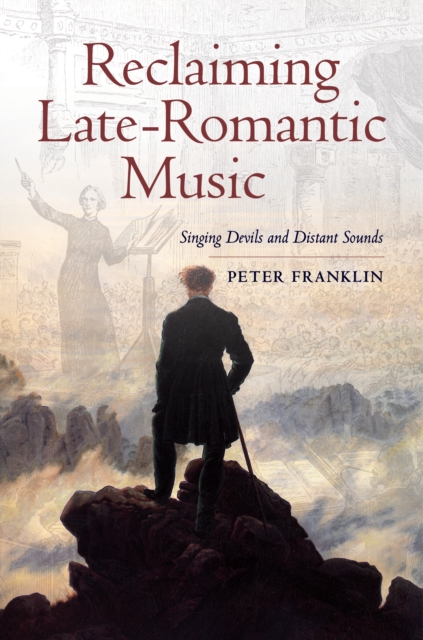
Why are some of the most beloved and frequently performed works of the late-romantic period-Mahler, Delius, Debussy, Sibelius, Puccini-regarded by many critics as perhaps not quite of the first rank?
The tonadilla, a type of satiric musical skit popular on the public stages of Madrid during the late Enlightenment, has played a significant role in the history of music in Spain.
For the three forces competing for political authority in France during World War II, music became the site of a cultural battle that reflected the war itself.
This new collection views Russian music through the Greek triad of';the Good, the True, and the Beautiful' to investigatehow the idea of nation embeds itself in the public discourse about music and other arts with results at times invigorating, at times corrupting.
In the German states in the late eighteenth century, women flourished as musical performers and composers, their achievements measuring the progress of culture and society from barbarism to civilization.
Breaking down walls between genres that are usually discussed separately-classical, jazz, and popular-this highly engaging book offers a compelling new integrated view of twentieth-century music.
In this book, Susan McClary examines the mechanisms through which seventeenth-century musicians simulated extreme affective states-desire, divine rapture, and ecstatic pleasure.
This pathbreaking study links two traditionally separate genres as their stars crossed to explore the emergence of multiple selves in early modern Italian culture and society.
In this groundbreaking, historically-informed semiotic study of late eighteenth-century music, Stephen Rumph focuses on Mozart to explore musical meaning within the context of Enlightenment sign and language theory.
The early seventeenth century, when the first operas were written and technical advances with far-reaching consequences-such as tonal music-began to develop, is also notable for another shift: the displacement of aristocratic music-makers by a new professional class of performers.
This lively history immerses the reader in San Francisco's musical life during the first half of the twentieth century, showing how a fractious community overcame virulent partisanship to establish cultural monuments such as the San Francisco Symphony (1911) and Opera (1923).
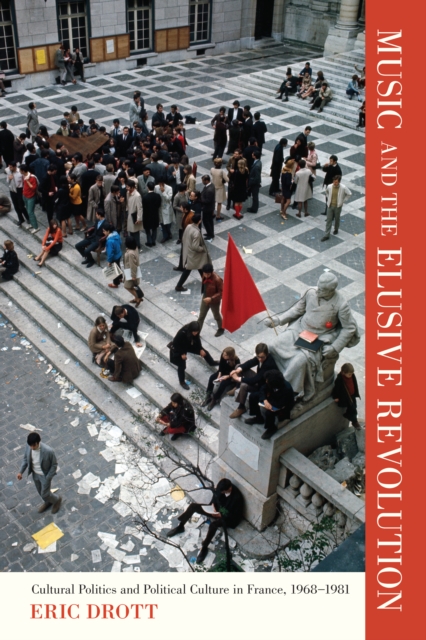
In May 1968, France teetered on the brink of revolution as a series of student protests spiraled into the largest general strike the country has ever known.
Interpreting Music is a comprehensive essay on understanding musical meaning and performing music meaningfully-"e;interpreting music"e; in both senses of the term.
In a book that challenges modernist ideas about the value and role of music in Western society, Composing the Citizen demonstrates how music can help forge a nation.
The Danger of Music gathers some two decades of Richard Taruskin's writing on the arts and politics, ranging in approach from occasional pieces for major newspapers such as the New York Times to full-scale critical essays for leading intellectual journals.
In this enlightening and entertaining book, one of the most original and sophisticated musicologists writing today turns his attention to music's most dramatic genre.
In this pioneering, erudite study of a pivotal era in the arts, Walter Frisch examines music and its relationship to early modernism in the Austro-German sphere.
In a highly influential essay, Rose Rosengard Subotnik critiques "e;structural listening"e; as an attempt to situate musical meaning solely within the unfolding of the musical structure itself.
John Deathridge presents a different and critical view of Richard Wagner based on recent research that does not shy away from some unpalatable truths about this most controversial of composers in the canon of Western music.
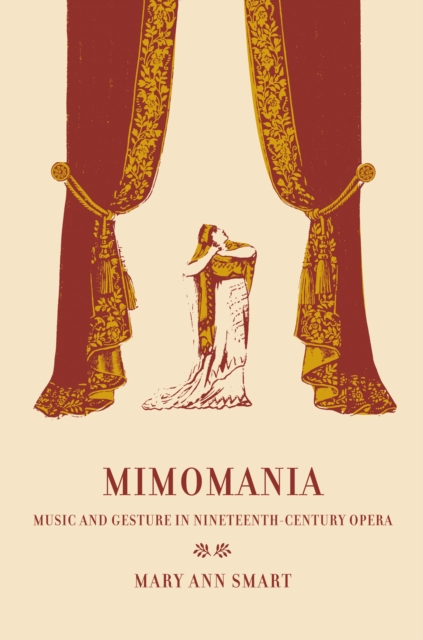
When Nietzsche dubbed Richard Wagner "e;the most enthusiastic mimomaniac"e; ever to exist, he was objecting to a hollowness he felt in the music, a crowding out of any true dramatic impulse by extravagant poses and constant nervous movements.
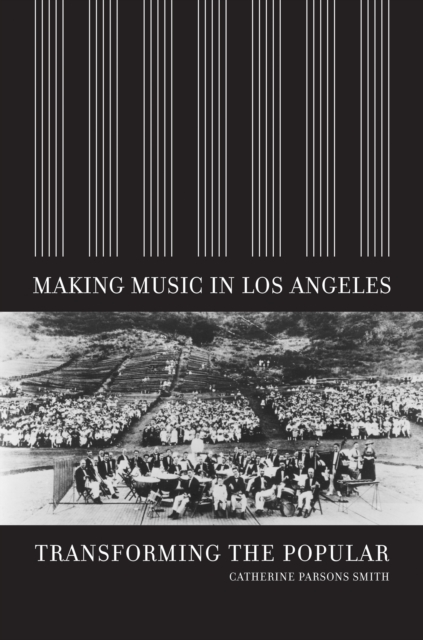
In this fascinating social history of music in Los Angeles from the 1880s to 1940, Catherine Parsons Smith ventures into an often neglected period to discover that during America's Progressive Era, Los Angeles was a center for making music long before it became a major metropolis.
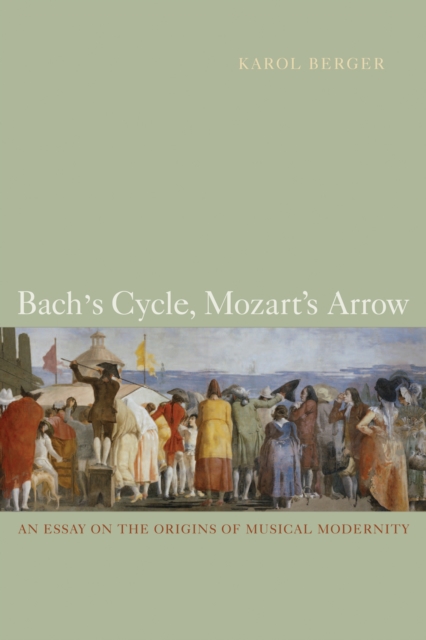
In this erudite and elegantly composed argument, Karol Berger uses the works of Monteverdi, Bach, Mozart, and Beethoven to support two groundbreaking claims: first, that it was only in the later eighteenth century that music began to take the flow of time from the past to the future seriously; second, that this change in the structure of musical time was an aspect of a larger transformation in the way educated Europeans began to imagine and think about time with the onset of modernity, a part of a shift from the premodern Christian outlook to the modern post-Christian worldview.
This bold challenge to conventional notions about medieval music disputes the assumption of pure literacy and replaces it with a more complex picture of a world in which literacy and orality interacted.
In this provocative analysis of Beethoven's late style, Stephen Rumph demonstrates how deeply political events shaped the composer's music, from his early enthusiasm for the French Revolution to his later entrenchment during the Napoleonic era.
Just as the preoccupations of any given cultural moment make their way into the language of music, the experience of music makes its way into other arenas of life.
In this boldly innovative book, renowned musicologist Susan McClary presents an illuminating cultural interpretation of the Italian madrigal, one of the most influential repertories of the Renaissance.
In this engrossing collection of essays, distinguished composer, theorist, journalist, and educator Arthur Berger invites us into the vibrant and ever-changing American music scene that has been his home for most of the twentieth century.
Opera developed during a time when the position of women-their rights and freedoms, their virtues and vices, and even the most basic substance of their sexuality-was constantly debated.
Based on his decades of experience conducting these works, Leonard Slatkin guides readers through eight of the most beloved orchestral pieces of the twentieth century:Claude Debussy's La MerDmitri Shostakovich's Symphony No.