This collection of essays delves into the historiographical traditions that have dominated how the stories of European postwar avant-garde music are told, seeking to approach commonplaces of that history writing from new perspectives.
This collection of essays delves into the historiographical traditions that have dominated how the stories of European postwar avant-garde music are told, seeking to approach commonplaces of that history writing from new perspectives.
The grotesque is one of art's most puzzling figures - transgressive, comprising an unresolveable hybrid, generally focussing on the human body, full of hyperbole, and ultimately semantically deeply puzzling.
The grotesque is one of art's most puzzling figures - transgressive, comprising an unresolveable hybrid, generally focussing on the human body, full of hyperbole, and ultimately semantically deeply puzzling.
Between 1958 and 2002, Luciano Berio wrote fourteen pieces entitled Sequenza, along with several versions of the same work for different instruments, revisions of the original pieces and also the parallel Chemins series, where one of the Sequenzas is used as the basis for a new composition on a larger scale.
Between 1958 and 2002, Luciano Berio wrote fourteen pieces entitled Sequenza, along with several versions of the same work for different instruments, revisions of the original pieces and also the parallel Chemins series, where one of the Sequenzas is used as the basis for a new composition on a larger scale.
In 1853 Robert Schumann identified fully-formed compositional mastery in the young Brahms, who nevertheless in the years following embarked on a period of intensive further study, producing, among other works, the neo-baroque Sarabande and Gavotte.
In 1853 Robert Schumann identified fully-formed compositional mastery in the young Brahms, who nevertheless in the years following embarked on a period of intensive further study, producing, among other works, the neo-baroque Sarabande and Gavotte.
Charles Avison's Essay on Musical Expression, first published in 1752, is a major contribution to the debate on musical aesthetics which developed in the course of the 18th century.
Charles Avison's Essay on Musical Expression, first published in 1752, is a major contribution to the debate on musical aesthetics which developed in the course of the 18th century.
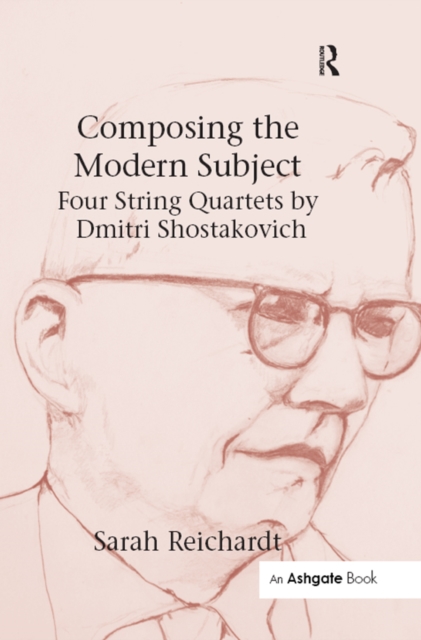
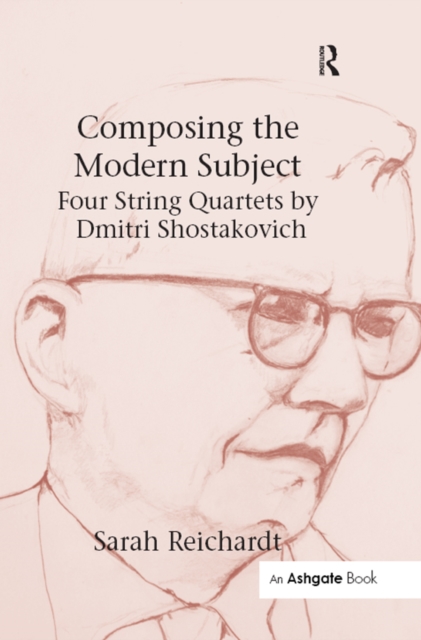
Since the publication of Solomon Volkov's disputed memoirs of Dmitri Shostakovich, the composer and his music has been subject to heated debate concerning how the musical meaning of his works can be understood in relationship to the composer's life within the Soviet State.
Musicology, having been transmitted as a compilation of disparate events and disciplines, has long necessitated a 'magic bullet', a 'unified field theory' so to speak, that can interpret the steady metamorphosis of Western art music from late medieval modality to twentieth-century atonality within a single theoretical construct.
Musicology, having been transmitted as a compilation of disparate events and disciplines, has long necessitated a 'magic bullet', a 'unified field theory' so to speak, that can interpret the steady metamorphosis of Western art music from late medieval modality to twentieth-century atonality within a single theoretical construct.
Composers, performers, listeners, critics and theorists all play vital roles in the creation of music culture; yet often each group can appear to hold widely divergent views of a musical work's aims and effects.
Composers, performers, listeners, critics and theorists all play vital roles in the creation of music culture; yet often each group can appear to hold widely divergent views of a musical work's aims and effects.
Since the publication of Solomon Volkov's disputed memoirs of Dmitri Shostakovich, the composer and his music has been subject to heated debate concerning how the musical meaning of his works can be understood in relationship to the composer's life within the Soviet State.
The substantial collection of notations of seventeenth-century Ottoman instrumental music made by Demetrius Cantemir is both a record of compositions of considerable intrinsic interest and a historical document of vital importance, representing as it does one of the most comprehensive accounts of any Middle Eastern repertoire before the widespread adoption of Western notation in the twentieth century.
The substantial collection of notations of seventeenth-century Ottoman instrumental music made by Demetrius Cantemir is both a record of compositions of considerable intrinsic interest and a historical document of vital importance, representing as it does one of the most comprehensive accounts of any Middle Eastern repertoire before the widespread adoption of Western notation in the twentieth century.
In 1912 Heinrich Schenker contracted with the Viennese publisher Universal Edition to provide an 'elucidatory edition' (Erl erungsausgabe) of Beethoven's last five piano sonatas.
In 1912 Heinrich Schenker contracted with the Viennese publisher Universal Edition to provide an 'elucidatory edition' (Erl erungsausgabe) of Beethoven's last five piano sonatas.
This collection presents numerous discoveries and fresh insights into music and musical practices that shaped distinctly localized individual and collective identities in pre-modern and early modern Europe.
This collection presents numerous discoveries and fresh insights into music and musical practices that shaped distinctly localized individual and collective identities in pre-modern and early modern Europe.
Music and Historical Critique provides a definitive collection of Gary Tomlinson's influential studies on critical musicology, with the watchword throughout being history.