This book explores early new critical debates about intention, tracing how and why intention was dismissed across much humanities scholarship, and how it can be revisited and made relevant as a key formative, evaluative, and ethical concept.
This volume is dedicated to the elusive category of the Hitchcock Touch, the qualities and techniques which had manifested in Alfred Hitchcock's own films yet which cannot be limited to the realm of Hitchcockian cinema alone.
This book presents an extended account of the language of dystopia, exploring the creativity and style of dystopian narratives and mapping the development of the genre from its early origins through to contemporary practice.
This book explores the idea that while we see the vampire as a hero of romance, or as a member of an oppressed minority struggling to fit in and acquire legal recognition, the vampire has in many ways changed beyond recognition over recent decades due to radically shifting formations of the sacred in contemporary culture.
This book examines social aspects of humour relating to the judiciary, judicial behaviour, and judicial work across different cultures and eras, identifying how traditionally recorded wit and humorous portrayals of judges reflect social attitudes to the judiciary over time.
The Palgrave Encyclopedia of American Horror Film Shorts chronicles for the first time over 1,500 horror and horror-related short subjects theatrically released between 1915, at the dawn of the feature film era when shorts became a differentiated category of cinema, and 1976, when the last of the horror-related shorts were distributed to movie theaters.
Rethinking Genre in Contemporary Global Cinema offers a unique, wide-ranging exploration of the intersection between traditional modes of film production and new, transitional/transnational approaches to film genre and related discourses in a contemporary, global context.
This book explores the cycle of horror on US television in the decade following the launch of The Walking Dead, considering the horror genre from an industrial perspective.
Australian Western in the Fifties: Kangaroo, Hopalong Cassidy on Tour, and Whiplash looks at Australian Westerns from three points of view-film, personal appearance, and television at the beginning, middle, and end of the 1950s, the American Western's golden age.
This book offers a comprehensive and systematic overview of the flourishing genre of the contemporary Latin American road movie, of which Diarios de motocicleta and Y tu mama tambien are only the best-known examples.
This book examines the convergent paths of the Internet and the American military, interweaving a history of the militarized Internet with analysis of a number of popular Hollywood movies in order to track how the introduction of the Internet into the war film has changed the genre, and how the movies often function as one part of the larger Military-Industrial- Media-Entertainment Network and the Total War Machine.
This book undertakes a concentrated study of the impact of degraded and low-quality imagery in contemporary cinema and real-world portrayals of violence.
This book offers a unique argument for the emergence of a post-9/11 vampire that showcases changing perspectives on identity and religion in American culture, offering a look at how cultural narratives can be used to work through trauma.
This book explores Alan Moore's career as a cartoonist, as shaped by his transdisciplinary practice as a poet, illustrator, musician and playwright as well as his involvement in the Northampton Arts Lab and the hippie counterculture in which it took place.
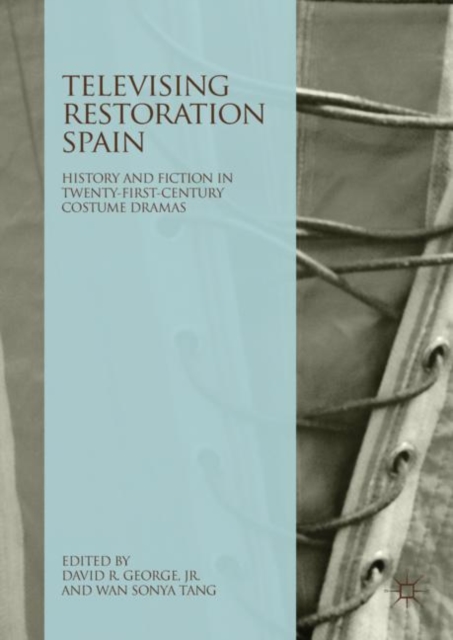
This edited volume examines the historical, political, cultural, and aesthetic implications of re-visiting Restoration Spain (1874-1931) in television costume dramas produced since 2000.
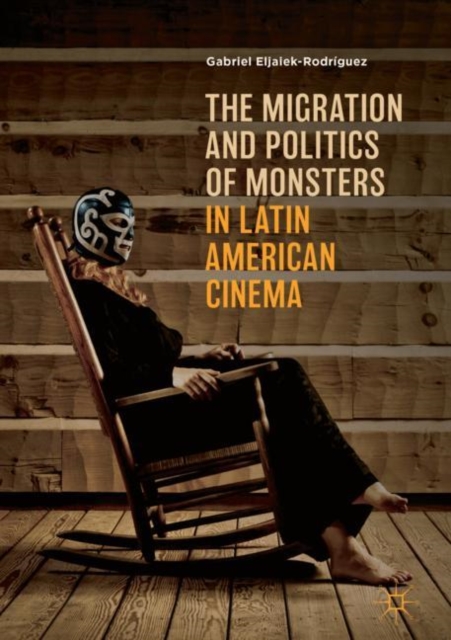
The Migration and Politics of Monsters in Latin America proposes a cinematic cartography of contemporary Latin American horror films that take up the idea of the American continent as a space of radical otherness, or monstrosity, and use it for political purposes.
National Identity in 21st-Century Cuban Cinema tours early 21st-century Cuban cinema through four key figures-the monster, the child, the historic icon, and the recluse-in order to offer a new perspective on the relationship between the Revolution, culture, and national identity in contemporary Cuba.
Die Kategorie Race gewinnt aktuell wieder stärker an politischer Sichtbarkeit, bedingt vor allem durch die Black-Lives-Matter-Bewegung, Migration und Flucht, nicht zuletzt auch durch Theorieansätze wie Postcolonial Studies, Critical Race Theory, Intersektionalität oder Decolonizing der Gender Studies.
Der bisherige Fokus der TV-Serienforschung auf US-amerikanische Produktionen hat gemeinsam mit dem steten Aufstieg innovativer Serienformate aus der Romania zu einer großen Forschungslücke geführt.
Der Sammelband bringt verschiedene Zugänge und Kontexte zu Twin Peaks zusammen und greift dabei auch die besonderen produktions- und rezeptionsästhetischen Spezifika der Serie auf.
Mit Gothic Cinema schließt sich eine Lücke im deutschsprachigen Filmdiskurs: Erstmalig beleuchtet der Band einen bislang wenig diskutierten Filmzusammenhang.
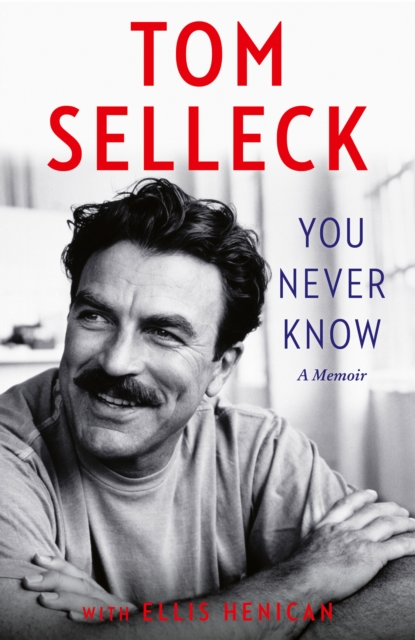
A Waterstones Best Book of 2024There are many miles from the business school and basketball court at the University of Southern California to 50 million viewers for the final episode of a TV show called Magnum P.
La decimosexta entrega del celebre abecedario del cine mexicano, presenta en exclusiva material inedito de la investigacion en curso del critico cinematografico con mayor trayectoria en nuestro pais.
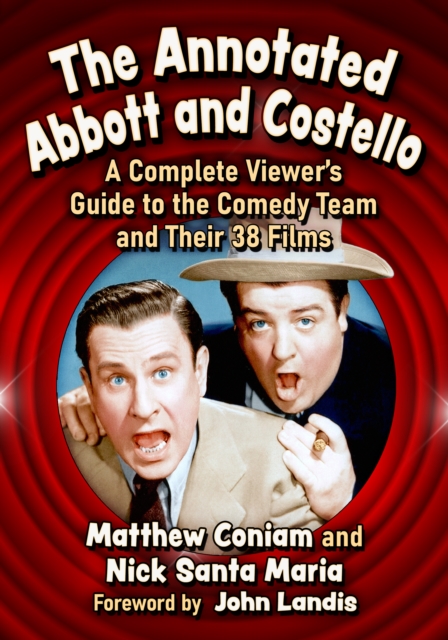
Abbott and Costello were the most popular comedians of the 1940s, with burlesque-inspired routines that enthralled audiences on both radio and television.