Postmodern Vampires: Film, Fiction, and Popular Culture is the first major study to focus on American cultural history from the vampire's point of view.
This book explores the role and purpose of journalism to spark and propagate change by investigating human rights journalism and its capacity to inform, educate and activate change.
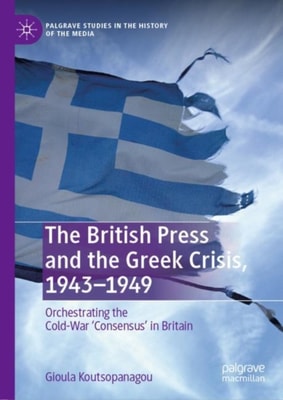
This book provides the first detailed analysis of how interactions between government policy and Fleet Street affected the political coverage of the Greek civil war, one of the first major confrontations of the Cold War.
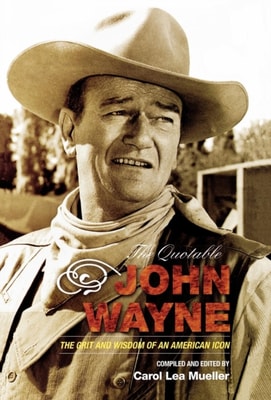
Perhaps best known for his classic movie lines, such as Fill your hands, you sons-a-bitches from True Grit, the late actor John Wayne often displayed a spontaneous and biting wit away from the screen as well.
"e;All the cutting edge technology I learned in college-typewriters, film splicers, glue-is now in a museum; the one thing that hasn't changed is how to tell a visual story.
Although five-time Academy-Award nominee Ennio Morricone has scored numerous films in various genres, his westerns will undoubtedly remain his most memorable cinematographic accomplishments.
This is the first book on enduring Hollywood star Eleanor Parker, long underrated despite three best actress Academy Award nominations (Caged, 1950; Detective Story, 1951; Interrupted Melody, 1955).
Among the many fine examples of film scores by Erich Wolfgang Korngold (1897-1957), the score for The Adventures of Robin Hood (1938) stands out the most.
Classic film noir was Hollywood's 'dark cinema' of crime and corruption; a genre underpinned by a tone of existential cynicism which stripped bare the myth of the American Dream and offered a bleak, nightmarish vision of a fragmented society that rhymed with many of the social realities of forties and fifties America.
Images of violent black masculinity are not new in American culture, but in the late 1980s and early '90s, the social and economic climate in the country contributed to an unprecedented number of films about ghetto life.
Emphasizing the importance of cultural theory for film history, Giuliana Bruno enriches our understanding of early Italian film as she guides us on a series of "e;inferential walks"e; through Italian culture in the first decades of this century.
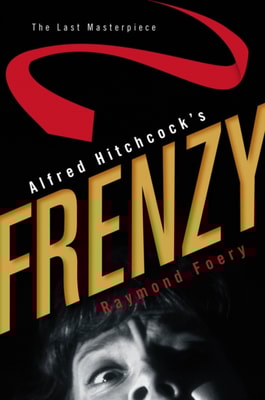
After an unparalleled string of artistic and commercial triumphs in the 1950s and 1960s, Alfred Hitchcock hit a career lull with the disappointing Torn Curtain and the disastrous Topaz.
A new, counterintuitive theory for how social networks influence the spread of behaviorNew social movements, technologies, and public-health initiatives often struggle to take off, yet many diseases disperse rapidly without issue.
A collection of distinguished essays by some of today's best nonfiction writers and journalistsFrom a Swedish hotel made of ice to the enigma of UFOs, from a tragedy on Lake Minnetonka to the gold mine of cyberpornography, The Princeton Reader brings together more than 90 favorite essays by 75 distinguished writers.
In this, the first comprehensive book on Liliana Cavani, Gaetana Marrone redraws the map of postwar Italian cinema to make room for this extraordinary filmmaker, whose representations of transgressive eroticism, spiritual questing, and psychological extremes test the limits of the medium, pushing it into uncharted areas of discovery.
Spanish filmmaker Carlos Saura, who began his career under the censorship of Franco's regime, has forged an international reputation for his unique cinematic treatment of emotional and spiritual responses to repressive political conditions.
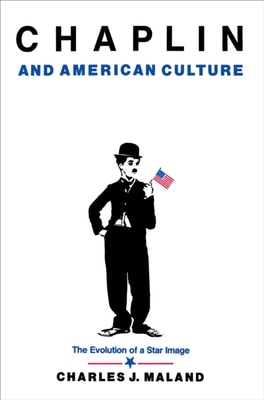
Charles Maland focuses on the cultural sources of the on-and-off, love-hate affair between Chaplin and the American public that was perhaps the stormiest in American stardom.
Patrice Petro challenges the conventional assessment of German film history, which sees classical films as responding solely to male anxieties and fears.
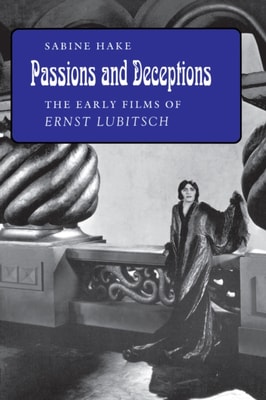
A collaborator with Warner Brothers and Paramount in the early days of sound film, the German film director Ernst Lubitsch (1892-1947) is famous for his sense of ironic detachment and for the eroticism he infused into such comedies as So This Is Paris and Trouble in Paradise.
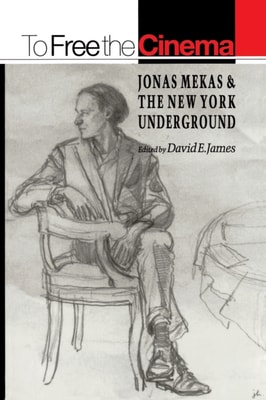
Jonas Mekas, one of the driving forces behind New York's alternative film culture from the 1950s through the 1980s, made for an unlikely counterculture hero: a Lithuanian emigr and fervent nationalist from an agrarian family, he had not grown up with either capitalist commercialism or the postwar rebellion against it.
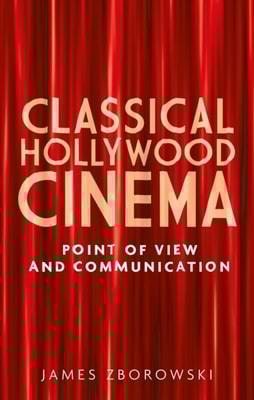
This book offers a new approach to filmic point of view by combining close analyses informed by the tools of narratology and philosophy with concepts derived from communication studies.
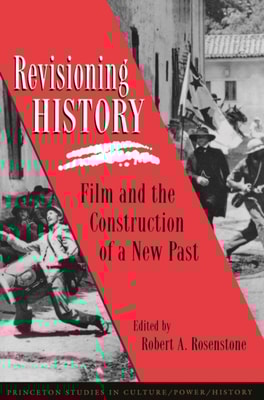
In Revisioning History thirteen historians from around the world look at the historical film on its own terms, not as it compares to written history but as a unique way of recounting the past.
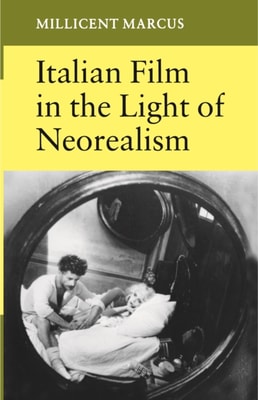
The movement known as neorealism lasted seven years, generated only twenty-one films, failed at the box office, and fell short of its didactic and aesthetic aspirations.
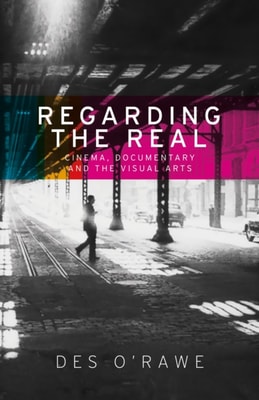
Regarding the real develops an original approach to documentary film, focusing on its aesthetic relations to visual arts such as animation, assemblage, photography, painting and architecture.
An essential work of the cinematic history of the Weimar Republic by a leading figure of film criticismFirst published in 1947, From Caligari to Hitler remains an undisputed landmark study of the rich cinematic history of the Weimar Republic.
This book offers a new approach to filmic point of view by combining close analyses informed by the tools of narratology and philosophy with concepts derived from communication studies.
Regarding the real develops an original approach to documentary film, focusing on its aesthetic relations to visual arts such as animation, assemblage, photography, painting and architecture.
Newly available in paperback, this book looks at how rap and metal have been highly engaged with America's role in the world, supercapitalism and their own role within it.
This is the first major study in English of cine quinqui, a cycle of popular Spanish films from the late 1970s and early 1980s that starred real-life juvenile delinquents.
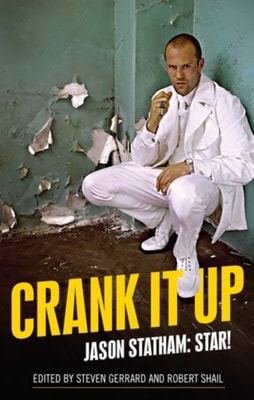
Jason Statham has risen from street seller through championship diving and modelling to become arguably the biggest British male film star of the twenty-first century.