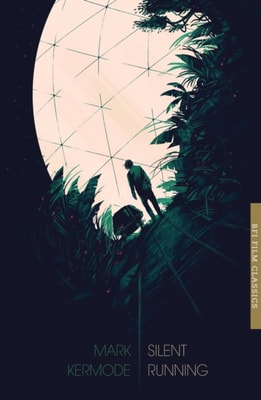
A visually stunning and heartfelt riposte to the emotional sterility of Kubrick's 2001: A Space Odyssey, Douglas Trumbull's eco-themed Silent Running (1972) became one of the defining science-fiction films of the seventies.
The past four decades have seen the Spanish film industry rise from isolation in the 1970s to international recognition within European and World Cinema today.
The War of the Worlds was one of a handful of high-prestige science fiction productions in a low-budget era, and initiated modern cinema's reliance on screen-filling special effects.
Widely believed to be Terry Gilliam's best film, Brazil's brilliantly imaginative vision of a retro-futuristic bureaucracy has had a lasting influence on genre cinema.
While digging an extension to the London Underground Railway, workmen discover an object which might be an ancient Martian spaceship and Professor Quatermass of the British Rocket Group investigates a mystery which prompts frightening revelations about the origins of humanity itself.
Dont Look Back, a documentary film of Bob Dylan's 1965 England tour, is recognised as a landmark work in the field of documentary film-making, contributing to the cultural life of an era.
Guillermo del Toro's cult masterpiece, Pan's Labyrinth (2006), won a total of 76 awards and is one of the most commercially successful Spanish-language films ever made.
Eric Ames draws on original archival research to provide fresh perspectives on Werner Herzog's breakthrough 1972 film, Aguirre, the Wrath of God (Aguirre, der Zorn Gottes), which portrays an expedition by Spanish conquistadors led by Aguirre (played by Klaus Kinski) to find the legendary city of El Dorado.
Focusing on early cinema's relationship with the pictorial arts, this pioneering study explores how cinema's emergence was grounded in theories of picture composition, craft and arts education - from magic lantern experiments in 1890s New York through to early Hollywood feature films in the 1920s.
Nollywood is often portrayed by the popular press as an unruly industry, with mysteriously fast and cheap production and shadowy distribution networks.
The first computer-generated animated feature film, Toy Story (1995) sustains a dynamic vitality that proved instantly appealing to audiences of all ages.
Portraying the Ku Klux Klan as heroic underdogs, silent epic The Birth of a Nation (1915) is widely considered to be the most controversial film of all time.
In recent years, Arab television has undergone a dramatic and profound transformation from terrestrial, government-owned, national channels to satellite, privately owned, transnational networks.
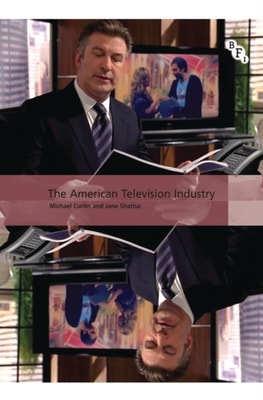
The American Television Industry offers a concise and accessible introduction to TV production, programming, advertising, and distribution in the United States.
Despite having had its obituary written many times, the movie musical remains a flourishing twenty-first century form, and as this volume demonstrates, one that exists far beyond the confines of Broadway and Hollywood.
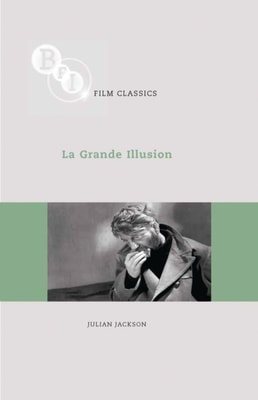
Jean Renoir's 1937 film La Grande Illusion is set during the First World War, but its themes of Franco-German conflict, divided loyalties in a time of war and the rise of anti-Semitism made it compelling and controversial viewing.
Todd Haynes's 2002 film Far From Heaven has been hailed as a homage to 1950s Hollywood melodrama, although anyone tempted to take the film at face value should be warned that it aims to subvert as much as celebrate that genre.
Upon its release in 1956, Don Siegel's Invasion of the Body Snatchers was widely perceived as another 'B' movie thriller in the cycle of science fiction and horror films that proliferated in the 1950s.
Movie Geek is a nerdy dive into popular movies, brought to you by the award-losing Den Of Geek website, with a foreword by the UK's foremost film critic, Mark Kermode.