Movies about significant historical personalities or landmark events like war seem to be governed by a set of unspoken rules for the expression of gender.
What has brought about the transformation of the British film industry over the last few decades, to the beginnings of what is arguably a new golden era?
There's a folk memory of China in which numberless yellow hordes pour out of the 'mysterious East' to overwhelm the vulnerable West, accompanied by a stereotype of the Chinese as cruel, cunning and depraved.
Since the publication of Vito Russo's seminal study The Celluloid Closet in 1981, much has been written about the representation of queer characters on screen.
The organization 'Genocide Watch' estimates that 100 million civilians around the globe have lost their lives as a result of genocide in only the past sixty years.
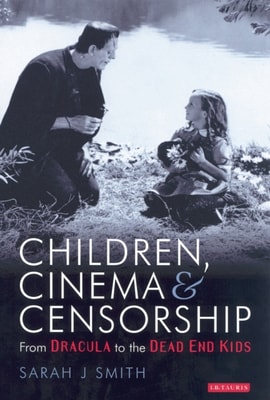
Children have long been one of cinema's largest audiences yet, from its infancy, cinema has in the minds of moral watchdogs accompanied a succession of pastimes and new technologies as catalysts for juvenile delinquency.
Wonder Woman was created in the early 1940s as a paragon of female empowerment and beauty and her near eighty-year history has included seismic socio-cultural changes.
The internationally acclaimed films Persepolis and Waltz with Bashir only hinted at the vibrant animation culture that exists within the Middle East and North Africa.
She has received numerous accolades including an Academy Award and two Golden Globes, and in 2004 became the first ever American woman to be nominated for a Best Director Oscar.
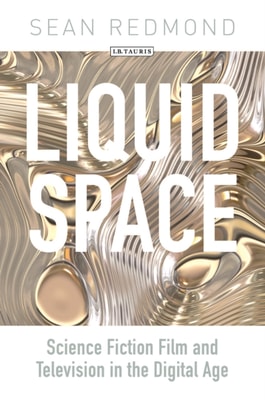
In this remarkable and original book, Sean Redmond examines the issues and themes that are repeatedly found across a range of contemporary science fiction films and television programmes.
Film historian James Chapman has mined Hitchcock's own papers to investigate fully for the first time the spy thrillers of the world's most famous filmmaker.
Although ostensibly presented as “light entertainment,” the work of writer-director-producer Joss Whedon takes much dark inspiration from the horror genre to create a unique aesthetic and perform a cultural critique.
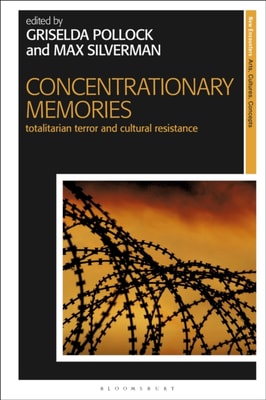
In 1945, French political prisoners returning from the concentration camps of Germany coined the phrase 'the concentrationary universe' to describe the camps as a terrible political experiment in the destruction of the human.
Film historian James Chapman has mined Hitchcock's own papers to investigate fully for the first time the spy thrillers of the world's most famous filmmaker.