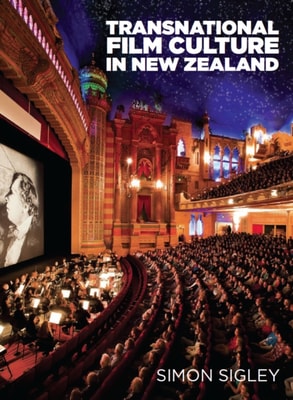
In this innovative work of cultural history, Simon Sigley tells the story of film culture in New Zealand from the establishment of the Auckland Film Society in the 1920s to the present day.
No society is without crime, prompting Nathaniel Hawthorne's narrator to make his famous statement in The Scarlet Letter that, however high its hopes are, no civilization can fail to allot a portion of its soil as the site of a prison.
No society is without crime, prompting Nathaniel Hawthorne's narrator to make his famous statement in The Scarlet Letter that, however high its hopes are, no civilization can fail to allot a portion of its soil as the site of a prison.
An extraordinarily beautiful city that has been celebrated, criticised and studied in many films, San Francisco is both fragile and robust, at once a site of devastation caused by 1906 earthquake but also a symbol of indomitability in its effort to rebuild afterwards.
Prague - known as 'The City of Dreams', 'The Hundred-Spired City' and, most significantly for this study, 'Hollywood of the East' - has played an important role in the history of the seventh art.
The rapid development of Hong Kong has occasioned the demolition of buildings and landscapes of historic significance, but film acts as a repository for memories of lost places, vanished vistas and material objects.
From a decidedly inauspicious start as a low-rated television series in the 1960s that was cancelled after three seasons, Star Trek has grown to a multi-billion dollar industry of spin-off series, feature films and merchandise.
From his debut in a six-page comic in 1939 to his most recent portrayal by Christian Bale in the blockbuster The Dark Knight Rises, Batman is perhaps the world's most popular superhero.
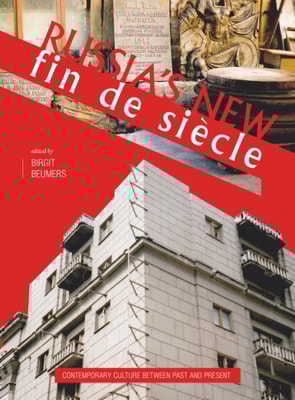
Russia's New Fin de Siecle brings together a range of texts on contemporary Russian culture - literary, cinematic and popular - as artists and writers try to situate themselves within the traditional frameworks of past and present, East and West, but also challenge established markers of identity.
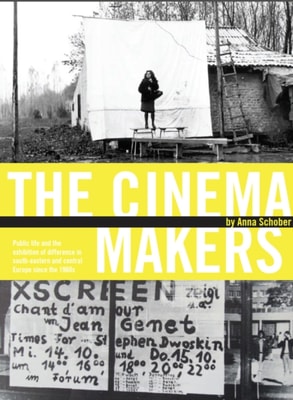
The Cinema Makers investigates how cinema spectators in southeastern and central European cities became cinema makers through such practices as squatting in existing cinema spaces, organizing cinema "e;events,"e; writing about film, and making films themselves.
Berlin School Glossary is the first major publication to mark the increasing international importance of a group of contemporary German and Austrian filmmakers initially known by the name the Berlin School: Christian Petzold, Thomas Arslan, Christoph Hochhausler, Jessica Hausner and others.
Berlin School Glossary is the first major publication to mark the increasing international importance of a group of contemporary German and Austrian filmmakers initially known by the name the Berlin School: Christian Petzold, Thomas Arslan, Christoph Hochhausler, Jessica Hausner and others.
Taking as its starting point the notion of photocinema - or the interplay of the still and moving image - the photographs, interviews, and critical essays in this volume explore the ways in which the two media converge and diverge, expanding the boundaries of each in interesting and unexpected ways.
Whether we stream them on our laptops, enjoy them in theatres or slide them into DVD players to watch on our TVs, movies are part of what it means to be socially connected in the twenty-first century.
Filming the City brings together the work of filmmakers, architects, designers, video artists and media specialists to provide three distinct prisms through which to examine the medium of film in the context of the city.
Filming the City brings together the work of filmmakers, architects, designers, video artists and media specialists to provide three distinct prisms through which to examine the medium of film in the context of the city.
For most of the twentieth century, the private eye dominated crime fiction and film, a lone figure fighting for justice, often in opposition to the official representatives of law and order.
The mere hint recently that British actor Idris Elba might take up the mantle of James Bond in future instalments of the film franchise was a major international news story - a testament to the enduring interest and appeal of Bond, a figure who has become a true global icon.
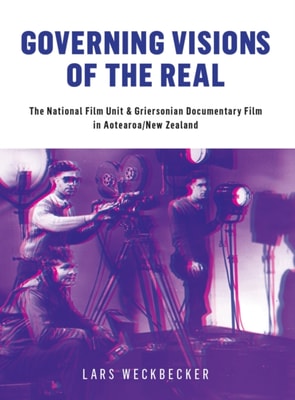
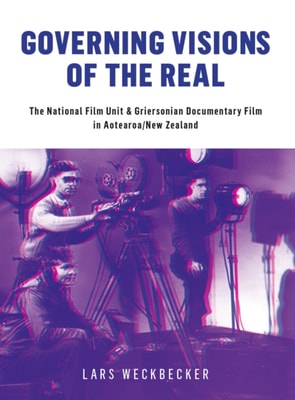
Governing Visions of the Real traces the emergence, development, and techniques of Griersonian documentary - named for pioneering Scottish film-maker John Grierson - in New Zealand throughout the first half of the twentieth century.
Governing Visions of the Real traces the emergence, development, and techniques of Griersonian documentary - named for pioneering Scottish film-maker John Grierson - in New Zealand throughout the first half of the twentieth century.
Hollywood continues to reign supreme; from award-winning dramas to multimillion-dollar, special-effects-laden blockbusters, Tinseltown produces the films that audiences around the world go to the cinema to see.
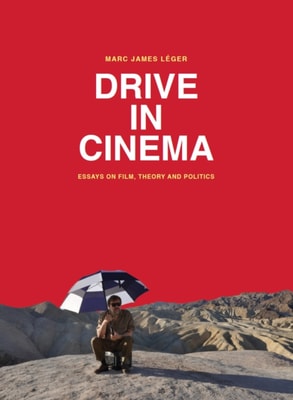
Drive in Cinema offers Zizek-influenced studies of films made by some of the most engaging and influential filmmakers of our time, from avant-garde directors Jean-Luc Godard, Werner Herzog, Alexander Kluge, Pier Paolo Pasolini and Vera Chytilova, to independent filmmakers William Klein, Oliver Ressler, Hal Hartley, Olivier Assayas, Vincent Gallo, Jim Jarmusch and Harmony Korine.
Drive in Cinema offers Zizek-influenced studies of films made by some of the most engaging and influential filmmakers of our time, from avant-garde directors Jean-Luc Godard, Werner Herzog, Alexander Kluge, Pier Paolo Pasolini and Vera Chytilova, to independent filmmakers William Klein, Oliver Ressler, Hal Hartley, Olivier Assayas, Vincent Gallo, Jim Jarmusch and Harmony Korine.
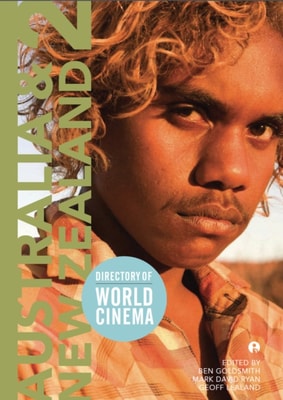
Building on and bringing up to date the material presented in the first instalment of Directory of World Cinema: Australia and New Zealand, this volume continues the exploration of the cinema produced in Australia and New Zealand since the beginning of the twentieth century.
Deftly deploying Derrida's notion of the 'unexperienced experience' and building on Paul Virilio's ideas about the aesthetics of disappearance, Vanishing Points explores the aesthetic character of presence and absence as articulated in contemporary art, photography, film and emerging media.
Deftly deploying Derrida's notion of the 'unexperienced experience' and building on Paul Virilio's ideas about the aesthetics of disappearance, Vanishing Points explores the aesthetic character of presence and absence as articulated in contemporary art, photography, film and emerging media.
Working at the intersection of religion and ever-shifting political, economic and social environments, Iranian cinema has produced some of the most critically lauded films in the world today.
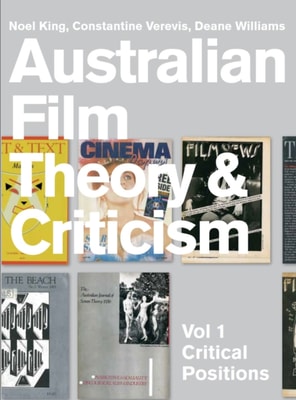
A three-volume project tracing key critical positions, people and institutions in Australian film, Australian Film Theory and Criticism interrogates not only the origins of Australian film theory but also its relationships to adjacent disciplines and institutions.
A three-volume project tracing key critical positions, people and institutions in Australian film, Australian Film Theory and Criticism interrogates not only the origins of Australian film theory but also its relationships to adjacent disciplines and institutions.