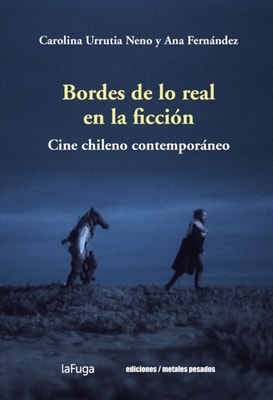
El minucioso examen de Bordes de lo real en la ficción surge de un diagnóstico con respecto al panorama del cine contemporáneo en Chile, y la dificultad teórica que significa el pensar un cine que pone en conflicto sus propios márgenes: se trata de una renovación dialogante del cine de los años dos mil (el llamado Novísimo Cine Chileno), que desde lo privado y lo afectivo se inmiscuye en las arenas de lo público, lo social y lo político en la cinematografía de ficción del presente.
En Para hacer el cuento corto…, Hugo Hanisch Ovalle nos sorprende con entretenidas y aventureras experiencias vividas en sus diversos viajes y trabajos alrededor de todo el mundo, acompañadas por maravillosas acuarelas de su propia y genial mano, que deleitarán al lector a medida que avance por cada una de las inolvidables anécdotas.
Este libro es una historia personal del filme más emblemático del gran realizador chileno que revela minuciosamente, paso a paso, todas las vicisitudes técnicas y humanas que debió enfrentar para su realización, constituyendo también una pieza maestra de la memoria histórica de Chile.
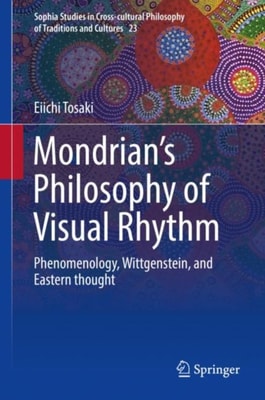
This volume investigates the meaning of visual rhythm through Piet Mondrian's unique approach to understanding rhythm in the compositional structure of painting, drawing reference from philosophy, aesthetics, and Zen culture.
The book describes the innovations that enabled botany, in the Eighteenth century, to emerge as an independent science, independent from medicine and herbalism.
Intended for scholars in the fields of philosophy, history of science and music, this book examines the legacy of the historical coincidence of the emergence of science and opera in the early modern period.
Emotion in Aesthetics is the first book on aesthetics to provide an extensive theory of emotion; application of the cognitive-emotive theory to aesthetics; analysis of the relationship between aesthetics, metaphor and emotion; a full theory of meaning and its application to aesthetics; discussion of the relationship between aesthetics, music and language in terms of phonetics, phonology and intonation; an analysis of humanistic aesthetics; a well-developed naturalistic theory of ethics as applied to aesthetics and emotion.
Dieser Buchtitel ist Teil des Digitalisierungsprojekts Springer Book Archives mit Publikationen, die seit den Anfängen des Verlags von 1842 erschienen sind.
3 same lecture he characterizes the phenomenology of knowledge, more specifically, as the "e;theory of the essence of the pure phenomenon of knowing"e; (see below, p.
List of Illustrations xiii The Life I The Style 19 Contents The Drawings 40 Appraisal and Evaluation 64 Bibliography 79 Notes 82 Index 90 Illustrations vii The French seventeenth century remains at the present moment one of the few areas in the history of later western art which still needs intensive study.
Memory is a subject that recently has attracted many scholars and readers not only in the general historical sciences, but also in the special field of art history.
AESTHETICIZING PRAGMATICS The Gamut of Pragmatics Pragmatics emerged among the sciences of language at the end of the 1960's in reaction to certain totalizing models in linguistics: structuralism (primarily in Europe) and generative grammar (initially in the United States).
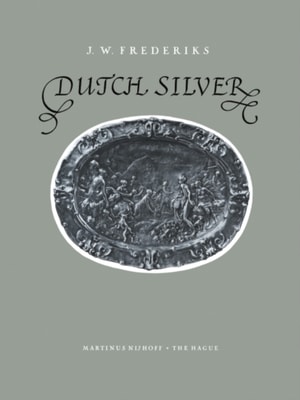
This third volume on Dutch Silver does not need a lengthy introduction, since it is a continuation of the second volume, describing and reproducing the wrought plate of the other provinces of the Netherlands, i.
n several of his writings on folk music Bela Bart6k recalls an incident I that happened to him in 1904 during a visit to a small village in Tran- 1 syl vania.
Researching Visual Arts Education in Museums and Galleries brings together case studies from Europe, Asia and North America, in a way that will lay a foundation for international co-operation in the future development and communication of practice-based research.
Since the second half of the last century art historians, realizing that the image of Rembrandt's work had become blurred with time, have attempted to redefine the artist's significance both as a source of inspiration to other artists and as a great artist in his own right.
This volume consists of papers given to the Royal Institute of Philos- ophy Conference on 'Philosophy and the Visual Arts: Seeing and Abstracting' given at the University of Bristol in September 1985.
Since the second half of the last century art historians, realizing that the image of Rembrandt's work had become blurred with time, have attempted to redefine the artist's significance both as a source of inspiration to other artists and as a great artist in his own right.
Since the second half of the last century art historians, realizing that the image of Rembrandt's work had become blurred with time, have attempted to redefine the artist's significance both as a source of inspiration to other artists and as a great artist in his own right.
The Pulitzer Prize-winning biographer turns his eye to the seventeenth-century Dutch Golden Age Twenty years ago, Benjamin Moser followed a love affair to an ancient Dutch town.
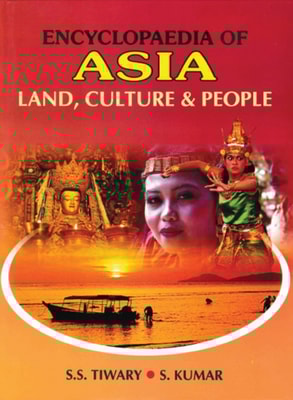
Encyclopaedia of Asia: Land, Culture and People is a unique attempt in the sense that for the first time the editors have attempted to provide readers with most contemporary information-base about these very important countries, forming the said region, called Asia.
Encyclopaedia of Asia: Land, Culture and People is a unique attempt in the sense that for the first time the editors have attempted to provide readers with most contemporary information-base about these very important countries, forming the said region, called Asia.
Encyclopaedia of Asia: Land, Culture and People is a unique attempt in the sense that for the first time the editors have attempted to provide readers with most contemporary information-base about these very important countries, forming the said region, called Asia.