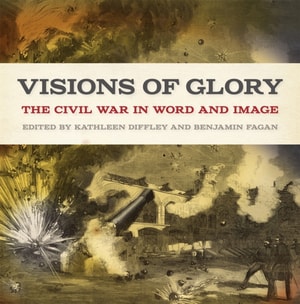
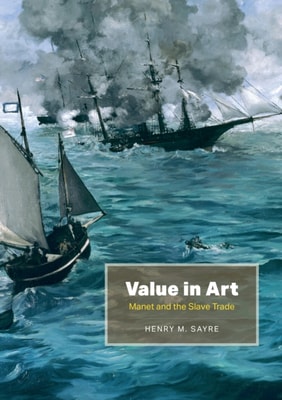
Visions of Glory brings together twenty-two images and twenty-two brisk essays, each essay connecting an image to the events that unfolded during a particular year of the Civil War.
This compelling novel takes the reader into the tumultuous period of the Renaissance and the origins of Leonardo da Vinci, the bastard child of a notary.
Originally a euphemism for Princeton University's Female Literary Tradition course in the 1980s, "e;chick lit"e; mutated from a movement in American women's avant-garde fiction in the 1990s to become, by the turn of the century, a humorous subset of women's literature, journalism, and advice manuals.
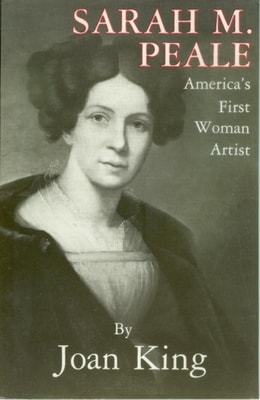
Practically every member of the Peale family contributed to Americas early art and culture and Sarah Peale was the first woman artist to have made a living from her work.
This book reexamines the historical thinking of Liang Qichao (1873-1929), one of the few modern Chinese thinkers and cultural critics whose appreciation of the question of modernity was based on first-hand experience of the world space in which China had to function as a nation-state.
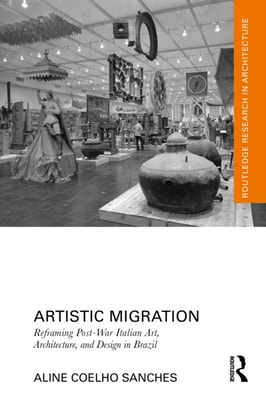
Artistic Migration: Reframing Post-War Italian Art, Architecture, and Design in Brazil investigates a selection of works by Italian artists and architects, and an art critic and dealer, who immigrated to Brazil after World War II, and were involved in the first activities and opportunities created by the Sao Paulo Museum of Art (MASP).
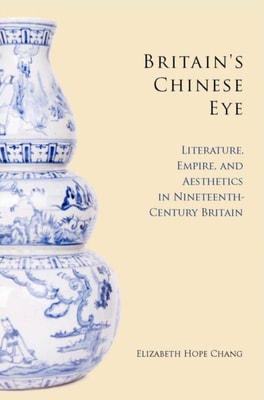
This book traces the intimate connections between Britain and China throughout the nineteenth century and argues for China's central impact on the British visual imagination.
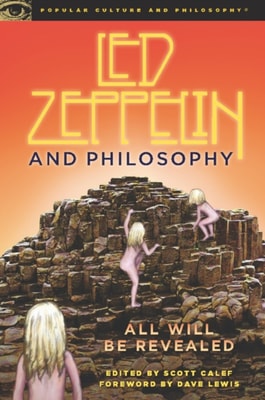
Led Zeppelin, who bestrode the world of rock like a colossus, have continually grown in popularity and influence since their official winding up in 1980.
The information coming about contemporary Indian literature remains scarce and timid due to the weak translation movement from it into our Arabic language, despite the closeness of this literature to the Eastern Arab spirituality, as what unites us with the culture of the Indian subcontinent is greater than Western literature due to the convergence of social and political conditions, lifestyle and historical depth.
This study reassesses Cage's multifaceted practice from a transdisciplinary perspective, using text as a premise for his musical, visual, lingual, and museal compositions.
This study evaluates how the ideology of Socialist Realism, developed by the Soviets in policies and the practices of art, has been influential in the Asia-Pacific region from 1917 until today.
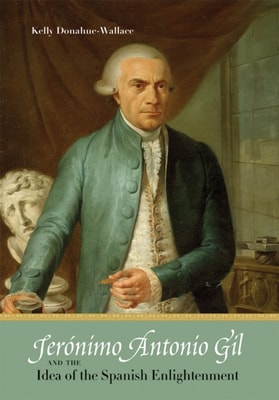
Examining the career of a largely unstudied eighteenth-century engraver, this book establishes Jeronimo Antonio Gil, a man immersed within the complicated culture and politics of the Spanish empire, as a major figure in the history of both Spanish and Mexican art.
At the turn of the fifteenth century, Rome was in the midst of a dramatic transformation from what the fourteenth-century poet Petrarch had termed a "e;crumbling city"e; populated by "e;broken ruins"e; into a prosperous Christian capital.
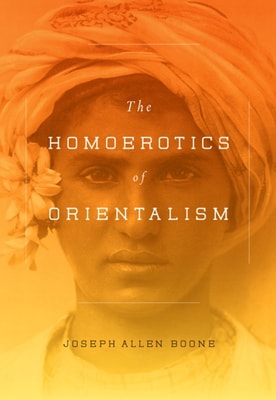
One of the largely untold stories of Orientalism is the degree to which the Middle East has been associated with "e;deviant"e; male homosexuality by scores of Western travelers, historians, writers, and artists for well over four hundred years.
In the year 721, a young Buddhist monk named Hyecho set out from the kingdom of Silla, on the Korean peninsula, on what would become one of the most extraordinary journeys in history.
Margareta Ingrid Christian unpacks the ways in which, around 1900, art scholars, critics, and choreographers wrote about the artwork as an actual object in real time and space, surrounded and fluently connected to the viewer through the very air we breathe.
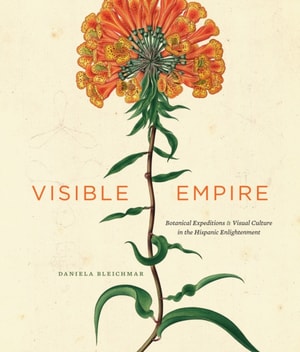
Between 1777 and 1816, botanical expeditions crisscrossed the vast Spanish empire in an ambitious project to survey the flora of much of the Americas, the Caribbean, and the Philippines.
Though underexplored in contemporary scholarship, the Victorian attempts to turn aesthetics into a science remain one of the most fascinating aspects of that era.
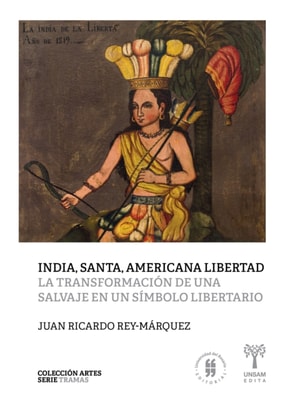
La efigie de una joven indígena –que aparece tanto en monedas como en grabados, pinturas y otras producciones visuales desde el siglo XV hasta nuestros días– condensa dos sentidos políticos y culturales muy diferentes.
The Invisible Dragon made a lot of noise for a little book When it was originally published in 1993 it was championed by artists for its forceful call for a reconsideration of beauty-and savaged by more theoretically oriented critics who dismissed the very concept of beauty as naive, igniting a debate that has shown no sign of flagging.