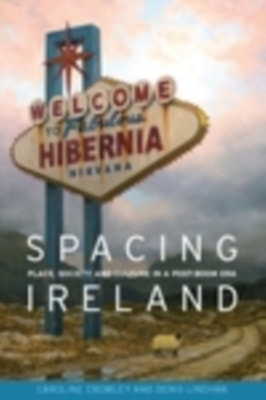
In light of the innumerable interventions that characterise the transformation of Ireland over the last two decades, Spacing Ireland: Place, society and culture in a post-boom era explores questions of 'space' and 'place' to understand the nature of major social, cultural and economic change in contemporary Ireland.
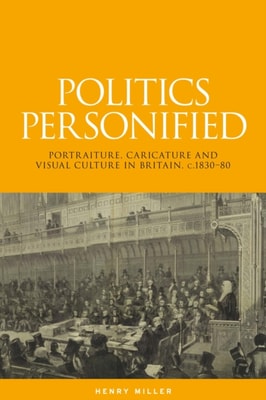
The remarkable popularity of political likenesses in the Victorian period is the central theme of this book, which explores how politicians and publishers exploited new visual technology to appeal to a broad public.
It's a rare comic character who can make audiences laugh for well over half a century--but then again, it's a pretty rare cartoon hero who can boast of forearms thicker than his waist, who can down a can of spinach in a single gulp, or who generally faces the world with one eye squinted completely shut.
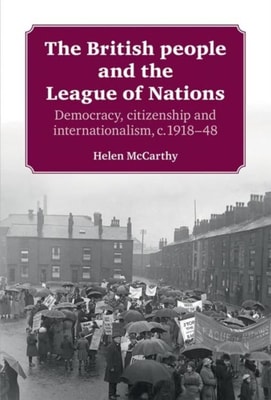
In the decades following Europe's first total war, millions of British men and women looked to the League of Nations as the symbol and guardian of a new world order based on international co-operation.
Adapting Philosophy looks at the ways in which The Matrix Trilogy adapts Jean Baudrillard's Simulacra and Simulation, and in doing so creates its own distinctive philosophical position.
In the decades following Europe's first total war, millions of British men and women looked to the League of Nations as the symbol and guardian of a new world order based on international co-operation.
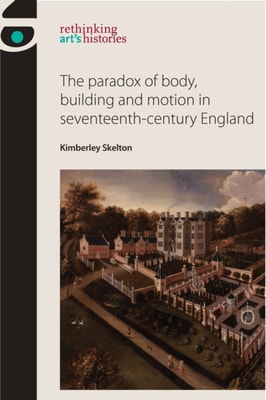
This book examines how seventeenth-century English architectural theorists and designers rethought the domestic built environment in terms of mobility, as motion became a dominant mode of articulating the world across discourses encompassing philosophy, political theory, poetry, and geography.
This book examines how seventeenth-century English architectural theorists and designers rethought the domestic built environment in terms of mobility, as motion became a dominant mode of articulating the world across discourses encompassing philosophy, political theory, poetry, and geography.
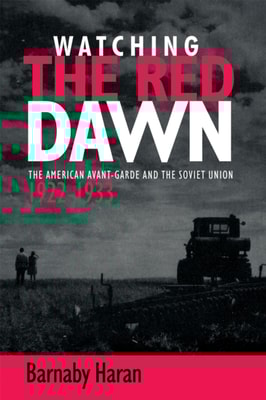
This book offers the first sustained examination of the cultural relations of the American and Soviet avant-gardes in a period of major transformation.
In sixty-seven exquisite watercolors and drawings, nationally famous architect Eugene Aubry captures on paper the sensibilities, the memories, and the grace that evokes Galveston, especially for those who are BOI (';born on the island').
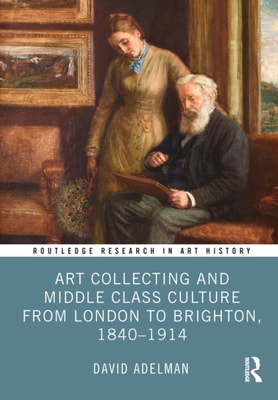
This study explores the interplay between money, status, politics and art collecting in the public and private lives of members of the wealthy trading classes in Brighton during the period 1840-1914.
The Big Book of Buds Volume 2 continues in the tradition of its predecessor by combining stunning, full-color photography with fun and clear descriptions of the characteristics that any gardener or connoisseur wants to know.
Since the time of the ancient Greeks, philosophers have pondered the nature and purpose of the arts, but artists have gone on making them and audiences enjoying them regardless of these musings.
Part of the bestselling series featuring the world's finest Cannabis Sativa strains, this guide features genetics from 100 different seed breeders - more than all other cannabis strain guides put together.
There is no more contentious and perennial issue in the history of modern Western thought than the vexed relationship between the genesis of an idea and its claim to validity beyond it.
Visual Art and the Urban Evolution of the New South recounts the enormous influence of artists in the evolution of six southern cities-Atlanta, Charleston, New Orleans, Louisville, Austin, and Miami-from 1865 to 1950.
In Working South, renowned watercolorist Mary Whyte captures in exquisite detail the essence of vanishing blue-collar professions from across ten states in the American South with sensitivity and reverence for her subjects.
Artist Mary Whyte's Down Bohicket Road includes two decades worth of watercolors-depicting a select group of Gullah women of Johns Island, South Carolina, and their stories.
This cultural history reveals how cats became the undisputed mascot of the internet-"e;an essential look at life online"e; (Ryan Milner, author of The World Made Meme).
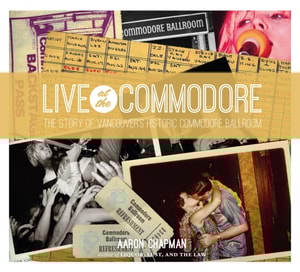
Vancouver's Commodore Ballroom is, like New York's CBGB's and Los Angeles's Whiskey a Go-Go, one of the most venerated rock clubs in the world; originally built in 1930, it's hosted a who's-who of music greats before they made it big: The Police, The Clash, Blondie, Talking Heads, Nirvana, New York Dolls, U2, and, more recently, Lady Gaga and the White Stripes.