Though underexplored in contemporary scholarship, the Victorian attempts to turn aesthetics into a science remain one of the most fascinating aspects of that era.
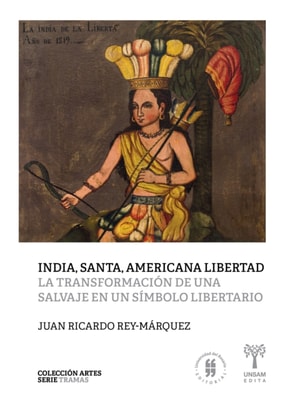
La efigie de una joven indígena –que aparece tanto en monedas como en grabados, pinturas y otras producciones visuales desde el siglo XV hasta nuestros días– condensa dos sentidos políticos y culturales muy diferentes.
The Invisible Dragon made a lot of noise for a little book When it was originally published in 1993 it was championed by artists for its forceful call for a reconsideration of beauty-and savaged by more theoretically oriented critics who dismissed the very concept of beauty as naive, igniting a debate that has shown no sign of flagging.
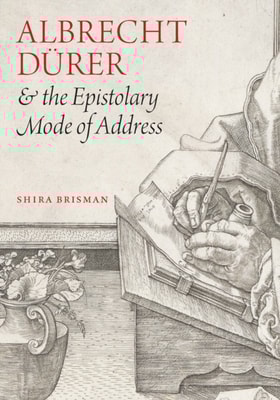
Art historians have long looked to letters to secure biographical details; clarify relationships between artists and patrons; and present artists as modern, self-aware individuals.
To read accounts of late medieval banquets is to enter a fantastical world where live lions guard nude statues, gilded stags burst into song, and musicians play from within pies.
Primate Societies is a synthesis of the most current information on primate socioecology and its theoretical and empirical significance, spanning the disciplines of behavioral biology, ecology, anthropology, and psychology.
A renowned scholar’s reflections on the romantic period, its disparate participants, and our unacknowledged debt to them With his usual wit and élan, esteemed historian Peter Gay enters the contentious, long-standing debates over the romantic period.
With near-mythical forests of birch and pine, the Nordic and Baltic countries boast a rich tradition of religious wood carving that is in many ways emblematic of their cultures.
Informed by a provocative exhibition at the Louvre curated by the author, The Severed Head unpacks artistic representations of severed heads from the Paleolithic period to the present.
Best-selling author Umberto Eco's latest work unlocks the riddles of history in an exploration of the "e;linguistics of the lunatic,"e; stories told by scholars, scientists, poets, fanatics, and ordinary people in order to make sense of the world.
During the 1960s and 1970s, the Russian conceptual artist Ilya Kabakov was a galvanizing figure in Moscow's underground art community, ultimately gaining international prominence as the "e;leader"e; of a band of artists known as the Moscow Conceptual Circle.
A beautifully illustrated look at the vogue for night landscapes amid the social, political, and technological changes of modern America The turn of the 20th century witnessed a surge in the creation and popularity of nocturnes and night landscapes in American art.
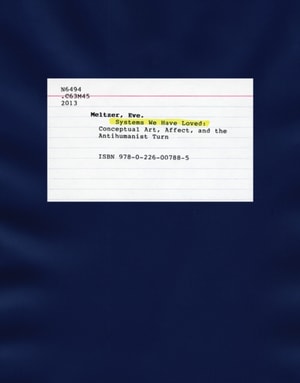
By the early 1960s, theorists like Levi-Strauss, Lacan, Foucault, and Barthes had created a world ruled by signifying structures and pictured through the grids of language, information, and systems.
The Art of Resistance surveys the lives of seven paintersDing Cong (19162009), Feng Zikai (18981975), Li Keran (190789), Li Kuchan (18981983), Huang Yongyu (b.
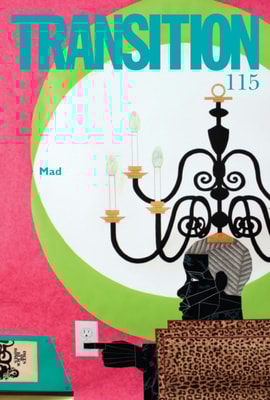
Published three times per year by Indiana University Press for the Hutchins Center at Harvard University, Transition is a unique forum for the freshest, most compelling ideas from and about the black world.
This provocative and illuminating book provides a new perspective on the development of political thought from Homer to Machiavelli, Tocqueville, and Gertrude Stein (who is introduced here, for the first time, as a writer of political significance).
"e;A genial exercise in public philosophy"e; (Kirkus, starred review) from one of the world's best-known popular philosophers"e;Simon Critchley is an international treasure that rare and real philosopher who embraces Rousseau's 'Aofeeling of existence,' David Bowie's vision of love, and Philip K.
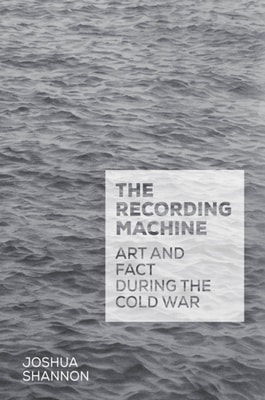
A revealing look at the irrevocable change in art during the 1960s and its relationship to the modern culture of fact This refreshing and erudite book offers a new understanding of the transformation of photography and the visual arts around 1968.
A fascinating biography of a revolutionary American artist ripe for rediscovery as a photographer and champion of other artists Alfred Stieglitz (1864–1946) was an enormously influential artist and nurturer of artists even though his accomplishments are often overshadowed by his role as Georgia O’Keeffe’s husband.
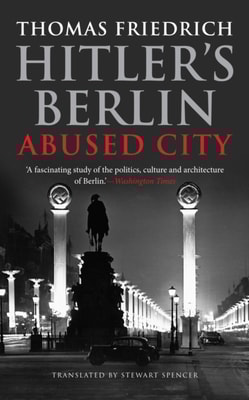
How Berlin captivated Hitler's imagination, and how he sought to redesign the city to align with his obsessions and ambitions From his first visit to Berlin in 1916, Hitler was preoccupied and fascinated by Germany's great capital city.
The definitive English-language account of a singular Nordic artistThe Norwegian painter, novelist, and social critic Christian Krohg (18521925) is best known for creating highly political paintings of workers, prostitutes, and Skagen fishermen of the 1880s and for serving as a mentor to Edvard Munch.
Ranging from Homer to Picasso, and from the Iranian Revolution to The Wizard of Oz, this spirited and radiant book awakens us anew to the role of color in our livesOur lives are saturated by color.