The first book to look at this particular subject, The Roman Book of Gardening brings together an extraordinarily varied selection of texts on Roman horticulture, celebrating herb and vegetable gardening in verse and prose spanning five centuries.
The first book to look at this particular subject, The Roman Book of Gardening brings together an extraordinarily varied selection of texts on Roman horticulture, celebrating herb and vegetable gardening in verse and prose spanning five centuries.
An indispensable guide to the myth of Oedipus this book is the first to analyze its long and varied history from ancient times to the modern day, and presented with an authoritative survey that considers Oedipus in art and music as well as in literature.
An indispensable guide to the myth of Oedipus this book is the first to analyze its long and varied history from ancient times to the modern day, and presented with an authoritative survey that considers Oedipus in art and music as well as in literature.
A central figure in both classical and ancient near Eastern fields, Trevor Bryce presents the first publication to focus on Troy's neighbours and contemporaries as much as Troy itself.
A central figure in both classical and ancient near Eastern fields, Trevor Bryce presents the first publication to focus on Troy's neighbours and contemporaries as much as Troy itself.
Helen Rhee's outstanding work is the first book to bring together The Apologies and the semi-fictional Apocryphal Acts and Martyr Acts in a single study.
Helen Rhee's outstanding work is the first book to bring together The Apologies and the semi-fictional Apocryphal Acts and Martyr Acts in a single study.
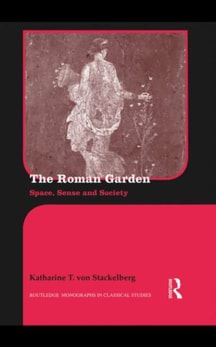
This innovative book is the first comprehensive study of ancient Roman gardens to combine literary and archaeological evidence with contemporary space theory.
This innovative book is the first comprehensive study of ancient Roman gardens to combine literary and archaeological evidence with contemporary space theory.
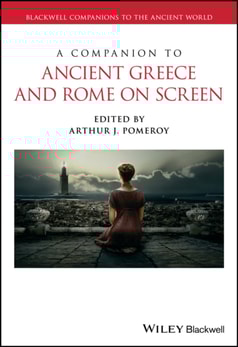
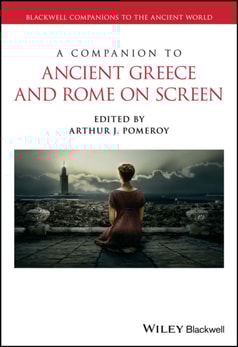
A comprehensive treatment of the Classical World in film and television, A Companion to Ancient Greece and Rome on Screen closely examines the films and TV shows centered on Greek and Roman cultures and explores the tension between pagan and Christian worlds.
A comprehensive treatment of the Classical World in film and television, A Companion to Ancient Greece and Rome on Screen closely examines the films and TV shows centered on Greek and Roman cultures and explores the tension between pagan and Christian worlds.
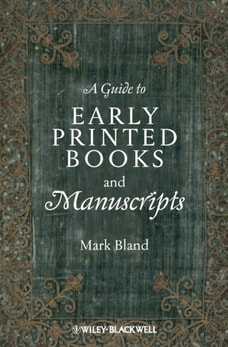
A Guide to Early Printed Books and Manuscripts provides an introduction to the language and concepts employed in bibliographical studies and textual scholarship as they pertain to early modern manuscripts and printed texts Winner, Honourable Mention for Literature, Language and Linguistics, American Publishers Prose Awards, 2010 Based almost exclusively on new primary research Explains the complex process of viewing documents as artefacts, showing readers how to describe documents properly and how to read their physical properties Demonstrates how to use the information gleaned as a tool for studying the transmission of literary documents Makes clear why such matters are important and the purposes to which such information is put Features illustrations that are carefully chosen for their unfamiliarity in order to keep the discussion fresh
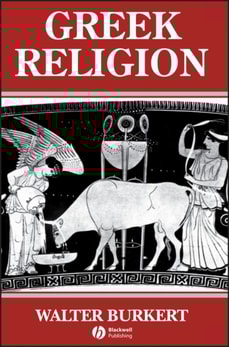
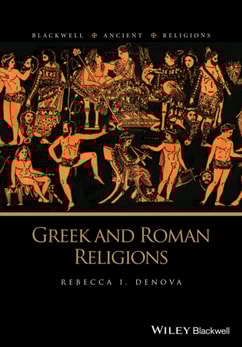
Offers an introduction to the basic beliefs, practices, and major deities of Greek and Roman religions A volume in the Blackwell Ancient Religions, Greek and Roman Religions offers an authoritative overview of the region s ancient religious practices.
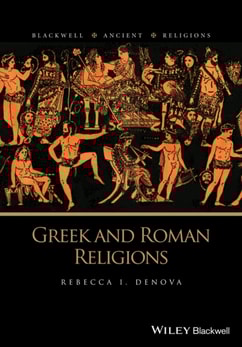
Offers an introduction to the basic beliefs, practices, and major deities of Greek and Roman religions A volume in the Blackwell Ancient Religions, Greek and Roman Religions offers an authoritative overview of the region s ancient religious practices.
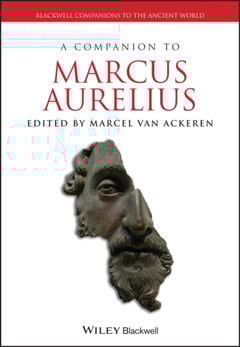
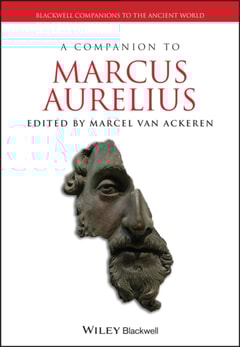
A COMPANION TO MARCUS AURELIUS Considered the last of the Five Good Emperors, Marcus Aurelius ruled the Roman Empire from ad 161 until his death in 180 yet his influence on philosophy continues to resonate in the modern age through his Meditations.
A COMPANION TO MARCUS AURELIUS Considered the last of the Five Good Emperors, Marcus Aurelius ruled the Roman Empire from ad 161 until his death in 180 yet his influence on philosophy continues to resonate in the modern age through his Meditations.