The scientific study of all forms of human and animal behaviour, sometimes concerned with the methods through which behaviour can be modified is collectively known as psychology.
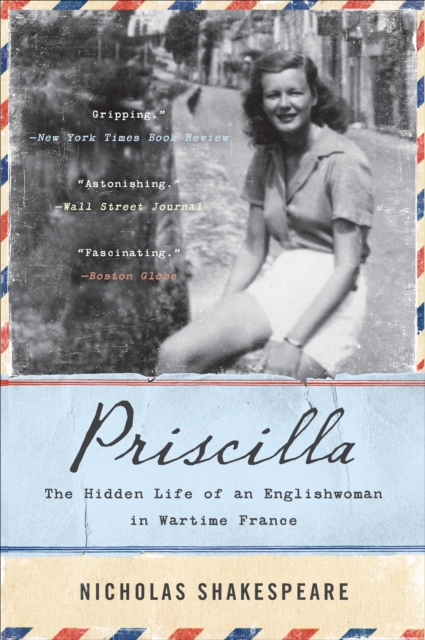
Michele Audin construye en La senorita Haas una hermosa y potente novela coral con las vidas de trece mujeres, anonimas aunque con un mismo apellido, Haas, y un mismo espacio-tiempo: la Francia que, entre 1934 y 1941, se adentra en la radicalizacion y el ascenso del fascismo, la Segunda Guerra Mundial y la deportacion de judios a los campos de exterminio.
Channelling 6th December 2022 Great Mystery You must know that all I say is true, that the End of the World is nigh, and all shall be saved, for to raise our consciousness is the goal, not only of Creator, but of all souls who see Yeshua as their Saviour, and Mary his Mother as their own.
In 1951, Alvin Cramer Segal, at the age of eighteen and without a formal education, started working in the factory of his stepfather's company in Montreal.
In this unique and exhilarating autobiography, Allan Jones - Canada's first blind diplomat - vividly describes how an untreatable eye disease slowly decimated his visual world, most challengingly during his postings in Tokyo and New Delhi, and how he discovered and took to heart the revelatory Indian philosophy that changed his life.
In the middle of the Great War, Victor Cavendish, the ninth Duke of Devonshire, and his wife Lady Evelyn landed in Halifax in November 1916 so he could serve as the governor general of Canada.
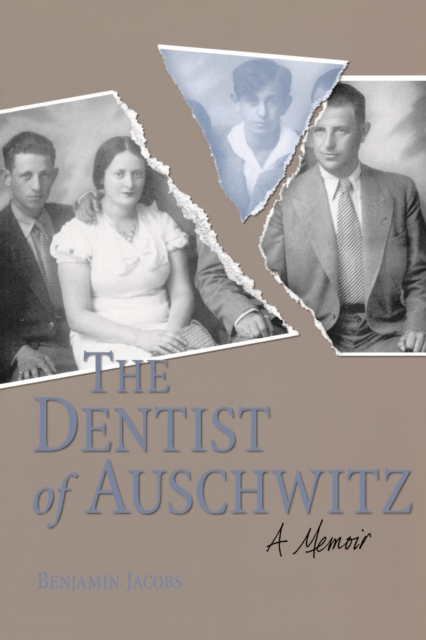
George Reinitz was twelve years old when he and his family were taken from Szikszo, Hungary, and deported to Auschwitz, where many of his family members were killed.
Best known for his writings on economic history and communications, Harold Innis also produced a body of biographical work that paid particular attention to cultural memory and how it is enriched by the study of neglected historical figures.
In 1960, Helge Ingstad and Anne Stine Ingstad made a discovery that rewrote the history of European exploration and colonization of North America - a thousand-year-old Viking settlement at L'Anse aux Meadows, Newfoundland.
Most modern historians perpetuate the myth that Giuliano de' Medici (1479-1516), son of Lorenzo the Magnificent, was nothing more than an inconsequential, womanizing hedonist with little inclination or ability for politics.
Best known for his writings on economic history and communications, Harold Innis also produced a body of biographical work that paid particular attention to cultural memory and how it is enriched by the study of neglected historical figures.
In 1960, Helge Ingstad and Anne Stine Ingstad made a discovery that rewrote the history of European exploration and colonization of North America - a thousand-year-old Viking settlement at L'Anse aux Meadows, Newfoundland.
A gripping first-hand account of the devastating last chapter of the Holocaust, written by a privileged eyewitness, the secretary of the Hungarian Judenrat, and a member of Budapest's Jewish elite, How It Happened is a unique testament to the senseless brutality that, in a matter of months, decimated what was Europe's largest and last-surviving Jewish community.
More than fifty years after most Canadian women received the right to vote, very few women were elected as members of Parliament and none came from Quebec.
In this unique and exhilarating autobiography, Allan Jones - Canada's first blind diplomat - vividly describes how an untreatable eye disease slowly decimated his visual world, most challengingly during his postings in Tokyo and New Delhi, and how he discovered and took to heart the revelatory Indian philosophy that changed his life.
Set against a background of intense religious and cultural change and tensions over the meanings of nationalism and federalism in both Quebec and Canada, Michael Gauvreau's The Hand of God traces the emergence of Claude Ryan as a public intellectual.
The compelling biography of former British Columbia cabinet minister Bob Williams weaves his political and economical insights with the story of his unconventional life.
Visionary leader and businessman Jean de Grandpre has earned many nicknames: he is known variously as the Simplifier, the Architect, and the Strategist.
Despite her trailblazing efforts to represent the work of Canadian writers to publishers in North America and abroad, Doris Hedges (1896-1972), the Montreal author who started Canada's first literary agency in 1946, is routinely excluded from Canadian literary histories.
As the leading legal historian of his generation in Canada and professor at McGill University for over three decades, Blaine Baker (1952-2018) was known for his unique personality, teaching style, intellectual cosmopolitanism, and deep commitment to the place of Canadian legal history in the curriculum of law faculties.
Despite her trailblazing efforts to represent the work of Canadian writers to publishers in North America and abroad, Doris Hedges (1896-1972), the Montreal author who started Canada's first literary agency in 1946, is routinely excluded from Canadian literary histories.
Visionary leader and businessman Jean de Grandpre has earned many nicknames: he is known variously as the Simplifier, the Architect, and the Strategist.
Marie-Andre Duplessis (1687-1760) guided the Augustinian sisters at the Hotel-Dieu of Quebec - the oldest hospital north of Mexico - where she was elected mother superior six times.
The first book to study the four wives of Queen Victoria's sons as a family group-based partly on previously unpublished material from the Royal Archives.