This lively and accessible introduction to Plato focuses on the philosophy and argument of his writings, drawing the reader into Plato's way of doing philosophy, and the general themes of his thinking.
Simon Critchley's Very Short Introduction shows that Continental philosophy encompasses a distinct set of philosophical traditions and practices, with a compelling range of problems all too often ignored by the analytic tradition.
A regiment of women warriors strides across the battlefield of German culture - on the stage, in the opera house, on the page, and in paintings and prints.
In The Idea of the Library in the Ancient World Yun Lee Too argues that the ancient library was much more than its incarnation at Alexandria, which has been the focus for students of the subject up till now.
Dangerous Talk examines the 'lewd, ungracious, detestable, opprobrious, and rebellious-sounding' speech of ordinary men and women who spoke scornfully of kings and queens.
Diotima's Children is a re-examination of the rationalist tradition of aesthetics which prevailed in Germany in the late seventeenth and eighteenth century.
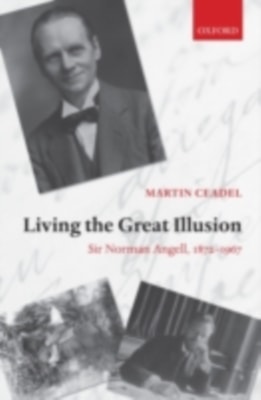
Sir Norman Angell, pioneer both of international relations as a distinct discipline and of the theory of globalization, winner of the Nobel Peace Prize, and one of the twentieth century's leading internationalist campaigners on both sides of the Atlantic, lived the great illusion in three senses.
The organisation of higher education across the world is one of several factors that conspire to create the assumption that our own map of the intellectual disciplines is, broadly speaking, valid cross-culturally.
Volume XXI/2 of History of Universities contains the customary mix of learned articles, book reviews, conference reports, and bibliographical information, which makes this publication such an indispensable tool for the historian of higher education.
In the early fifteenth century, the general council assembled at Constance and, representing the universal Church, put an end to the scandalous schism which for almost forty years had divided the Latin Church between rival lines of claimants to the papal office.
Oxford Studies in Early Modern Philosophy is an annual series, presenting a selection of the best current work in the history of early modern philosophy.
The Development of Ethics is a selective historical and critical study of moral philosophy in the Socratic tradition, with special attention to Aristotelian naturalism.
Euripides' Herakles, which tells the story of the hero's sudden descent into filicidal madness, is one of the least familiar and least performed plays in the Greek tragic canon.
Geoffrey Lloyd engages in a wide-ranging exploration of what we can learn from the study of ancient civilisations that is relevant to fundamental problems, both intellectual and moral, that we still face today.
Examining the development of a secular, purely material conception of human beings in the early Enlightenment, Bodies of Thought provides a fresh perspective on the intellectual culture of this period, and challenges certain influential interpretations of irreligious thought and the 'Radical Enlightenment'.
Volume XXII/2 of History of Universities contains the customary mix of learned articles, book reviews, and bibliographical information, which makes this publication an indispensable tool for the historian of higher education.
Germany and the Holy Roman Empire offers a striking new interpretation of a crucial era in German and European history, from the great reforms of 1495-1500 to the dissolution of the Reich in 1806.
Simon Critchley's Very Short Introduction shows that Continental philosophy encompasses a distinct set of philosophical traditions and practices, with a compelling range of problems all too often ignored by the analytic tradition.
Volume XXI/1 of History of Universities contains the customary mix of learned articles, book reviews, conference reports, and bibliographical information, which makes this publication such an indispensable tool for the historian of higher education.
Marsilius of Padua is conventionally seen as a thinker ahead of his time: the first secular political theorist, and the first post-classical thinker to espouse republicanism.
Michelle Kosch's book traces a complex of issues surrounding moral agency - how is moral responsibility consistent with the possibility of theoretical explanation?
In seventeenth-century Europe the Copts, or the Egyptian members of the Church of Alexandria, were widely believed to hold the key to an ancient wisdom and an ancient theology.
Fred Beiser, renowned as one of the world's leading historians of German philosophy, presents a brilliant new study of Friedrich von Schiller (1759-1805), rehabilitating him as a philosopher worthy of serious attention.
Magic and Impotence in the Middle Ages investigates the common medieval belief that magic could cause impotence, focusing particularly on the period 1150-1450.