Oxford Studies in Early Modern Philosophy is an annual series, presenting a selection of the best current work in the history of early modern philosophy.
The 11th of November 1918, Polish Independence Day, is a curious anniversary whose commemoration has been only intermittently observed in the last century.
In 1842 Heinrich Heine, the German poet, wrote that the bourgeoisie, 'obsessed by a nightmare apprehension of disaster' and 'an instinctive dread of communism', were driven against their better instincts into tolerating absolutist government.
This volume presents lucid and insightful lectures on three great figures from the history of political thought, by John Plamenatz (1912-1975), a leading political philosopher of his time.
Katerina Deligiorgi offers a contemporary defence of autonomy that is Kantian in orientation but which engages closely with recent arguments about agency, morality, and practical reasoning.
This is a new English translation of a classic of medieval Islamic learning, which illuminates the intellectual debates of its age and speaks vividly to the concerns of our own.
This volume presents an interconnected set of sixteen essays, four of which are previously unpublished, by Allan Gotthelf--one of the leading experts in the study of Aristotle's biological writings.
Germany and the Holy Roman Empire offers a striking new interpretation of a crucial era in German and European history, from the great reforms of 1495-1500 to the dissolution of the Reich in 1806.
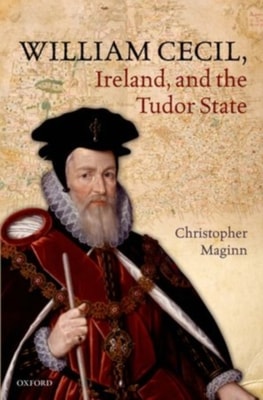
William Cecil, Ireland, and the Tudor State explores the complex relationship which existed between England and Ireland in the Tudor period, using the long association of William Cecil (1520-1598) with Ireland as a vehicle for historical enquiry.
Arguably the most decisive shift in the history of ideas in modern times was the complete demolition during the late seventeenth and eighteenth centuries - in the wake of the Scientific Revolution - of traditional structures of authority, scientific thought, and belief by the new philosophy and the philosophes, culminating in Voltaire, Diderot, and Rousseau.
The Oxford Handbook of the History of Political Philosophy presents fifty original essays, each specially written by a leading figure in the field, covering the entire subject of the history of political philosophy.
Germany and the Holy Roman Empire offers a new interpretation of the development of German-speaking central Europe and the Holy Roman Empire or German Reich, from the great reforms of 1495-1500 to its dissolution in 1806 after the turmoil of the French Revolutionary and Napoleonic Wars.
The question of who 'we' are and what vision of humanity 'we' assume in Western culture lies at the heart of hotly debated questions on the role of religion in education, politics, and culture in general.
Collected here in a single volume for the first time, On Liberty, Utilitarianism, Considerations on Representative Government, and The Subjection of Women show Mill applying his liberal utilitarian philosophy to a range of issues that remain vital today - issues of the nature of ethics, the scope and limits of individual liberty, the merits of and costs of democratic government, and the place of women in society.
In The Idea of the Library in the Ancient World Yun Lee Too argues that the ancient library was much more than its incarnation at Alexandria, which has been the focus for students of the subject up till now.
Diotima's Children is a re-examination of the rationalist tradition of aesthetics which prevailed in Germany in the late seventeenth and eighteenth century.
Dangerous Talk examines the 'lewd, ungracious, detestable, opprobrious, and rebellious-sounding' speech of ordinary men and women who spoke scornfully of kings and queens.
Guardians of Republicanism analyses the political and intellectual history of Renaissance Florence-republican and princely-by focusing on five generations of the Valori family, each of which played a dynamic role in the city's political and cultural life.
Though he was a prolific writer and an original thinker of vast erudition, Jung lacked a gift for clear exposition and his ideas are less widely appreciated than they deserve.