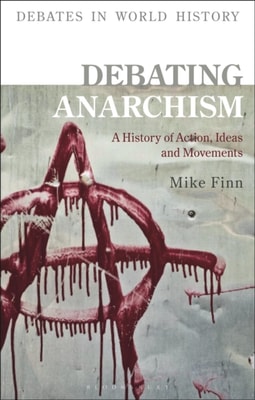
This timely book introduces readers to anarchism's relationship to broader history, offering not only a history of anarchism in the modern period, but a critical introduction to debates on anarchist history.
Portraits of Integrity depicts more than 20 historical, fictional and contemporary figures whose character or life raises questions about what integrity is and how it is perceived.
Over the last few years, Raymond Tallis has published widely acclaimed critiques of influential trends in contemporary thought: for example, Not Saussure - described as 'one of the most brilliant and effective of all rebuttals of post-Saussurean theory' - In Defence of Realism and The Explicit Animal, which demonstrated the baselessness of contemporary accounts of consciousness.
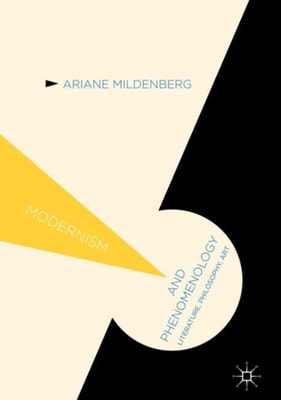
Braiding together strands of literary, phenomenological and art historical reflection, Modernism and Phenomenology explores the ways in which modernist writers and artists return us to wonder before the world.
Socialism, Social Ownership and Social Justice is concerned with the emergence in Europe over the centuries of dreams and aspirations amongst the poor and weak for new societies of justice and equality based on common ownership and common sharing.
In recent years there has been a growing recognition that a mature analysis of scientific and technological activity requires an understanding of its spatial contexts.
Science and the Quest for Reality is an interdisciplinary anthology that situates contemporary science within its complex philosophical, historical, and sociological contexts.
The influence and reputation of Thomas Hobbes (1588-1679), the greatest English political theorist and one of the greatest of all intellectuals, has never been higher than it is now.
Yasuma Takata (1883-1971), nicknamed 'the Japanese Marshall' by Martin Bronfenbrenner, dominated sociology and then economics in Japan over a long period.
Providing an introductory account of the Labour Party from its foundation, this book covers the whole period up to the General Election of 1992 and the subsequent choice of John Smith to succeed Neil Kinnock as party leader.
The internationally distinguished scholars who have contributed to this timely book were asked to take part in a collaborative act of demystification: a reconsideration of the eschatological ideas of the last fin de sicle, the 1890s, in the light of the critical thought of the 1990s.
Five essays address such themes as the relationship between feminist history and women's history, the use of the concept of "e;experience"e;, the development of the history of gender, demographic history and women's history and the importance of post-structuralism to women's history.
This collection of essays is concerned with the impact of the experience of empire upon the literary imagination as far as Ireland, Africa and India are concerned.
Writing about changes in the notion of womanhood, Denise Riley examines, in the manner of Foucault, shifting historical constructions of the category of "e;women"e; in relation to other categories central to concepts of personhood: the soul, the mind, the body, nature, the social.
From the viewpoint of carrying out multi-disciplinary studies between economics and other social sciences, Pareto's theories are especially important as they are the core of contemporary orthodox economics.
Supplies extensive material making it possible for the reader to understand how Thomas Jefferson's mind spanned the vast distance separating antiquity from writers like William James and Sigmund Freud, analyzing his studies in economics, moral philosophy, history and law.
A text which describes the ways that European powers used science and scientific inquiry to enforce their supposed cultural superiority on societies of Africa, Asia and Latin America.
This book aims to re-evaluate the relations between two major ideologies that have been increasingly contested in recent years, yet continue to be invoked or rejected as foundational systems for political thought or action.
Magic and Medieval Society presents a thematic approach to the topic of magic and sorcery in Western Europe between the eleventh and the fifteenth century.
Magic and Medieval Society presents a thematic approach to the topic of magic and sorcery in Western Europe between the eleventh and the fifteenth century.