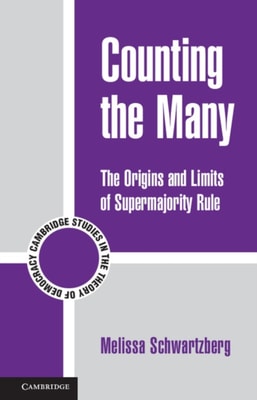
Examines the history underlying the use of supermajority voting rules and offers a critique of their ability to remedy the defects of majority decision making.
An innovative approach to rethinking sciences of mind at the turn of the twenty-first century via the texts of philosopher and psychologist William James.
Examines the history underlying the use of supermajority voting rules and offers a critique of their ability to remedy the defects of majority decision making.
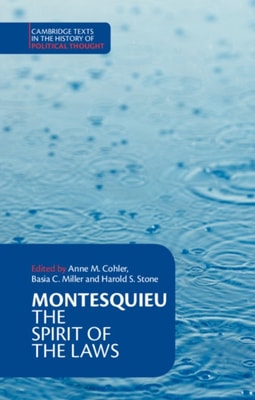
The Spirit of the Laws is, without question, one of the central texts in the history of eighteenth-century thought, yet there has been no complete, scholarly English-language edition since that of Thomas Nugent, published in 1750.
Luther''s On Secular Authority and Calvin''s On Civil Government, translated here, attempt to find a balance between Reformed Christians and the secular authorities.
The Empire of Chance tells how quantitative ideas of chance transformed the natural and social sciences, as well as daily life over the last three centuries.
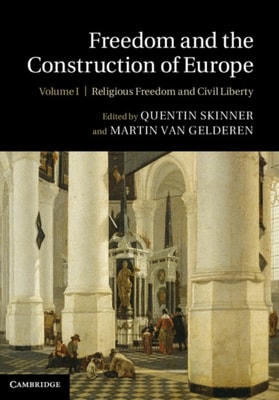
An internationally distinguished team of contributors explore the richness, diversity and complexity of ideas about freedom across early modern Europe.
An internationally distinguished team of contributors explore the richness, diversity and complexity of ideas about freedom across early modern Europe.
An internationally distinguished team of contributors explore the richness, diversity and complexity of ideas about freedom across early modern Europe.
An internationally distinguished team of contributors explore the richness, diversity and complexity of ideas about freedom across early modern Europe.
The Spirit of the Laws is, without question, one of the central texts in the history of eighteenth-century thought, yet there has been no complete, scholarly English-language edition since that of Thomas Nugent, published in 1750.