In this new collection of essays, a range of established and emerging cultural critics re-evaluate Richard Hoggart's contribution to the history of ideas and to the discipline of Cultural Studies.
In Sex, Gender and Science , Myra Hird outlines the social study of science and nature, specifically in relation to 'sex', sex 'differences' and sexuality.
Much of the widespread interest in the Bloomsbury Group over the past quarter-century has been biographical, yet without the Group's works there would be little interest in their lives.
Now in its eleventh edition, this book provides a concise introductory account of the Labour Party from its foundation up to Tony Blair's leadership, and the subsequent redrafting of the party's statement of aims in its constitution.
Perceptive, passionate and often controversial, Raymond Tallis's latest debunking of Kulturkritik delves into a host of ethical and philosophical issues central to contemporary thought, raising questions we cannot afford to ignore.
The first comparative study of the spread of mass education around the world in the late nineteenth and early twentieth centuries, this unique new book uses a bottom-up focus and demonstrates, to an extent not appreciated hitherto, the gulf between the intentions of the government and the reality on the ground.
A new and innovative account of British sociology's intellectual origins that uses previously unknown archival resources to show how the field's forgotten roots in a late nineteenth and early twentieth-century debate about biology can help us understand both its subsequent development and future potential.
Based on original and previously unseen written and sound archives and interviews with former and current radio producers and presenters, Public Issue Radio addresses the controversial question of the political leanings of current affairs programmes, and asks if Analysis became an early platform for both Thatcherite and Blairite ideas.
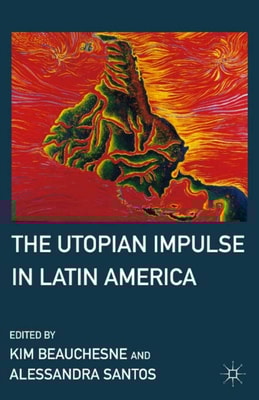
An exploration of the concept of utopia in Latin America from the earliest accounts of the New World to current cultural production, the carefully selected essays in this volume represent the latest research on the topic by some of the most important Latin Americanists working in North American academia today.
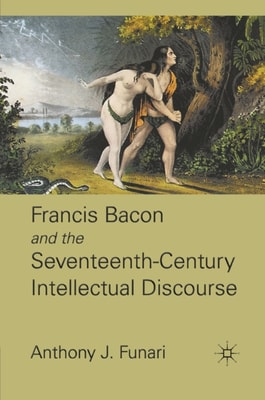
This book explores the resistance of three English poets to Francis Bacon's project to restore humanity to Adamic mastery over nature, moving beyond a discussion of the tension between Bacon and these poetic voices to suggest theywere also debating the narrative of humanity's intellectual path.
This book critically assessesthird-wave feminist strategies for advancing a feminist 'politics of the self' within the late modern, postfeminist gender order - a context where gender equality has been mainstreamed, feminism has been dismissed, and a neoliberal culture of self-management has become firmly entrenched.
This volume inscribes an innovative domain of inquiry, bringing museum and heritage studies to bear on questions of transitional justice, memory and post-conflict reconciliation.
This book offers a critique of the dominant conceptualization of heritage found in policy, which tends to privilege the white, middle and upper classes.
This book puts to the test the prominent claim that social class has declined in importance in an era of affluence, choice and the waning of tradition.
This volume offers a comprehensive treatment of the development of Keynes's economic ideas in the General Theory of Employment, Interest and Money , using archival material, the historical record of the economics of Keynes's time and place and the scholarship available on Keynes's biography and philosophy.
Following the spirit of Benjamin's Arcades Project, this book acts as a kaleidoscope of change in the 21st century, tracing its different reflections in the international contemporary while seeking to understand individual/collective reactions to change through a series of creative methodologies.
Beginning with a widespread definition of Decadence as when individual parts flourish at the expense of the whole, Regenia Gagnier - a leading cultural historian of late nineteenth-century Britain - shows the full range of meanings of individualism at the height of its promise.
This interdisciplinary study analyzes the ways in which signs of masculinity have been performed across a wide variety of contexts and genres - including literature, classical ballet, sports, rock music, films and computer games - from the early nineteenth century to the present day.
A groundbreaking collection of essays looking at the concepts of 'intermediality' and 'multimodality' - the relationship between various forms of art and new media - and including case studies ranging from music, film and architecture to medieval ballads, biopoetry and Lettrism.
Boaz Hagin carries out a philosophical examination of the issue of death as it is represented and problematized in Hollywood cinema of the classical era (1920s-1950s) and in later mainstream films, looking at four major genres: the Western, the gangster film, melodrama and the war film.
Martin Flanagan uses Bakhtin's notions of dialogism, chronotope and polyphony to address fundamental questions about film form and reception, focussing particularly on the way cinematic narrative utilises time and space in its very construction.
A bold and exciting exploration of the relationship and interactions between humans, the human landscape and the earth, looking at a diverse range of case studies from the nineteenth-century city to the Asian tsunami and Hurricane Katrina.
A pioneering study of the development of one of the key critical discourses in contemporary Irish studies, this book covers all the major figures, publications and debates within Irish postcolonial criticism, delivering a commentary on this diverse body of work as well as positioning Irish postcolonial criticism within the wider postcolonial field.
This collection examines two recent phenomena: the return of realist tendencies and practices in world cinema and television, and the 'rehabilitation' of realism in film and media theory.
These essays by leading figures from academia, architecture and the arts consider how cultures of memory are constructed for and in contemporary cities.
An international line-up of scholars examines the role of the intellectual in the twenty-first century, looking at the gap between contemporary cultural theory and cultural practice, and asking whether knowledge and methodologies in the humanities can intervene in everyday politics and vice-versa.
In this bold intervention into the understanding of the diasporic experience within cultural studies, McCarthy challenges a critical position emergent over the last thirty years (what he calls the 'new marginalism').
In a series of encounters with key figures in the field of cultural studies, this book draws together interest in affect theory and contemporary politics to describe the mobilising effects of individual scholarly voices in cultural studies' history, emphasising the ongoing importance of engaged, public intellectualism throughout.
The past three decades have seen a remarkable growth of interest in intellectual history and this book provides the first comprehensive survey of recent research in this field.
The human body, traded, fragmented and ingested is at the centre of Medicinal Cannibalism in Early Modern English Literature and Culture , which explores the connections between early modern literary representations of the eaten body and the medical consumption of corpses.
From the National Book Award-winning author, an absorbing biography of the esteemed editor, publisher, power broker, and rival to William Randolph Hearst.