The story of the prophet Elijah's transformation from fierce zealot to compassionate hero and cherished figure in Jewish tradition "e;In a series on Jewish Lives, this volume is about the Jewish life-the one that goes on forever.
The first biography of a man who was at the center of American foreign policy for a generationFew have ever enjoyed the degree of foreign-policy influence and versatility that Henry Cabot Lodge Jr.
This "e;magisterial history"e; presents a new perspective on Thomas Morton, his colonial philosophy, and his lengthy feud with the Puritans (Wall Street Journal).
"e;[The book's] power lies in a vivid re-creation not only of Churchill's public roles but also his private life-of good fortune but also family tragedy.
One of the great liberal politicians of the twentieth century, rediscovered in an important, definitive biographyHubert Humphrey (1911'Ai1978) was one of the great liberal leaders of postwar American politics, yet because he never made it to the Oval Office he has been largely overlooked by biographers.
This award-winning biography delves beyond the myths about Ancient Rome's most famous assassin: "e;A beautifully written and thought-provoking book"e; (Christopher Pelling, author of Plutarch and History).
A major new biography, illuminating the great mystery of Benjamin Franklin’s faith Renowned as a printer, scientist, and diplomat, Benjamin Franklin also published more works on religious topics than any other eighteenth-century American layperson.
The definitive account of Richard Nixon's congressional career, back in print with a new prefaceUnsurpassed in the fifteen years since its original publication, Irwin F.
From the prizewinning Jewish Lives series, an insider’s perspective on the life and influence of Israel’s first native-born prime minister, his bold peace initiatives, and his tragic assassination More than two decades have passed since prime minister Yitzhak Rabin’s assassination in 1995, yet he remains an unusually intriguing and admired modern leader.
A major publishing event: the third volume of Michel Leiris’s renowned autobiography, now available in English for the first time in a brilliant translation by Lydia Davis A beloved and versatile author and ethnographer, French intellectual Michel Leiris is often ranked in the company of Proust, Gide, Sartre, and Camus, yet his work remains largely unfamiliar to English-language readers.
The second volume of Michel Leiris’s hugely influential four-volume autobiographical essay, available to English-language readers in a brilliant and sensitive translation by Lydia Davis One of the most versatile and beloved French intellectuals of the twentieth century, Michel Leiris reconceives the autobiography as a literary experiment that sheds light on the mechanisms of memory and on the way the unconnected events of a life become connected through invented narrative.
A dazzling translation by Lydia Davis of the first volume of Michel Leiris’s masterwork, perhaps the most important French autobiographical enterprise of the twentieth century Michel Leiris, a French intellectual whose literary works inspired high praise from the likes of Simone de Beauvoir and Claude Lévi-Strauss, began the first volume of his autobiographical project at the age of 40.
The first edited edition of a Union soldier’s remarkable memoir, offering a rare perspective on guerrilla warfare and on the larger meanings of the Civil War While tales of Confederate guerilla-outlaws abound, there are few scholarly accounts of the Union men who battled them.
The definitive biography of a radical activist and intellectual Max Eastman (1883–1969) was a prolific writer, radical, and public intellectual who helped shape the twentieth century.
A master historian illuminates the tumultuous relationship of Il Duce and his young lover Claretta, whose extraordinarily intimate diaries only recently have become available Few deaths are as gruesome and infamous as those of Benito Mussolini, Italy’s fascist dictator, and Claretta (or Clara) Petacci, his much-younger lover.
A seminal biography of the underappreciated eleventh-century Scandinavian warlord-turned-Anglo-Saxon monarch who united the English and Danish crowns to forge a North Sea empire Historian Timothy Bolton offers a fascinating reappraisal of one of the most misunderstood of the Anglo-Saxon kings: Cnut, the powerful Danish warlord who conquered England and created a North Sea empire in the eleventh century.
An imaginative reassessment of Æthelred "the Unready," one of medieval England’s most maligned kings and a major Anglo-Saxon figure The Anglo-Saxon king Æthelred "the Unready" (978–1016) has long been considered to be inscrutable, irrational, and poorly advised.
An eye-opening biography of a woman at the intersection of three distinct cultures in colonial America Born and raised in a New England garrison town, Esther Wheelwright (1696–1780) was captured by Wabanaki Indians at age seven.
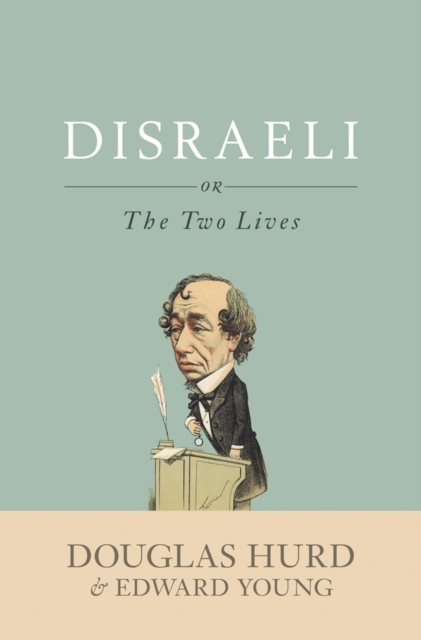
From the prizewinning Jewish Lives series, a fresh, vivid look at Disraeli's life, achievements, and temperament that casts doubts on his much-touted commitment to Jewish rights Lauded as a “great Jew,” excoriated by antisemites, and one of Britain’s most renowned prime ministers, Benjamin Disraeli has been widely celebrated for his role in Jewish history.
This first modern study of Henry the Young King, eldest son of Henry II but the least known Plantagenet monarch, explores the brief but eventful life of the only English ruler after the Norman Conquest to be created co-ruler in his father’s lifetime.
Surprisingly, no previous book has ever explored how family life shaped the political careers of America's great Founding Fathers-men like George Mason, Patrick Henry, George Washington, Thomas Jefferson, and James Madison.
A vast archive of documents, unread since the sixteenth century, revises the portrait of Spain’s best-known king Philip II is not only the most famous king in Spanish history, but one of the most famous monarchs in English history: the man who married Mary Tudor and later launched the Spanish Armada against her sister Elizabeth I.
From the prizewinning Jewish Lives series, an insightful new biography of the most controversial and perhaps most fervent of all Zionist political figures Vladimir Jabotinsky (1880–1940) was a man of huge paradoxes and contradictions and has been the most misunderstood of all Zionist politicians--a first-rate novelist, a celebrated Russian journalist, and the founder of the branch of Zionism now headed by Benjamin Netanyahu.
The first major biography of the founder of modern Iraq, a charismatic champion of Arab independence and unity Born in 1883, King Faisal I of Iraq was a seminal figure not only in the founding of the state of Iraq but also in the making of the modern Middle East.
The spirited and measured memoir of Walter Bagehot, had he left one Walter Bagehot (1826–1877) was a prominent English journalist, banker, and man of letters.
The Marquess of Queensberry is as famous for his role in the downfall of one of our greatest literary geniuses as he was for helping establish the rules for modern-day boxing.
"e;Emma Griffin gives a new and powerful voice to the men and women whose blood and sweat greased the wheels of the Industrial Revolution"e; (Tim Hitchcock, author of Down and Out in Eighteenth-Century London).
From the prizewinning Jewish Lives series, an insightful study of the inner life of the Zionist leader responsible for the creation of the state of Israel David Ben-Gurion cast a great shadow during his lifetime, and his legacy continues to be sharply debated to this day.
More than half a century after Eisenhower left office, the history of his presidency is so clouded by myth, partisanship, and outright fraud that most people have little understanding of how Ike's administration worked or what it accomplished.
More than just a single-minded warrior-king, Henry V comes to life in this fresh account as a gifted ruler acutely conscious of spiritual matters and his subjects' welfare Shakespeare's centuries-old portrayal of Henry V established the king's reputation as a warmongering monarch, a perception that has persisted ever since.
Merging archaeology, material culture, and social history, historian Susan Kern reveals the fascinating story of Shadwell, the birthplace of Thomas Jefferson and home to his parents, Jane and Peter Jefferson, their eight children, and over sixty slaves.
In this provocative book one of the most brilliant scholars of religion today dismantles distorted religious “histories” offered up by Christopher Hitchens, Richard Dawkins, and other contemporary critics of religion and advocates of atheism.
Henry IV (1399–1413), the son of John of Gaunt, duke of Lancaster, seized the English throne at the age of thirty-two from his cousin Richard II and held it until his death, aged forty-five, when he was succeeded by his son, Henry V.
During the course of his short but extraordinary life, John Ledyard (1751–1789) came in contact with some of the most remarkable figures of his era: the British explorer Captain James Cook, American financier Robert Morris, Revolutionary naval commander John Paul Jones, Benjamin Franklin, Thomas Jefferson, and others.
In the European Enlightenments it was often argued that moral conduct rather than adherence to certain theological doctrines was the true measure of religious belief.