The fascinating correspondence of the Berlin lawyer and musician Christian Gottfried Krause is an important document reflecting the trends and developments in aesthetics, music theory and music making in the Prussian capital during the reign of Frederick the Great.
The fascinating correspondence of the Berlin lawyer and musician Christian Gottfried Krause is an important document reflecting the trends and developments in aesthetics, music theory and music making in the Prussian capital during the reign of Frederick the Great.
The object of this book is to give the English-speaking public, in a convenient form, as faithful and readable a copy as the translator was capable of making of a document unique in the literature of antiquity.
Placed within a comprehensive contextual historical narrative, The Life of Daniel Waldo Lincoln, 1784-1815 offers a compelling portrait of one brilliant but compromised man's perspective of his changing times.
Placed within a comprehensive contextual historical narrative, The Life of Daniel Waldo Lincoln, 1784-1815 offers a compelling portrait of one brilliant but compromised man's perspective of his changing times.
John Van Buren's 'Travel journal for a trip to Europe, 1838-1839' is a record of the a year he spent in England, Scotland, Ireland, Belgium and Holland, primarily for his father, Martin Van Buren, the 8th President of the United States.
Originally published in 1963 and edited by an authority on Wyndham Lewis (whom he also knew personally) this volume made available for the first time over 500 letters of Wyndham Lewis, who for half a century was a dynamic force among English artists and intellectuals.
Originally published in 1963 and edited by an authority on Wyndham Lewis (whom he also knew personally) this volume made available for the first time over 500 letters of Wyndham Lewis, who for half a century was a dynamic force among English artists and intellectuals.
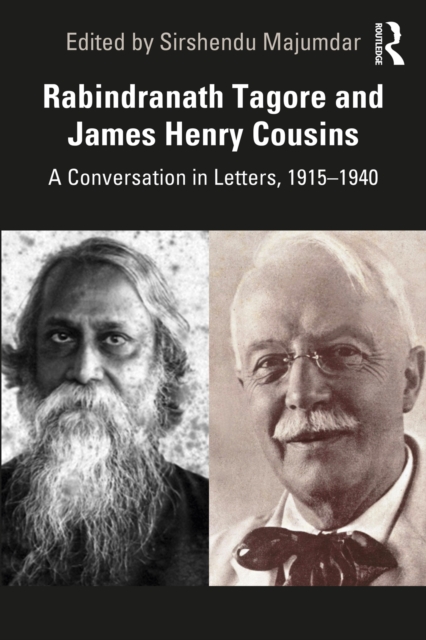
This book presents a set of original letters exchanged between Rabindranath Tagore, the first Asian to win the Nobel Prize for Literature, and the eminent Irish poet and theosophist, James Henry Cousins.
This book presents a set of original letters exchanged between Rabindranath Tagore, the first Asian to win the Nobel Prize for Literature, and the eminent Irish poet and theosophist, James Henry Cousins.
Aims to bring alive, through the eyes of their contemporaries, three of the greatest political figures of the Victorian era - Henry, third Viscount Palmerston, Benjamin Disraeli and William Gladstone.
Throughout her fifty-year career, Harriet Martineau's prolific literary output was matched only by her exchanges with a range of high-profile British, American and European correspondents.