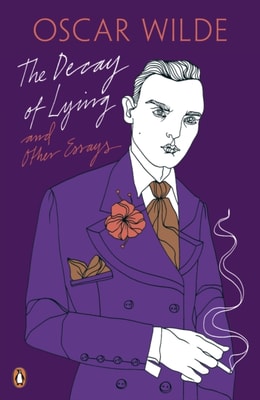
In 'The Decay of Lying' Oscar Wilde uses his decadent ideology in an attempt to reverse and therefore reject his audiences' 'normal' conceptualizations of nature, art and morality.
This is one of the few records published by Gurdjieff in which he offers guidance to his 'community of seekers', the pupils from many countries who joined him in Paris and New York.
Describing the silliness and 'feminine fatuity' of many popular books by lady novelists, George Eliot perfectly skewers the formulaic yet bestselling works that dominated her time, with their loveably flawed heroines.
An irresistible invitation to reject the work ethic and enjoy life's simple pleasures (such as laughing, drinking and lying in the open air), Robert Louis Stevenson's witty and seminal essay on the joys of idleness is accompanied here by his writings on, among other things, growing old, visiting unpleasant places and the overwhelming experience of falling in love.
Charles Dickens describes in Night Walks his time as an insomniac, when he decided to cure himself by walking through London in the small hours, and discovered homelessness, drunkenness and vice on the streets.
Both Flesh and Not is an collection of essays and writing from the virtuosic genius David Foster WallaceBeloved for his brilliantly discerning eye, his verbal elasticity and his uniquely generous imagination, David Foster Wallace was heralded by critics and fans as the voice of a generation.
Throughout his long, hectic and astonishingly varied life, Johann Wolfgang von Goethe (1749 1832) would jot down his passing thoughts on theatre programmes, visiting cards, draft manuscripts and even bills Goethe was probably the last true Renaissance Man .
Collected in this volume are powerful dramas and psychological fiction by the nineteenth-century iconoclast now recognized as a major figure of world literature.
One of Germany's greatest poets, Johann Christian Friedrich H lderlin (1770-1843) was also a prose writer of intense feeling, intelligence and perception.
'A landmark of feminist thought and a rhetorical masterpiece' GuardianRanging from the silent fate of Shakespeare's gifted imaginary sister to Jane Austen, Charlotte Bront and the effects of poverty and sexual constraint on female creativity, A Room of One's Own, based on a lecture given by Woolf at Girton College, Cambridge, is one of the great feminist polemics.
A far-ranging, invigorating and irrepressible collection of essays on literature, cinema, art - and everything in between - from the MAN BOOKER PRIZE- and WOMEN'S PRIZE-SHORTLISTED author of Feel Free and Swing Time'Alarmingly good' Metro'Striding with open hearted zest and eloquence between fiction (from EM Forster to David Foster Wallace) and travel, movies and comedy, family and community in a self-portrait that charts the evolution of a formidable talent' Independent'Supremely good.
Poet, pattern-designer, environmentalist and maker of fine books, William Morris (1834-96) was also a committed socialist and visionary writer, obsessively concerned with the struggle to achieve a perfect society on earth.
Travelling on horseback through southern England in the early 19th century, William Cobbett provides evocative and accurate descriptions of the countryside, colourful accounts of his encounters with labourers, and indignant outbursts at the encroaching cities and the sufferings of the exploited poor.
One of the greatest philosophers of the nineteenth century, Schopenhauer (1788-1860) believed that human action is determined not by reason but by 'will' - the blind and irrational desire for physical existence.
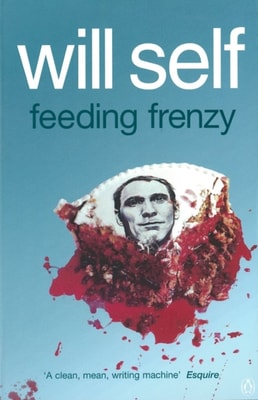
Feeding Frenzy - Booker nominee Will Self's dazzling collection of journalism and writing'Self often writes non-fiction as though it were fiction, topping off what we know as reality with the cream of his surreality' GuardianDuring the turbulent years of 1995-2000, Will Self surfed the great wave of olive oil which nearly swept British metropolitan culture away, and produced a series of restaurant reviews for The Observer, whose coruscating criticality led to a cabal of restaurateurs plotting his contract killing.
City of God is an enduringly significant work in the history of Christian thought, by one of its central figuresWritten as an eloquent defence of the faith at a time when the Roman Empire was on the brink of collapse, this great theological and philosophical work by St Augustine, bishop of Hippo, examines the ancient pagan religions of Rome, the arguments of the Greek philosophers and the revelations of the Bible.
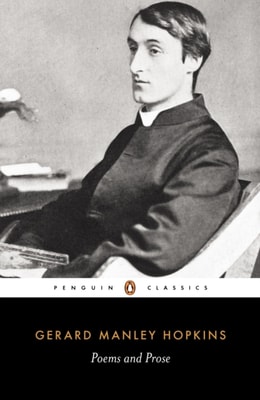
Closer to Dylan Thomas than Matthew Arnold in his 'creative violence' and insistence on the sound of poetry, Gerard Manley Hopkins was no staid, conventional Victorian.
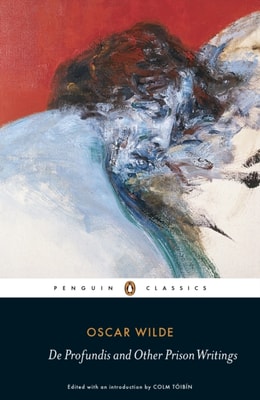
De Profundis and Other Prison Writings is a new selection of Oscar Wilde's prison letters and poetry in Penguin Classics, edited and introduced by Colm T ib n.
In these wonderfully stylish and eclectic essays, Charles Nicholl pursues the fugitive traces of the past with the skill and relish that have earned him a reputation as one of the finest literary and historical detectives of our time.
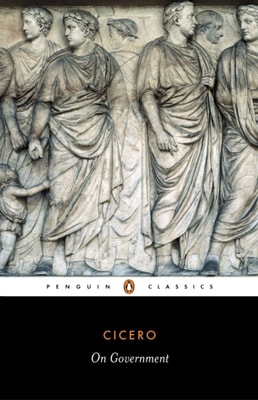
For the great Roman orator and statesman Cicero, 'the good life' was at once a life of contentment and one of moral virtue - and the two were inescapably intertwined.
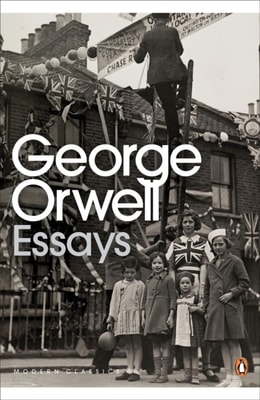
George Orwell's Essays illuminate the life and work of one of the greatest writers of this century - a man who elevated political writing to an art This outstanding collection brings together Orwell's longer, major essays and a fine selection of shorter pieces that includes 'My Country Right or Left', 'Decline of the English Murder', 'Shooting an Elephant' and 'A Hanging'.
Michel de Montaigne was one of the most influential figures of the Renaissance, singlehandedly responsible for popularising the essay as a literary form.
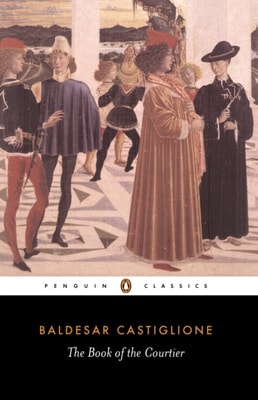
In The Book of the Courtier (1528), Baldesar Castiglione, a diplomat and Papal Nuncio to Rome, sets out to define the essential virtues for those at Court.
One of the most influential political texts ever written on America, and an indispensable authority on the nature of democracy In 1831 Alexis de Tocqueville, a young French aristocrat and civil servant, made a nine-month journey through eastern America.
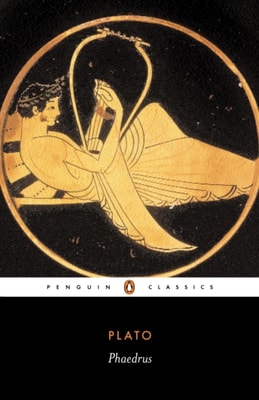
After the execution of Socrates in 399 BC, a number of his followers wrote dialogues featuring him as the protagonist and, in so doing, transformed the great philosopher into a legendary figure.
Voltaire's Philosophical Dictionary, first published in 1764, is a series of short, radical essays - alphabetically arranged - that form a brilliant and bitter analysis of the social and religious conventions that then dominated eighteenth-century French thought.
'It was with aweThat I beheldFresh leaves, green leaves,Bright in the sun'When the Japanese haiku master Basho composed The Narrow Road to the Deep North, he was an ardent student of Zen Buddhism, setting off on a series of travels designed to strip away the trappings of the material world and bring spiritual enlightenment.
'Sentence by sentence, page by page, Bellow is simply the best writer we have' The New York Times Book ReviewIn It All Adds Up, Pulitzer and Nobel Prize-winning author Saul Bellow takes readers on a brilliantly insightful journey through literary America over a forty-year period.
Taking the form of a dialogue between Socrates, Gorgias, Polus and Callicles, GORGIAS debates perennial questions about the nature of government and those who aspire to public office.
No philosopher has held a higher opinion of art than Hegel, yet nor was any so profoundly pessimistic about its prospects - despite living in the German golden age of Goethe, Mozart and Schiller.
A poet whose verse inspired music by Schubert, Schumann, Mendelssohn and Brahms, Heinrich Heine (1797-1856) was in his lifetime equally admired for his elegant prose.