This book examines the concept of translation as a return to origins and as restitution of lost narratives, and is based on the idea of diaspora as a term that depicts the longing to return home and the imaginary reconstructions and reconstitutions of home by migrants and translators.
Offering a discussion of translation and social media through three themes, theory, training and professional practice, this book builds on emerging research in Translation Studies, including references citing recent translation and social media industry data.
The Routledge Companion to Global Comparative Literature is a collection of papers by influential scholars who are engaged in comparative literary studies and addresses a central and highly important question about the discipline: if Eurocentrism has been integral to comparative literature, and if the world we live in is undergoing radical changes, then how can, or should, the discipline change to overcome this problem, of the discipline as well as of literary history, to accommodate non-Western traditions?
This volume explores the potential of the concept of the creaturely for thinking and writing beyond the idea of a clear-cut human-animal divide, presenting innovative perspectives and narratives for an age which increasingly confronts us with the profound ecological, ethical and political challenges of a multispecies world.
The book examines the perception of the organist as the most influential musical figure in Victorian society through the writings of Thomas Hardy and Robert Browning.
Cosmopolitanism and Transatlantic Circles in Music and Literature traces the transatlantic networks that were constructed between a select group of composers, including Edvard Grieg, Edward MacDowell, and Percy Grainger, and the writers with whom they shared cosmopolitan affinities, including Arne Garborg, Hamlin Garland, Madison Grant, and Lathrop Stoddard.
Offering a radical reassessment of 1930s British literature, this volume questions the temporal limits of the literary decade, and broadens the scope of queer literary studies to consider literary-historical responses to a variety of behaviours encompassed by the term 'queer' in its many senses.
This interdisciplinary edited collection establishes a new dialogue between translation, conflict and memory studies focusing on fictional texts, reports from war zones and audiovisual representations of the Spanish Civil War and the Franco Dictatorship.
This multidisciplinary collection of essays provides a critical and comprehensive understanding of how knowledge has been made, moved and used, by whom and for what purpose.
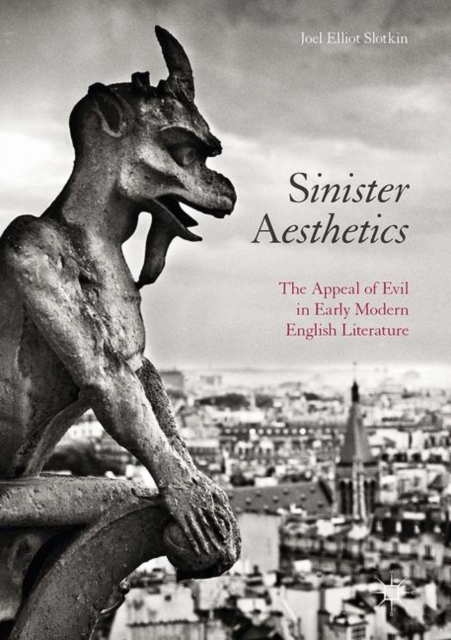
This engrossing volume studies the poetics of evil in early modern English culture, reconciling the Renaissance belief that literature should uphold morality with the compelling and attractive representations of evil throughout the period's literature.
The Afterlife of Texts in Translation: Understanding the Messianic in Literature reads Walter Benjamin's and Jacques Derrida's writings on translation as suggesting that texts exist within a process of continual translation.
This volume presents key contributions to the study of ecocriticism in Nordic children's and YA literary and cultural texts, in dialogue with international classics.
This volume addresses the construction and artistic representation of traumatic memories in the contemporary Western world from a variety of inter- and trans-disciplinarity critical approaches and perspectives, ranging from the cultural, political, historical, and ideological to the ethical and aesthetic, and distinguishing between individual, collective, and cultural traumas.
This volume will give readers insight into how genres are characterised by the patterns of frequency and distribution of linguistic features across a number of European languages.
The essays in this volume broaden previous approaches to Atlantic literature and culture by comparatively studying the politics and textualities of Southern Europe, North America, and Latin America across languages, cultures, and periods.
Drawing on a Marxist concept of world literature, this book is a study of the manipulations of time in contemporary anglophone fiction from Africa and South Asia.
This book discusses the elusive centrality of silence in modern literature and philosophy, focusing on the writing and theory of Jean-Luc Nancy and Roland Barthes, the prose of Samuel Beckett, and the poetry of Wallace Stevens.
This book explores the utopian imagination in contemporary American poetry and the ways in which experimental poets formulate a utopian poetics by adopting the rhetorical principles of negative theology, which proposes using negative statements as a means of attesting to the superior, unrepresentable being of God.
This book examines the distinction between literary expatriation and exile through a 'contrapuntal reading' of modern Palestinian and American writing.
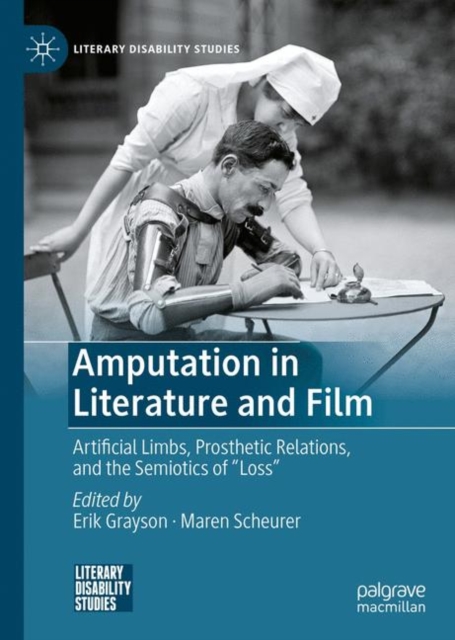
Amputation in Literature and Film: Artificial Limbs, Prosthetic Relations, and the Semiotics of "e;Loss"e; explores the many ways in which literature and film have engaged with the subject of amputation.
This book investigates the market-driven transformation of the higher education sector and the response given by the translation programmes in the UK and China, two vastly different social and economic contexts.
This monograph examines how higher education(HE) institutions construct 'professional identities' in the classroom, specifically how dominant discourses in institutions frame the social role, requisite skills and character required to practice a profession, and how students navigate these along their academic trajectories.
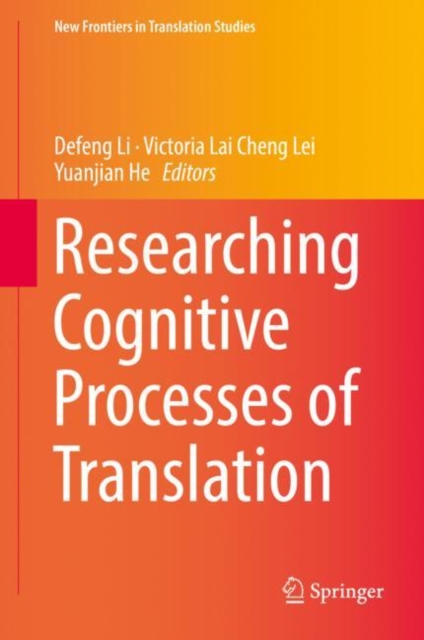
This edited volume covers an array of the most relevant topics in translation cognition, taking different approaches and using different research tools.
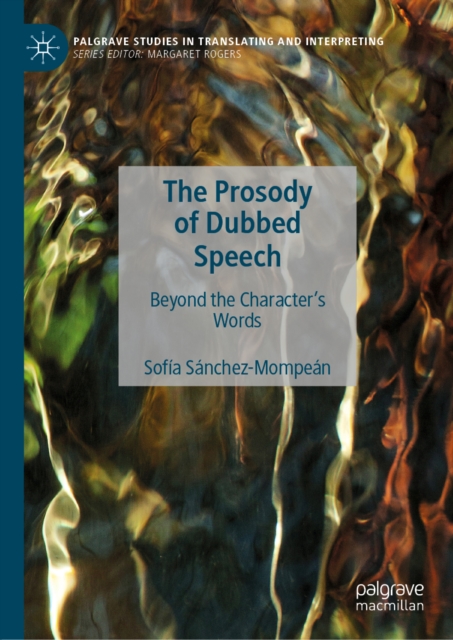
This book offers a descriptive and practical analysis of prosody in dubbed speech, examining the most distinctive traits that typify dubbed dialogue at the prosodic level.
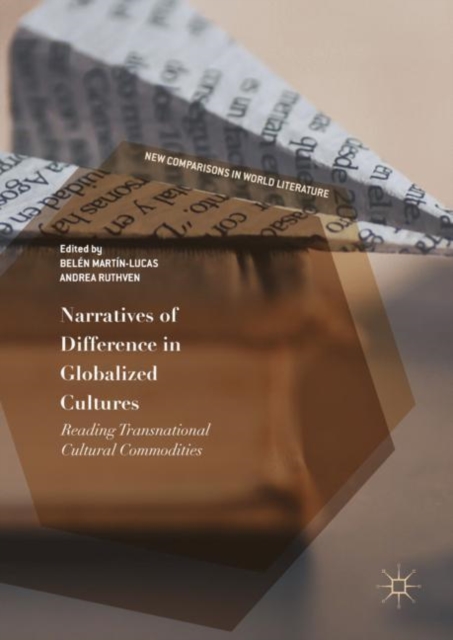
This book is about how the marketing of transnational cultural commodities capitalizes on difference and its appeal for cosmopolitan consumers in our postmodern globalized world.
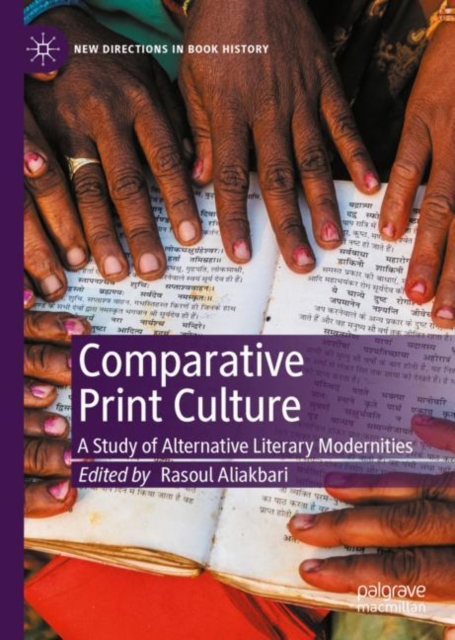
Drawing on comparative literary studies, postcolonial book history, and multiple, literary, and alternative modernities, this collection approaches the study of alternative literary modernities from the perspective ofcomparative print culture.
This book examines how the transcultural and transnational migration of people, texts, and ideas has transformed the paradigm of national literature, with Britain and Ireland as case studies.
Vernacular Aesthetics in the Later Middle Ages explores the formal composition, public performance, and popular reception of vernacular poetry, music, and prose within late medieval French and English cultures.
This Pivot updates the ideas of the famous political philosopher from the Italian Renaissance, Machiavelli, for the 21st century, using case studies from the West and from Kazakhstan to demonstrate the utility of Machiavelli's ideas for contemporary political life.
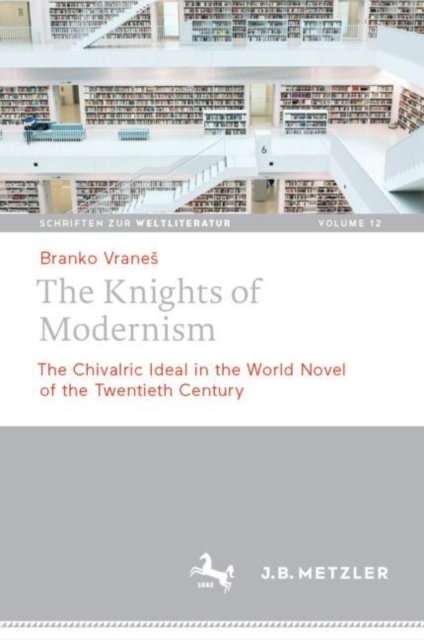
According to the customary literary-historical and theoretical notion, the fact that the first modern novel represents a parody or travesty of the chivalric ideal merits no particular attention.
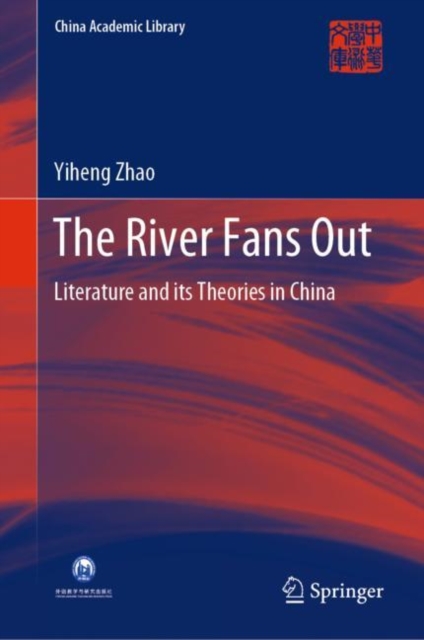
This book presents 18 highly influential essays on Chinese literature and semiotics by Professor Zhao Yiheng, including his analysis and discussions of the development of Chinese literature and its characteristics from traditional to modern times.
The book traces the literary journey that Proust's work made to China and back by means of translation, intertextual engagement, and the creation of a transcultural dialogue through migrant literature.
This book investigates the transmission of knowledge in the Arab and Islamic world, with particular attention to the translation of material from Greek, Persian, and Sanskrit into Arabic, and then from Arabic into Latin in medieval Western Europe.