Originally published in 1982, this title supplies a complete verbal index, listing all the words in the texts with their locations, a word frequency table, and a field of reference which establishes a page/line reference system for locating each context.
Originally published in 1985, this concordance lists all the words in the text indexed, along with the locations of their appearance in the Field of Reference.
Originally published in 1979, this concordance consists of a Verbal Index listing the location of all words used by Conrad, a Word Frequency Table listing number occurrences for each word in his text, and a Field of Reference in which the user can locate in its context a word cited in the Verbal Index.
Originally published in 1985, this concordance lists all the words in the text indexed, along with the locations of their appearance in the Field of Reference.
Originally published in 1979, this concordance consists of a Verbal Index listing the location of all words used by Conrad, a Word Frequency Table listing number occurrences for each word in his text, and a Field of Reference in which the user can locate in its context a word cited in the Verbal Index.
Caught between the well-worn grooves the Boom and the Gen-X have left on the Latin American literary canon, the writing intellectuals that comprise what the Generation of '72 have not enjoyed the same editorial acclaim or philological framing as the literary cohorts that bookend them.
Samuel Hall Young, a Presbyterian clergyman, met John Muir when the great naturalist's steamboat docked at Fort Wrangell, in southeastern Alaska, where Young was a missionary to the Stickeen Indians.
Karl Miller is one of the greatest literary critics of the last fifty years, the founder of the London Review of Books and Lord Northcliffe Professor of Modern English Literature at University College, London.
This work provides a compelling explanation of something that has bedeviled a number of feminist scholars: Why did popular authors like Edna Ferber continue to write conventional fiction while living lives that were far from conventional?
Challenging the widely-held assumption that Slavoj Zizek's work is far more germane to film and cultural studies than to literary studies, this volume demonstrates the importance of Zizek to literary criticism and theory.
Addressing texts produced by writers who lived through the Civil War and wrote about it before the end of Reconstruction, this collection explores the literary cultures of that unsettled moment when memory of the war had yet to be overwritten by later impulses of reunion, reconciliation, or Lost Cause revisionism.
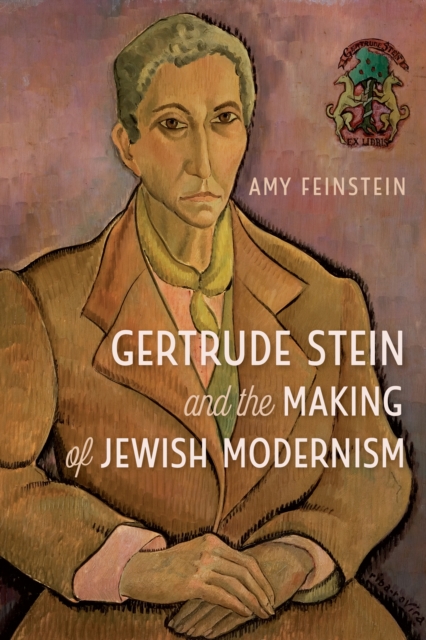
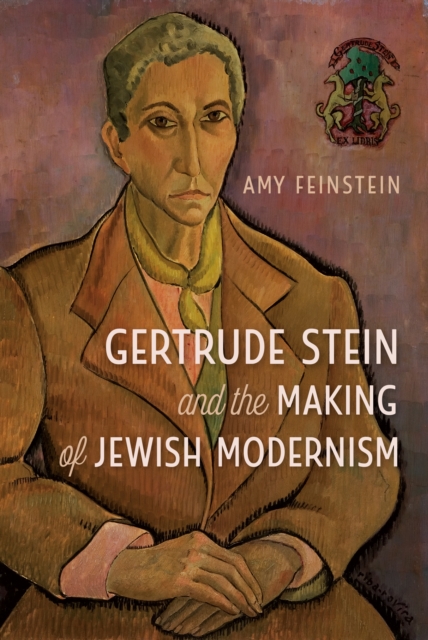
Challenging the assumption that modernist writer Gertrude Stein seldom integrated her Jewish identity and heritage into her work, this book uncovers Steins constant and varied writing about Jewish topics throughout her career.
A rich examination of the influence of Aristotle and Thomas Aquinas on James JoyceIn this book, Fran ORourke examines the influence of Aristotle and Thomas Aquinas on James Joyce, arguing that both thinkers fundamentally shaped the philosophical outlook which pervades the authors oeuvre.
A rich examination of the influence of Aristotle and Thomas Aquinas on James JoyceIn this book, Fran ORourke examines the influence of Aristotle and Thomas Aquinas on James Joyce, arguing that both thinkers fundamentally shaped the philosophical outlook which pervades the authors oeuvre.
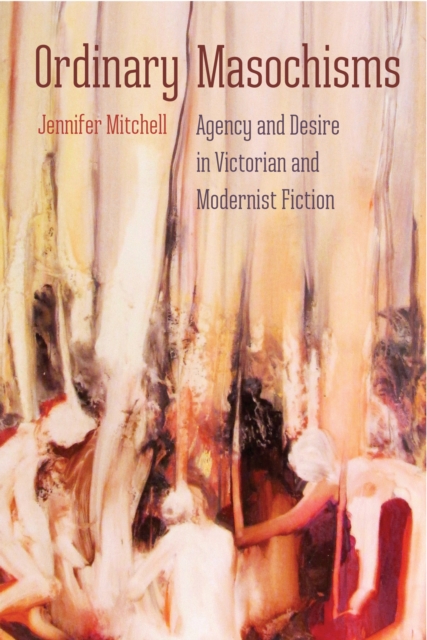
Ordinary Masochisms reveals how literary works from the nineteenth and twentieth centuries frequently challenged the prevailing view of masochism as a deviant behavior, an opinion supported by many sexologists and psychoanalysts in the 1800s.
Challenging the assumption that modernist writer Gertrude Stein seldom integrated her Jewish identity and heritage into her work, this book uncovers Steins constant and varied writing about Jewish topics throughout her career.
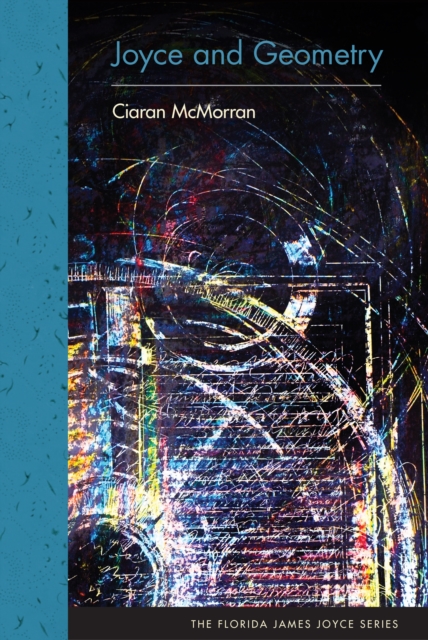
In a paradigm shift away from classical understandings of geometry, nineteenth-century mathematicians developed new systems that featured surprising concepts such as the idea that parallel lines can curve and intersect.
The first full commentary on Piers Plowman since the late nineteenth century is inaugurated with the publication of the first two of its five projected volumes.
With thousands of new volumes lining the shelves of bookstores, abundant advertisements, and innumerable online reviews, it is becoming increasingly difficulty for the concerned adult to recommend literature that is of quality, yet speaks to young audiences.